
Last updated September 20, 2026
Full 25-point door and opener safety check with every visit - springs, cables, rollers, tracks, and your LiftMaster or Chamberlain opener included
You get a price before we start. It does not change when the truck arrives.
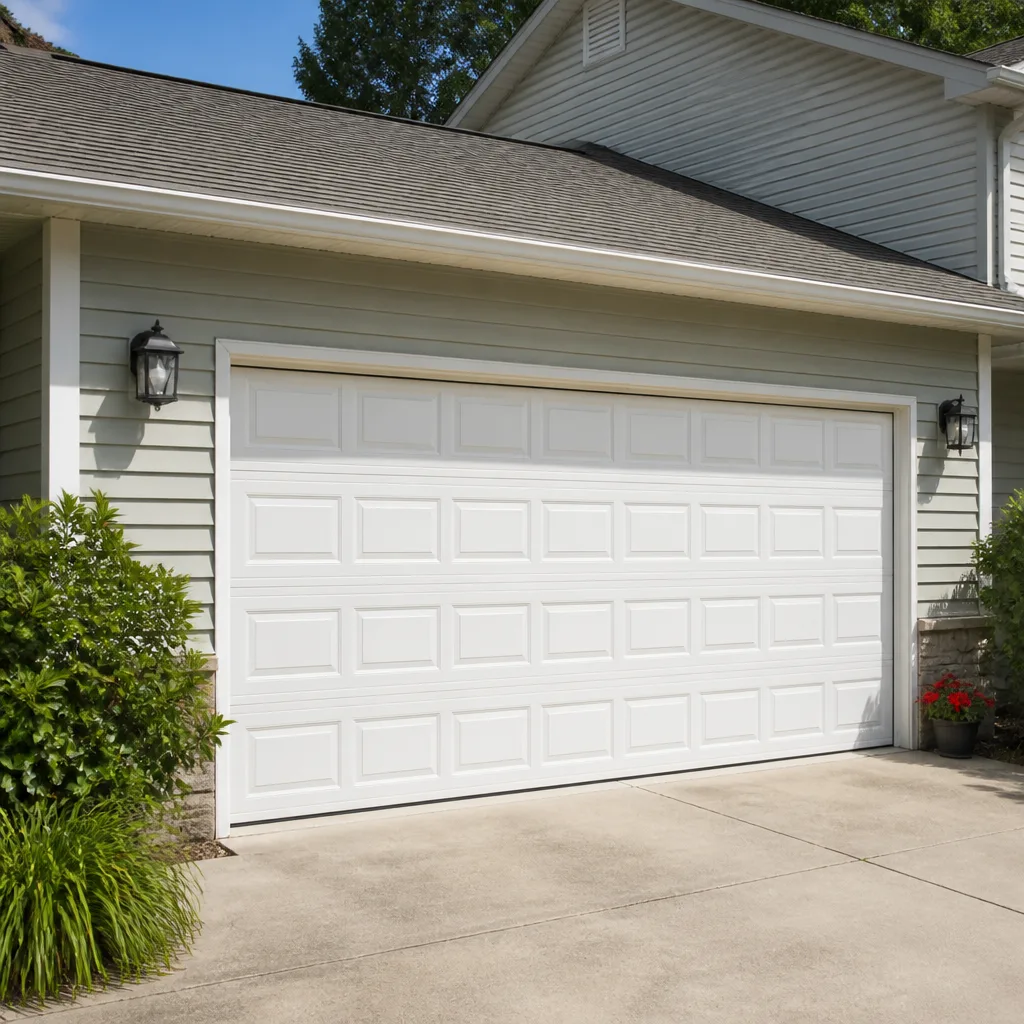
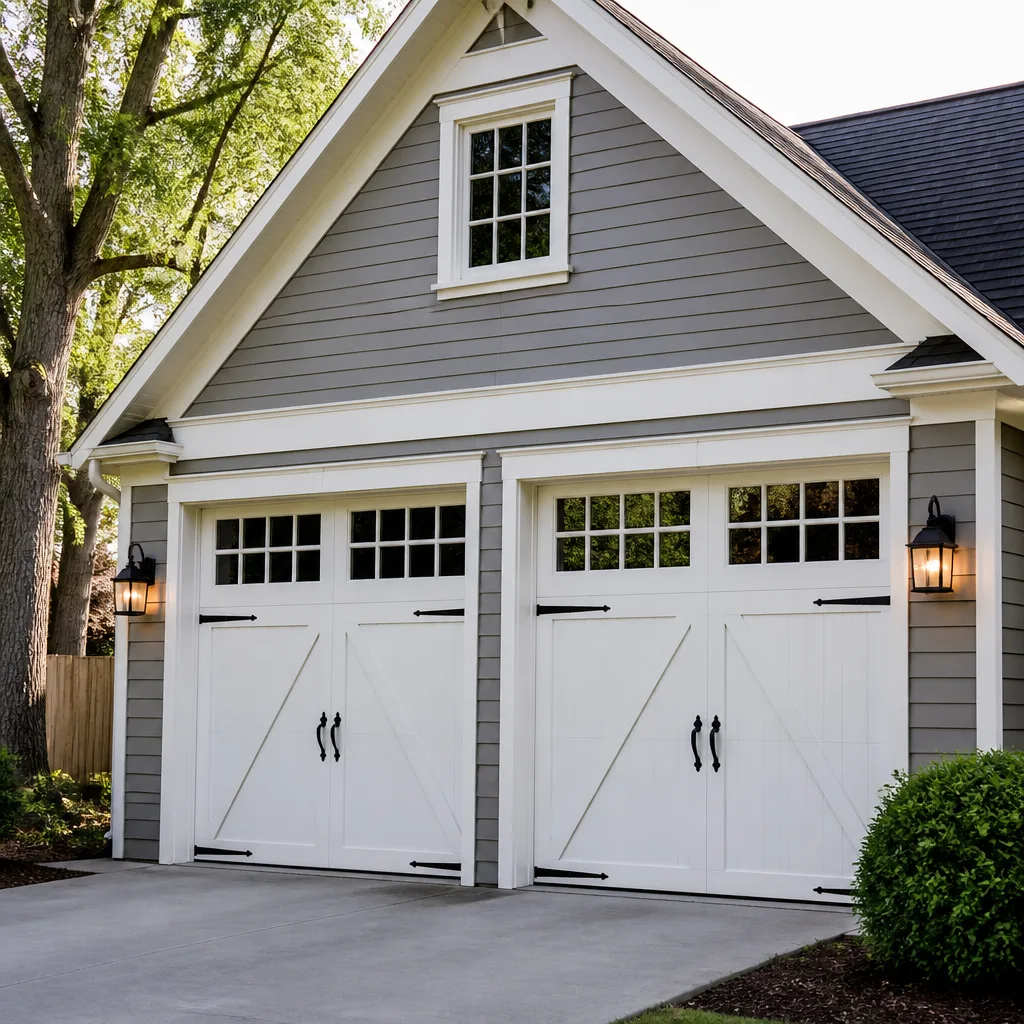
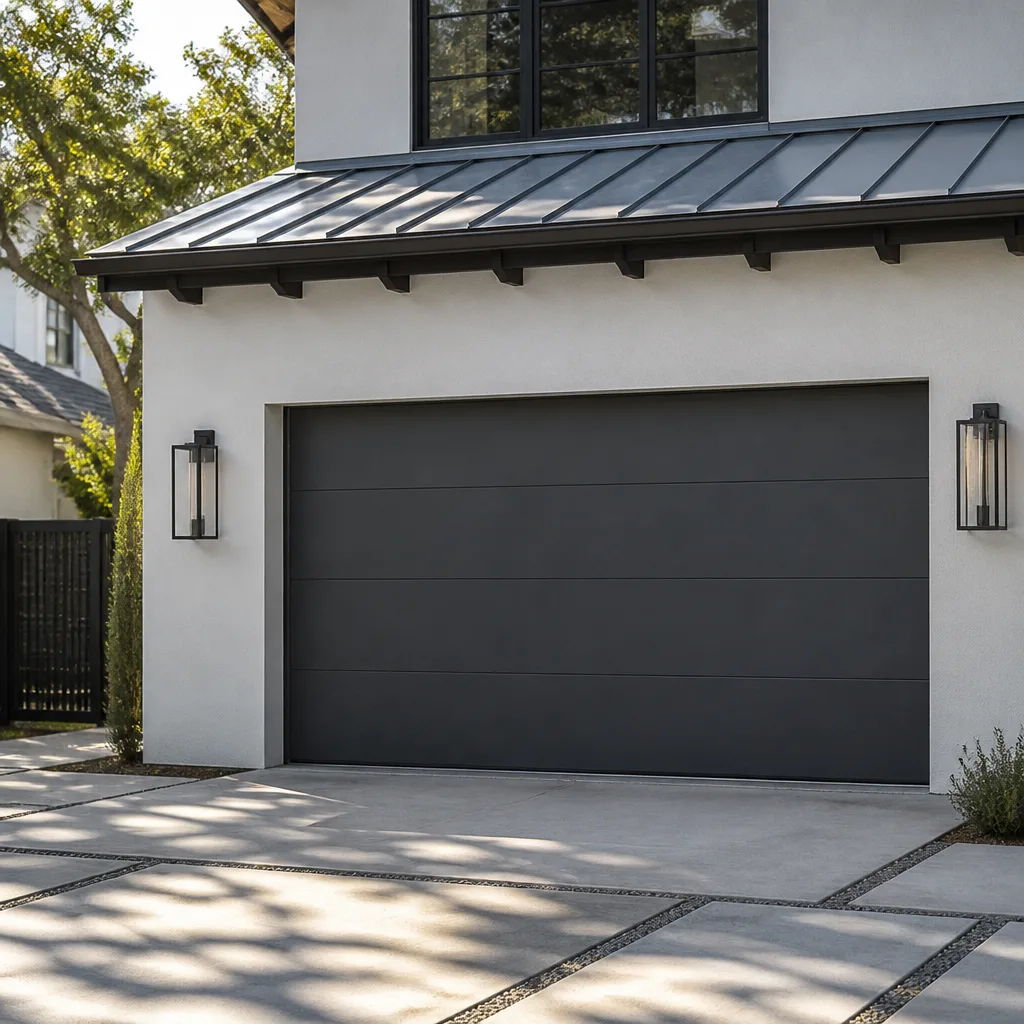
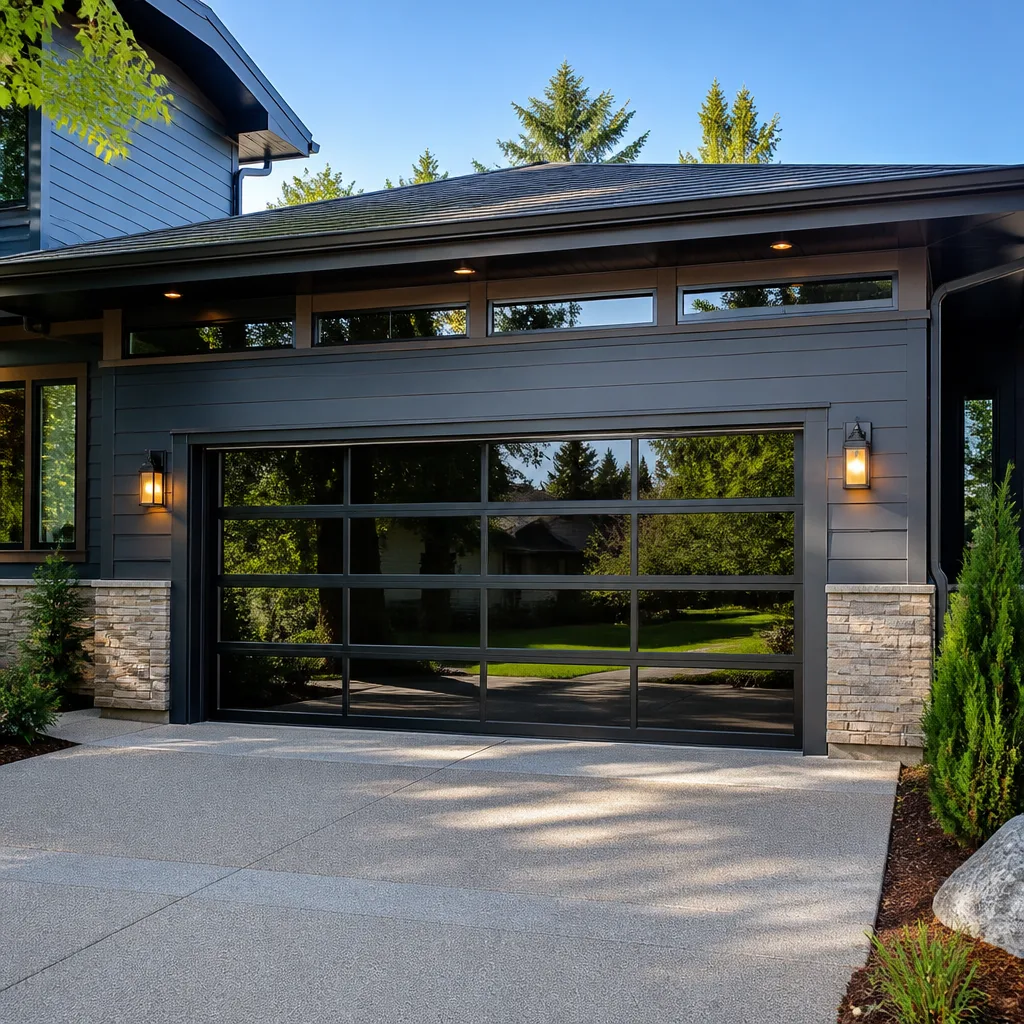
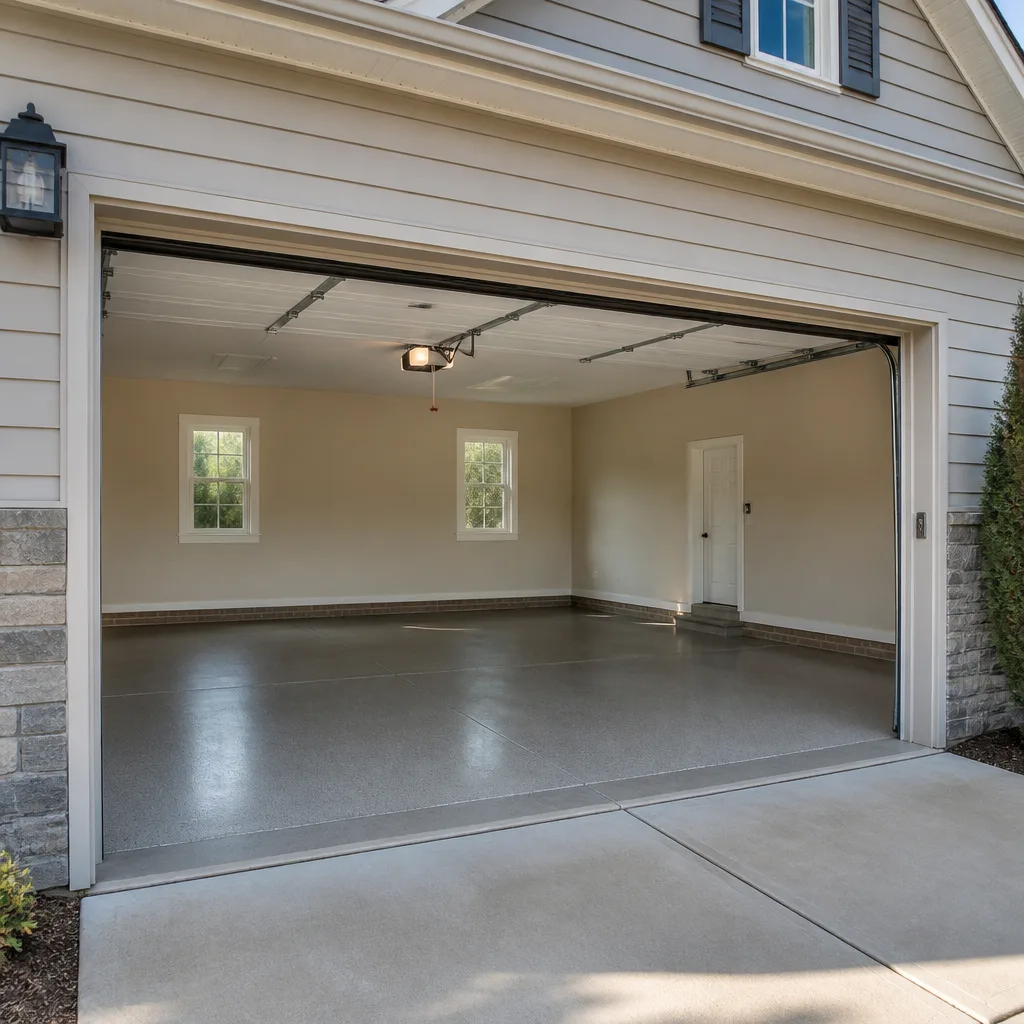
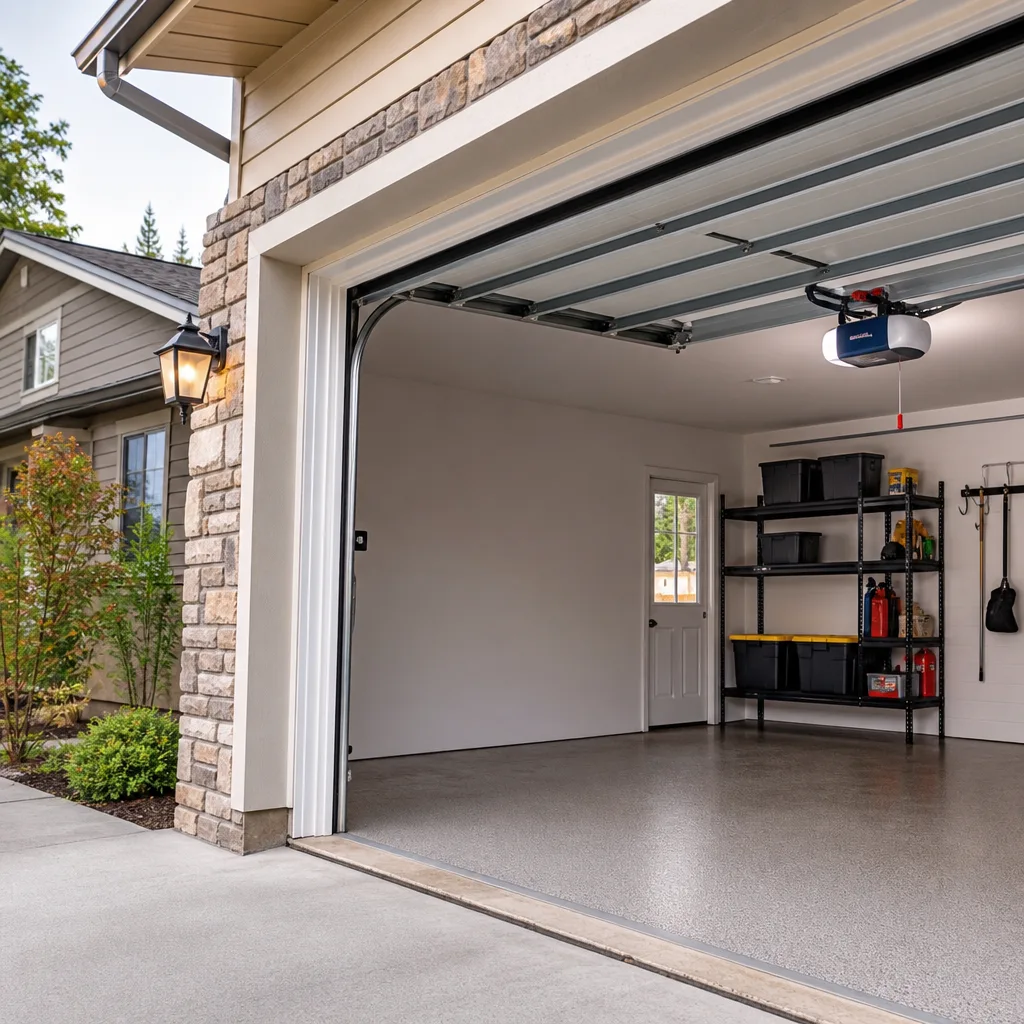
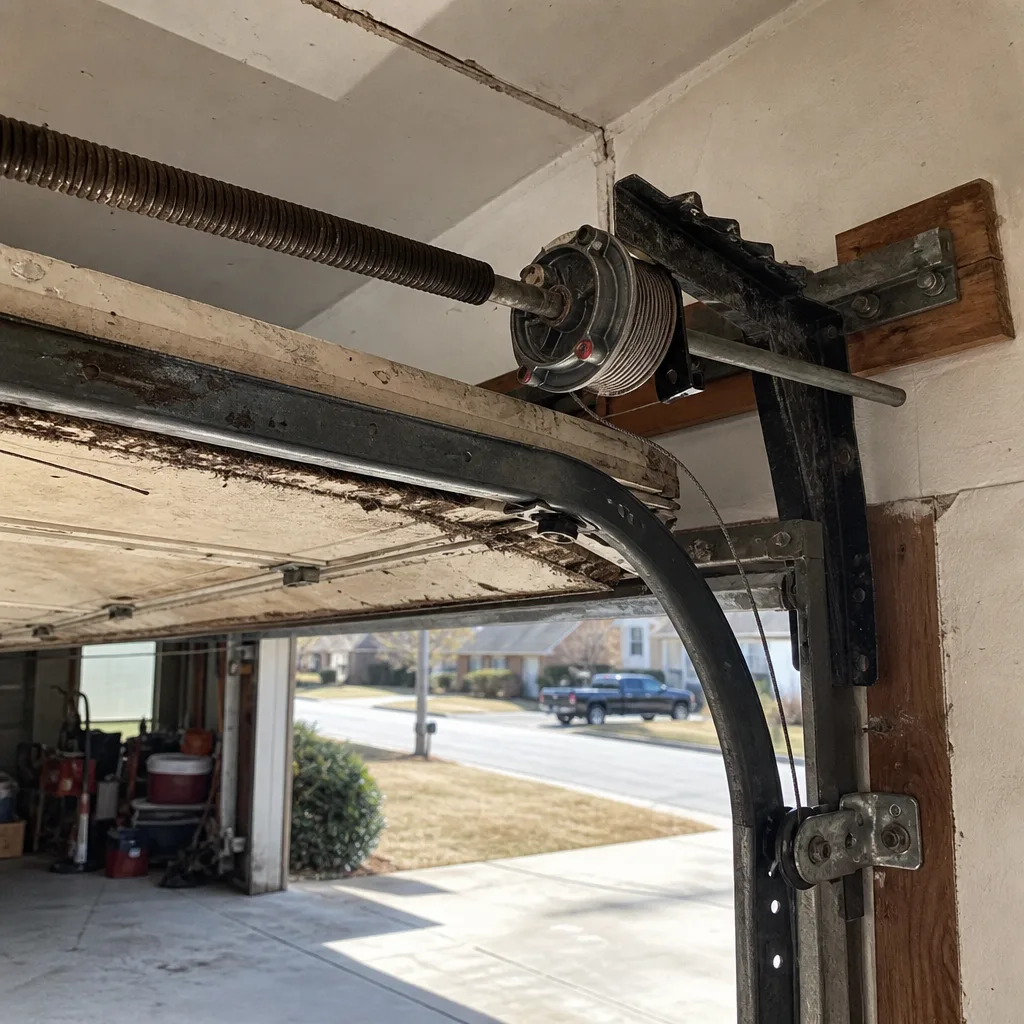 Before
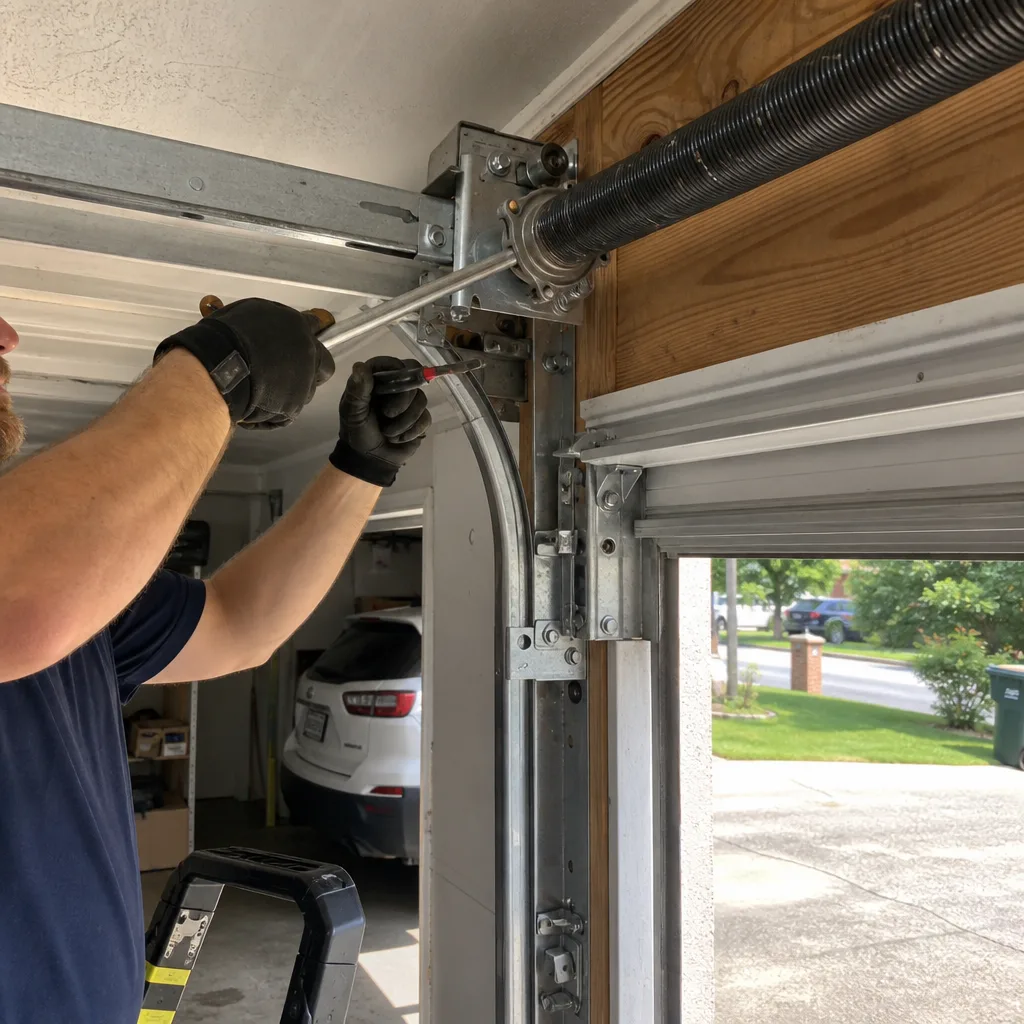 After
After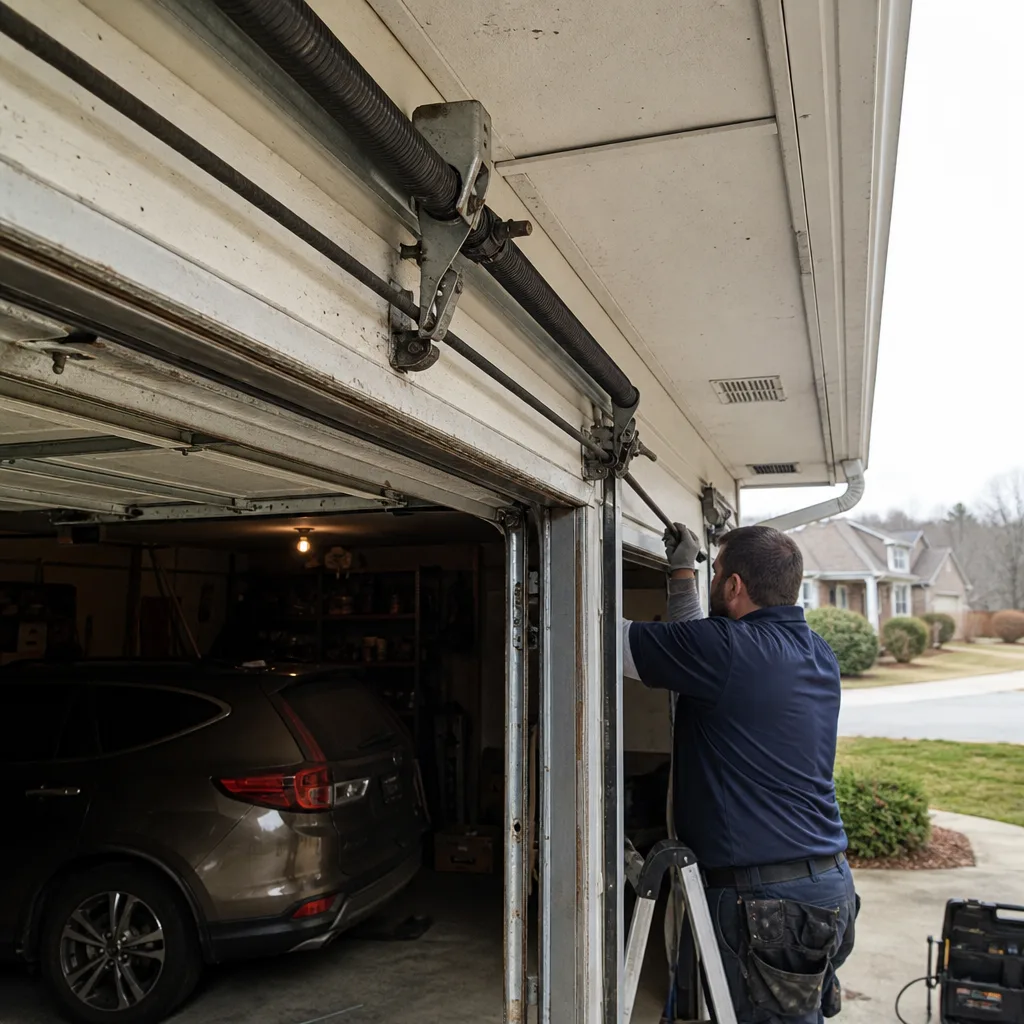 Before
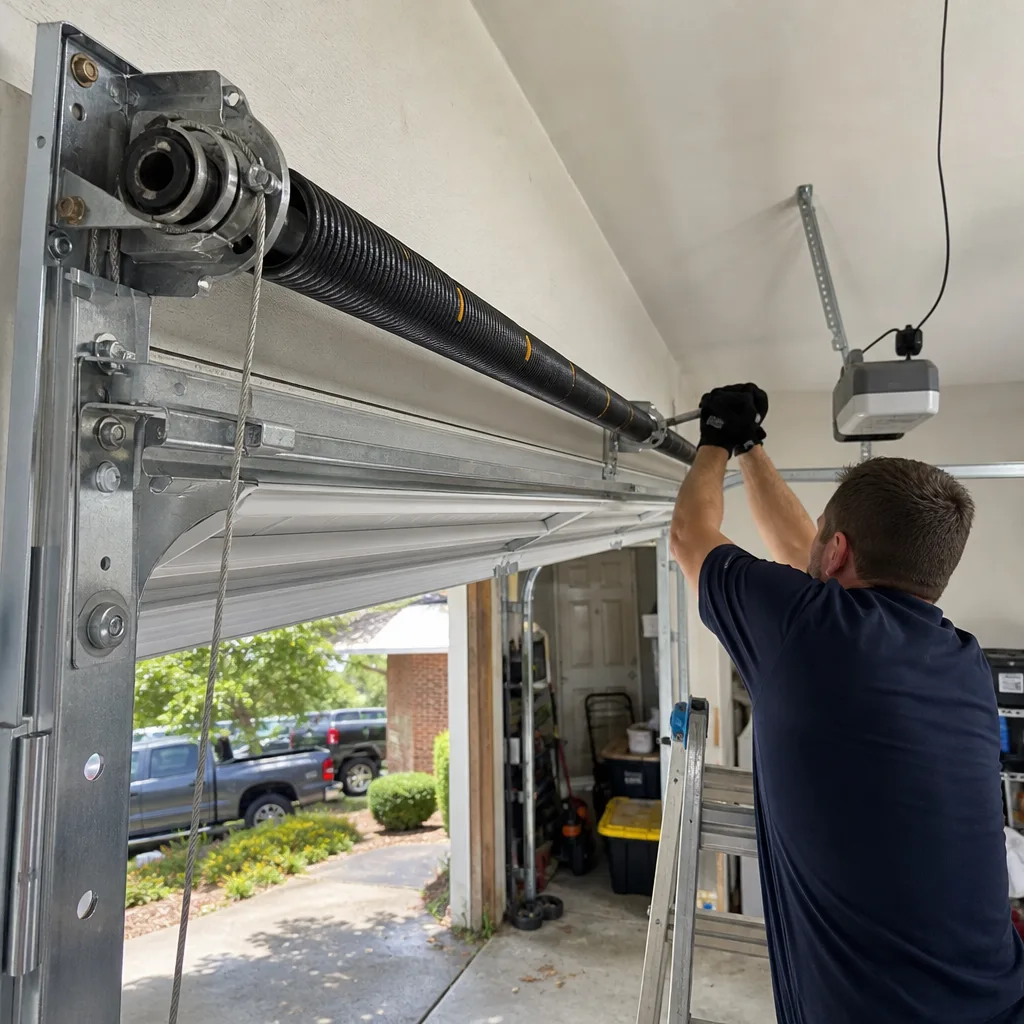 After
After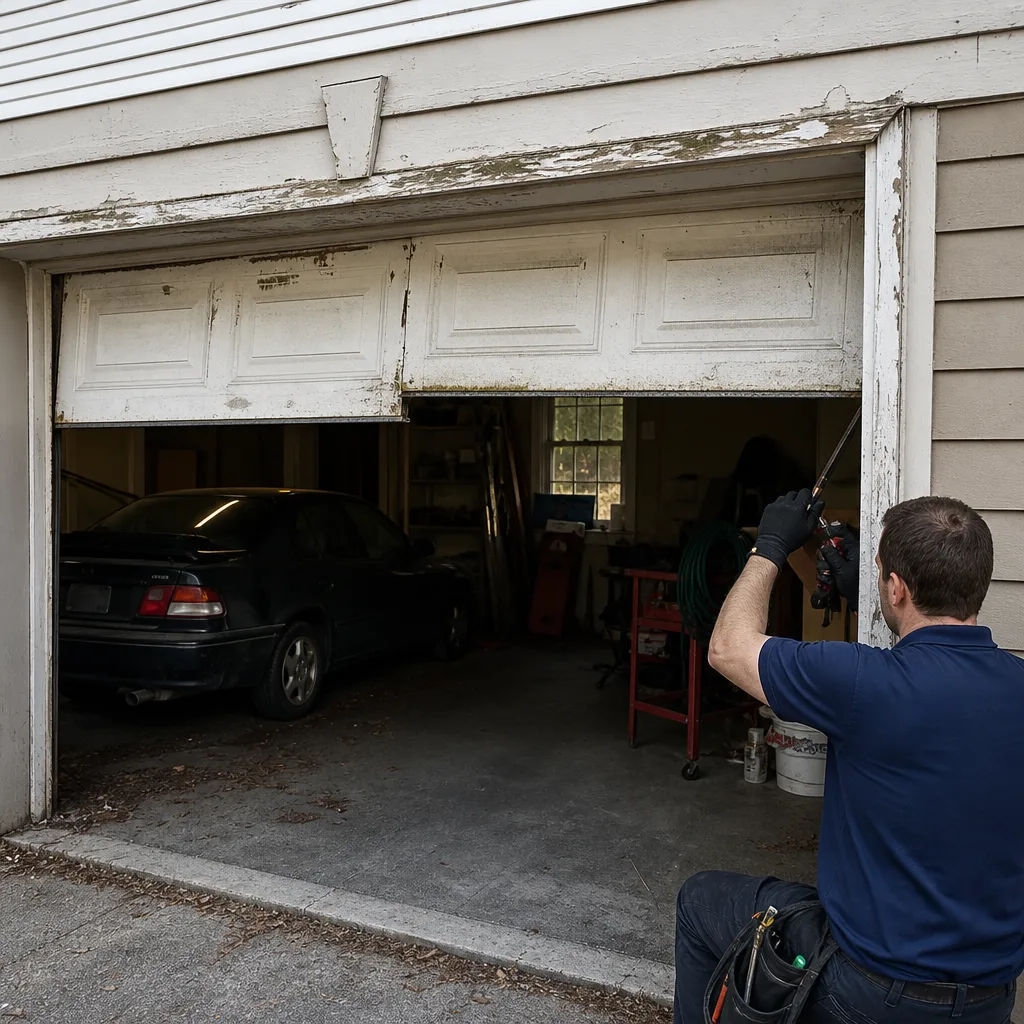 Before
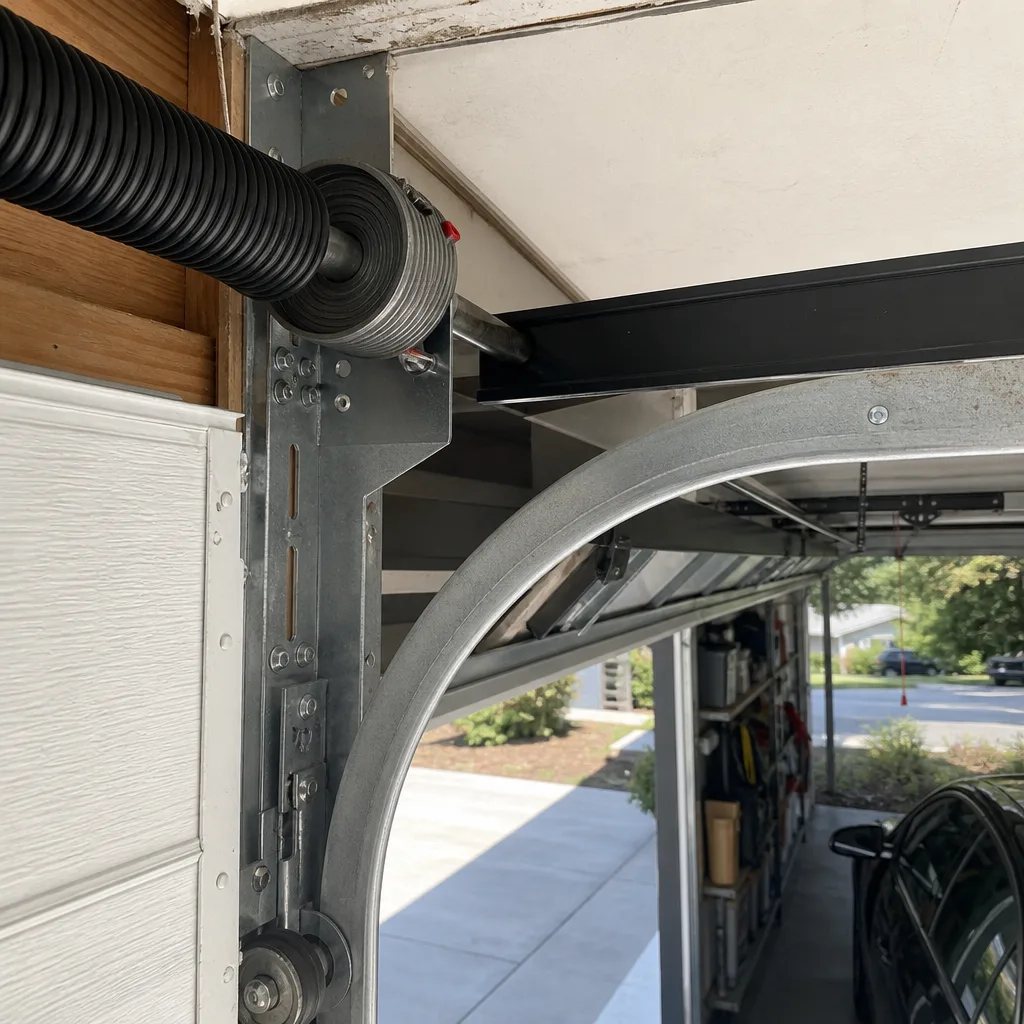 After
AfterGarage Door Cost Breakdown: The Douglasville Homeowner’s Reference for 2026
The single largest source of garage door invoice surprises in the Atlanta metro isn’t parts markup. It’s labor categories that were never itemized in the original quote because the contractor quoted a job price, not a work scope. A Douglasville homeowner who receives a one-line “garage door replacement: $2,400” has no way to know whether that number reflects a torsion spring conversion, a new opener mount, or just a panel swap. This guide fixes that. You’ll learn the line-item structure behind every real garage door quote in Douglasville, what each component actually costs to buy and install in this market in 2026, and how to spot the gaps that turn into change orders.
Quick Answer
A full garage door replacement in Douglasville, GA, typically runs between $1,100 and $3,800 in 2026, depending on door size, material, insulation value, and spring configuration. That range breaks into five distinct line items: door panel section, hardware kit, spring system, opener (when replaced alongside), and installation labor. Single-panel section replacements run $300 to $700 installed. Torsion spring replacement on its own runs $180 to $340. Every figure in this guide reflects 2026 Douglasville-area pricing patterns, not national averages.
Table of Contents
- The Five Line Items Every Douglasville Garage Door Quote Should Have
- Door Panel Section Pricing: What the Door Itself Costs
- Spring System Costs: Torsion vs. Extension by the Numbers
- Opener Pricing: Standalone and Bundled With Door Replacement
- Installation Labor: Douglasville’s Hourly Reality and Flat-Rate Alternative
- R-Value and Cost: The Two Places Insulation Adds Money
- Section Replacement vs. Full Door Replacement: The Color-Match Problem
- The Photographed Pre-Quote Inspection: What It Costs and Why It Matters
- Reading Your Warranty Clause: Labor Coverage vs. Parts Coverage
- Common Mistakes to Avoid
- When to Call a Professional
- Frequently Asked Questions
- The Bottom Line
BeforeAfterThe Five Line Items Every Douglasville Garage Door Quote Should Have
A verifiable quote names the parts, the work, and the money separately. Here’s the structure we work from at Servo Garage Doors Douglasville, and it’s the structure you should demand from any contractor you call.
- Door panel section(s) – the door itself, priced by size, material, and construction. Steel single-layer doors start around $400 for a single 8×7 panel. Insulated steel with a composite backer runs $650 to $1,400. Wood overlay or carriage-style doors start at $1,200 and climb fast.
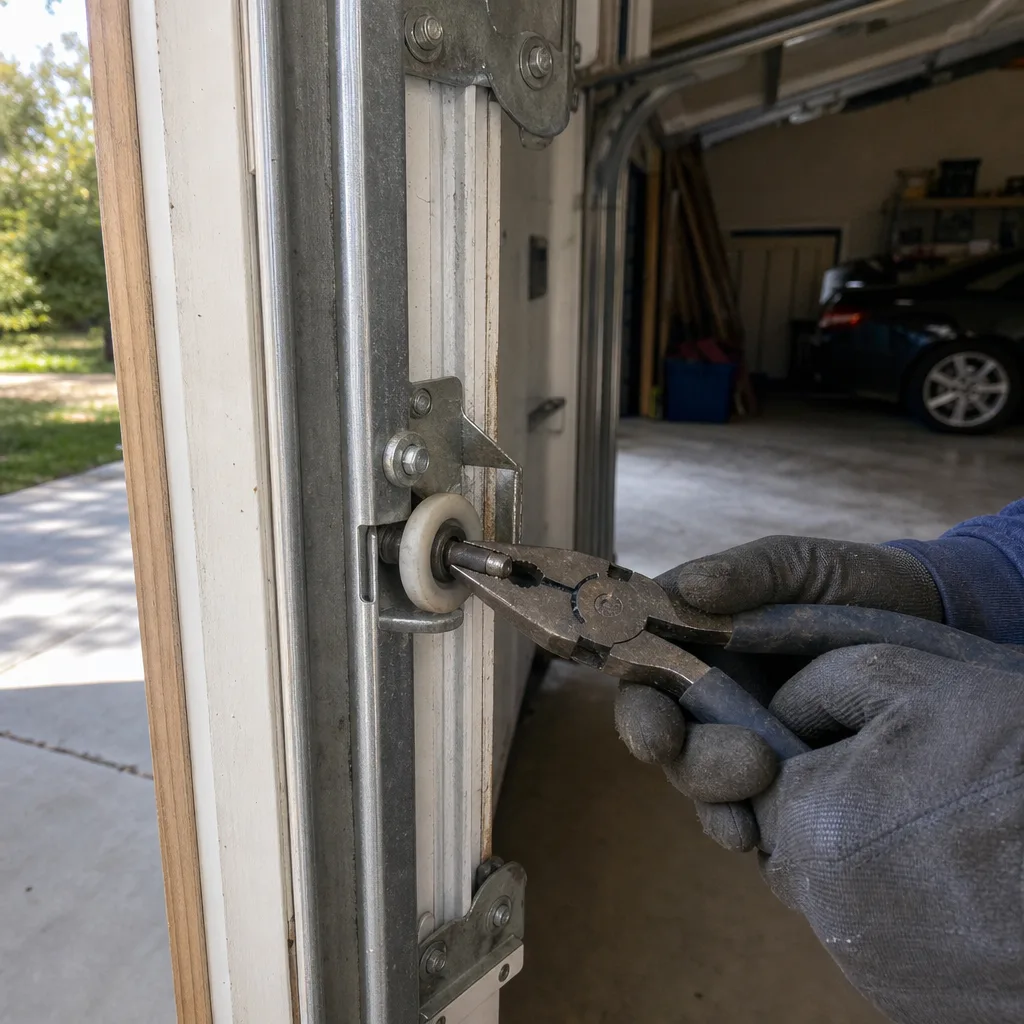
- Hardware kit – hinges, rollers, brackets, and track components. These are not free add-ons. In Douglasville’s humidity, nylon rollers replace steel rollers on most jobs at a $25 to $60 materials delta, and that’s a line item a good quote names.
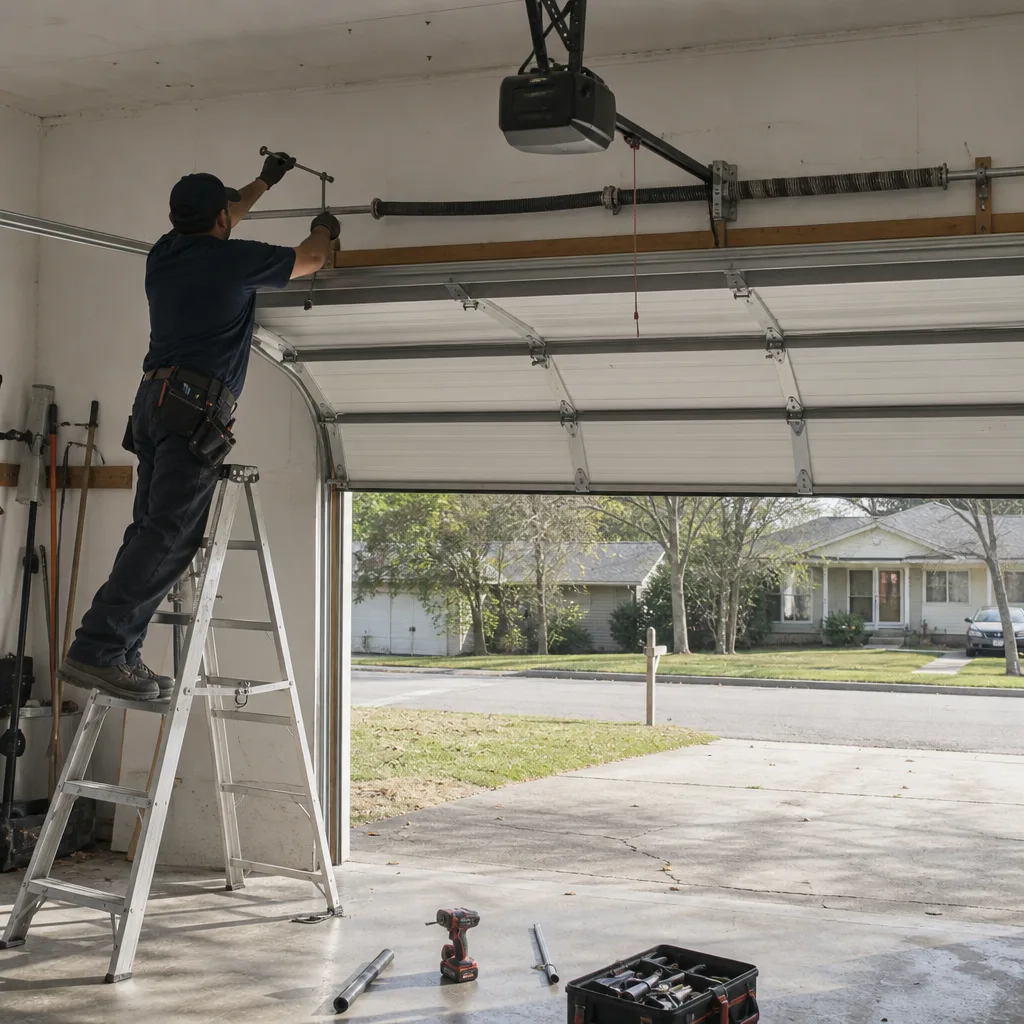
- Spring system – torsion springs (mounted above the door, the modern standard) or extension springs (mounted alongside the horizontal track, common on pre-2000 Douglasville homes). Spring pricing differs by $80 to $140 in this market because torsion springs require different labor and balancing time.
- Opener – when replaced alongside a door. In Douglasville, bundled opener replacement adds $250 to $500 for the unit and $75 to $150 for installation, depending on drive type.
- Installation labor – billed separately, shown as either an hourly rate or a flat scope fee. Douglasville’s 2026 labor rate for garage door work runs $85 to $135 per hour. A straight panel replacement runs 2 to 3 labor hours. A full door conversion with spring rebalance and opener remount runs 4 to 6.
When any of these lines is missing, the risk shifts to you. A job price without a work scope is an invitation for the contractor to define the job in the field. Clause 1 of The Haven Standard, the operating standard behind our work, requires a flat, written price and written scope before any work begins. We follow that on every job in Douglasville, and you should hold other contractors to the same.
If you’re comparing door replacement to repair, start with Garage Door Repair in Douglasville for the decision framework we use when a door can be saved.
Door Panel Section Pricing: What the Door Itself Costs
Douglasville’s garage door market tracks Atlanta wholesale pricing closely, but local delivery and inventory constraints add a layer. Here’s what door sections actually cost in 2026, broken down by material and insulation class.
Steel, Single-Layer (Non-Insulated)
$400 to $800 for a standard 16×7 door. These are the doors you see on late-1990s and early-2000s subdivisions across Douglasville, including Chapel Hills and the corridor along Highway 5. They’re loud, they dent, and they transmit heat directly into the garage. If your garage is attached and you’re replacing one of these, upgrading to even a basic insulated panel pays back within three summers.
Steel, Double-Layer (Polystyrene Insulation)
$650 to $1,200. The steel front face is backed with a polystyrene core, which gives the panel structure and a modest R-value around 6 to 9. This is the most common replacement class in Douglasville because it balances cost with noise reduction and dent resistance. Brands in this range include the Clopay Classic and the lower Amarr Lincoln lines.
Steel, Triple-Layer (Polystyrene or Polyurethane, Steel Backer)
$900 to $1,800. A steel backer sandwiches the insulation core, which means the panel is structurally stronger and the R-value climbs to 12 to 18. These doors handle Georgia humidity better because the backer shields the insulation from moisture. If you store anything in the garage that rusts or warps, this is the door class to price.
Wood and Wood-Overlay (Carriage Style)
$1,200 to $3,500 and up. Real wood doors in Douglasville require maintenance. The humidity cycle between March and September causes wood to swell and contract, which means a wood door needs resealing every two to three years. Wood-overlay, which puts a composite or steel core behind a wood-look face, carries less maintenance burden at $1,100 to $2,400. Homeowners in Anneewakee Creek and the established lots along Forrest Avenue tend to price this class for curb appeal reasons.
Here’s a Douglasville-specific reference table for a standard 16×7 door, panel only, no labor:
| Panel Class | Typical 2026 Range (Panel Only) | R-Value | Notes |
|---|---|---|---|
| Single-layer steel | $400 – $800 | None to R-3 | Noise and heat transfer; budget only |
| Double-layer steel | $650 – $1,200 | R-6 to R-9 | Most common replacement in Douglasville |
| Triple-layer steel | $900 – $1,800 | R-12 to R-18 | Best humidity and dent resistance |
| Wood overlay | $1,100 – $2,400 | Varies | Curb appeal; lower maintenance |
| Solid wood | $1,200 – $3,500+ | Varies | High maintenance in Georgia humidity |
Spring System Costs: Torsion vs. Extension by the Numbers
Douglasville homes built after roughly 2000 almost all have torsion spring systems. Homes built before that, especially ranches and split-levels from the 1970s and 1980s, often still run extension springs. When we replace a door, we quote the spring system as its own line because it determines how the door balances, and balancing is what determines how long the opener lasts. Learn to spot trouble early in our Garage Door Warning Signs: A Douglasville Homeowner’s Reference Guide.
Torsion spring replacement in Douglasville runs $180 to $340 for a standard pair on a 16×7 door. The springs themselves cost $40 to $90 per spring wholesale, and the labor includes winding the springs, which carries higher risk and therefore a higher labor rate. The phone quote you get should fall in this range. If it’s under $150, ask whether the quote includes both springs. If only the broken spring is replaced and the other is original, the imbalance will shorten the second spring’s life and you’ll pay for labor twice.
Extension spring replacement runs $125 to $240 in this market. The springs are cheaper and the installation is less technically demanding, which lowers labor. But extension springs stretch over time. When one fails, its mate has already stretched beyond spec. Replace both, every time.
The $80 to $140 difference between the two systems in Douglasville is real and it is not a markup trick. Torsion spring winding requires specialized bars and careful, controlled tensioning. Extension springs can be replaced with basic hand tools, which lowers the labor burden. The labor difference is what closes and widens that gap.
One more Douglasville-specific note: the red clay dust that blows off driveways and the fine pollen from the pines get into the spring coils and act as a mild abrasive over time. We see torsion springs fail faster on homes with gravel or dirt driveways than on homes with sealed concrete approaches. If that describes your house, factor in a spring replacement every 6 to 8 years instead of the typical 8 to 10.
Safety caveat: torsion springs are under constant, high tension. A spring that lets go can cause serious injury or death. Do not attempt to unwind or rewind a torsion spring yourself. This is one component where a trained professional with the right tools is the only safe option, and any contractor who glosses over that risk isn’t telling you the whole story. For details on local requirements, see Garage Door Permits, Codes & Inspections in GA: What You Need to Know.
Opener Pricing: Standalone and Bundled With Door Replacement
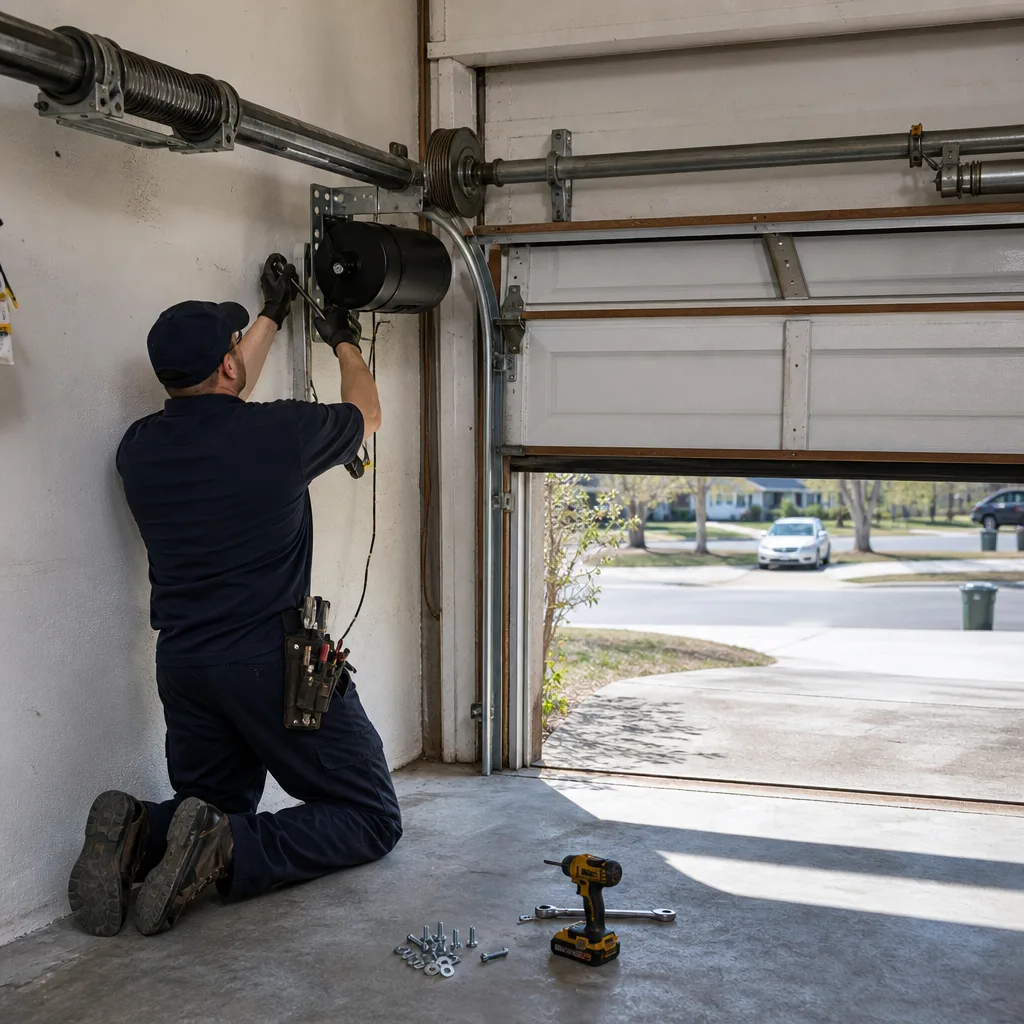
The opener is the motor unit mounted to the garage ceiling that pulls the door along the track. When homeowners replace a door in Douglasville, about 40% of them replace the opener at the same time, either because it’s old, underpowered for the new door’s weight, or lacks a modern safety sensor.
Standalone opener replacement in Douglasville runs $300 to $550 installed for a chain-drive unit, and $425 to $700 for a belt-drive unit. The belt-drive premium buys a noticeably quieter operation, which matters if the garage sits under a bedroom or shares a wall with living space. Homes in newer Douglasville subdivisions like Tributary and the developments off Bright Star Road tend to spec belt drives for exactly that reason.
When you bundle an opener with a door replacement, the opener line drops by $50 to $100 because the technician is already on site with the track exposed and the electrical box identified. Here’s a typical bundled breakdown:
- Chain drive (LiftMaster 81602 or Chamberlain equivalent): $220 – $300 unit, $75 – $100 install time
- Belt drive (LiftMaster 87504 or Genie equivalent): $320 – $420 unit, $75 – $100 install time
- Smart-enabled (WiFi, camera, battery backup): add $80 – $180 over base unit pricing
Smart-enabled openers have become the default in Douglasville’s newer construction. The Genie and LiftMaster units with integrated cameras and battery backup run on the higher end, and most homeowners we talk to in 2026 consider the battery backup a non-negotiable after the storm season we had last year. A dead opener during a power outage is a car trapped in the garage, and the built-in battery solves that for about $100 extra.
For a full walkthrough of opener work, including logic board replacement and sensor alignment, see Garage Door Opener Repair & Installation in Douglasville.
Installation Labor: Douglasville’s Hourly Reality and Flat-Rate Alternative
Douglasville’s garage door labor market in 2026 runs tighter than the national average for two reasons: the housing stock is aging into a replacement cycle all at once, and the metro Atlanta labor pool competes with higher-priced jobs in Cobb and Fulton counties. That pulls hourly rates up.
Current Douglasville garage door labor rates run $85 to $135 per hour. A straight panel swap on an existing track runs 2 to 3 hours. A full door replacement with spring conversion, track realignment, and opener remount runs 4 to 6 hours. The labor line on a straight replacement should fall between $170 and $405. On a full conversion, $340 to $810.
That’s the hourly reality. But here’s the thing our industry doesn’t say out loud: hourly billing creates an incentive misalignment. The technician who saves time by skipping a step looks the same on the invoice as the technician who did the job properly. That’s why our labor is quoted flat. We measure the scope, write the work down, and price it. The number doesn’t move whether the job takes 3 hours or 5. Clause 1 of The Haven Standard puts the written price and written scope in your hands before we touch the door.
What labor should cover, on any Douglasville job:
- Removal and disposal of the old door and hardware
- Track inspection and realignment (a door installed on worn track will fail early)
- Spring balance check and adjustment after the new panel is hung
- Opener force and limit adjustment if the opener is retained
- Safety sensor alignment and reversal test
If disposal isn’t listed, ask. Some Douglasville contractors charge a $50 to $75 haul-away fee as a separate line and don’t mention it until the cleanup stage.
Considering installation of a new door rather than repair? The decision framework lives on our Garage Door Installation in Douglasville page.
R-Value and Cost: The Two Places Insulation Adds Money
Insulation adds cost in two separate places, and most cost guides only mention the first one. The first is the panel itself: moving from a non-insulated single-layer steel door to a double-layer insulated panel adds $250 to $400 on a 16×7 door. Moving to a triple-layer polyurethane panel adds another $250 to $600.
The second place is the spring system. An insulated door weighs more than a non-insulated door of the same size. A 16×7 single-layer steel panel weighs around 150 lbs. The same size in triple-layer with a polyurethane core weighs closer to 210 lbs. That extra 60 lbs means the spring system has to be speced differently. A spring wound for a lighter door will be under-tensioned for a heavier one, which means the opener works harder, the door doesn’t balance at the halfway point, and the springs fatigue early.
So when a quote moves you from a single-layer to an insulated door and the spring line doesn’t change, that’s a red flag. The spring line should reflect the heavier panel. In Douglasville, that spring upgrade typically adds $40 to $80 to the spring line. It’s a legitimate cost. If it’s missing, the quote was built carelessly.
Now, does the energy math ever justify both costs? Here’s the honest answer. If the garage is detached and you don’t heat or cool it, insulation buys you noise reduction and dent resistance, not energy savings. If the garage is attached and shares a wall with conditioned space, the panel insulation slows heat transfer into that shared wall. The energy savings alone rarely pay for the insulation upgrade within the life of the door. But the comfort difference in a Douglasville August is real, and so is the durability of an insulated panel under sun load. Our recommendation: minimum double-layer for any attached garage. Triple-layer if the garage is under living space.
Section Replacement vs. Full Door Replacement: The Color-Match Problem
One dented panel doesn’t require a whole new door. But the decision between replacing a section and replacing the whole door isn’t as clean as the price tags suggest.
A single section replacement in Douglasville runs $300 to $700 installed. The section itself runs $150 to $400 depending on the door brand and panel position, and labor takes 1 to 2 hours. A full door replacement runs $1,100 to $3,800. On paper, section replacement wins when only one panel is damaged.
Then color match enters the room.
Garage door panels fade. Steel doors from the same manufacturer, same color code, even the same production year, will show a visible difference between a sun-aged original panel and a new replacement. The south-facing doors in Douglasville that catch full afternoon sun fade noticeably within five years. A replacement panel that looked identical on the paint chip will look like a patch once it’s installed. The contractor knows this. If they don’t mention it before you commit to a section replacement, they’re hoping you won’t notice until the check clears.
When section replacement works: the door is under five years old, the damage is on a lower panel that doesn’t face direct sun, and the door’s color is a stock white or almond that hasn’t faded noticeably.
When full replacement makes more sense: the door is over ten years old, the damaged panel faces south or west, the color is a custom or dark shade, or the door’s spring system is near end of life anyway. In those cases, the section replacement is a bridge repair that delays the inevitable by a few years, and the color mismatch will be visible every time you pull into the driveway.
The honest contractor shows you both numbers before you choose. This is also where an inspection with photos matters: the decision hinges on the actual condition of the remaining panels, not the one that’s dented. Clause 4 of The Haven Standard is why our technician photographs the failed component before quoting a replacement, and why you receive those photos in your record afterward. You see the door the way the technician sees it.
The Photographed Pre-Quote Inspection: What It Costs and Why It Matters
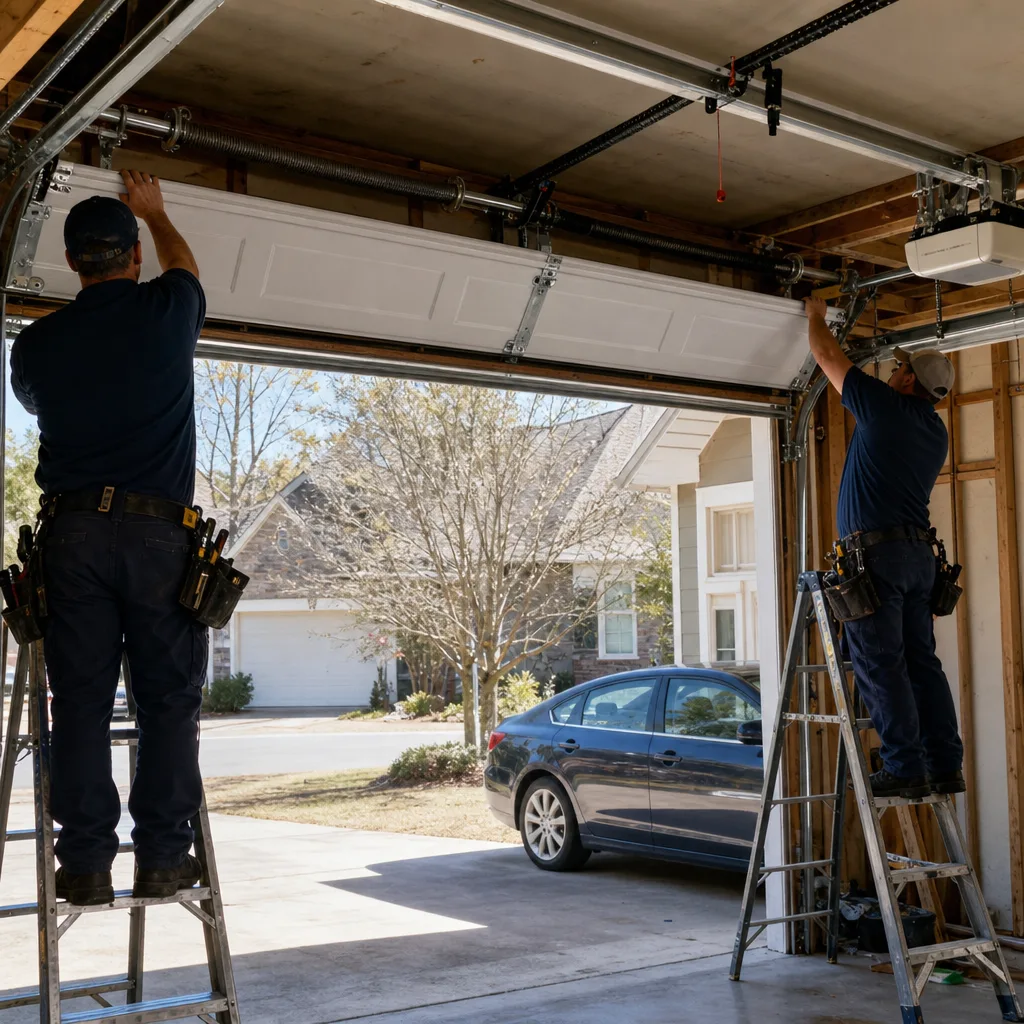
Any garage door quote worth the paper it’s on starts with someone looking at the actual door. Not the door’s warranty card, not its model number, not the photo you texted over. The actual door.
Here’s what a real pre-quote inspection covers, and why each step changes the number:
- Panel condition assessment – every panel, both sides, checked for rust, delamination, impact damage, and track wear. A door with one dented panel is a section replacement. A door with rust at the bottom rail on three panels is a full replacement. These look identical from across the driveway.
- Spring wire diameter measurement – the technician measures the spring coil thickness with a caliper. This tells whether the existing spring is speced correctly for the door’s weight, and whether it’s been replaced before. A door that’s run for years on the wrong spring will have damaged the opener and the hinges, not just the spring.
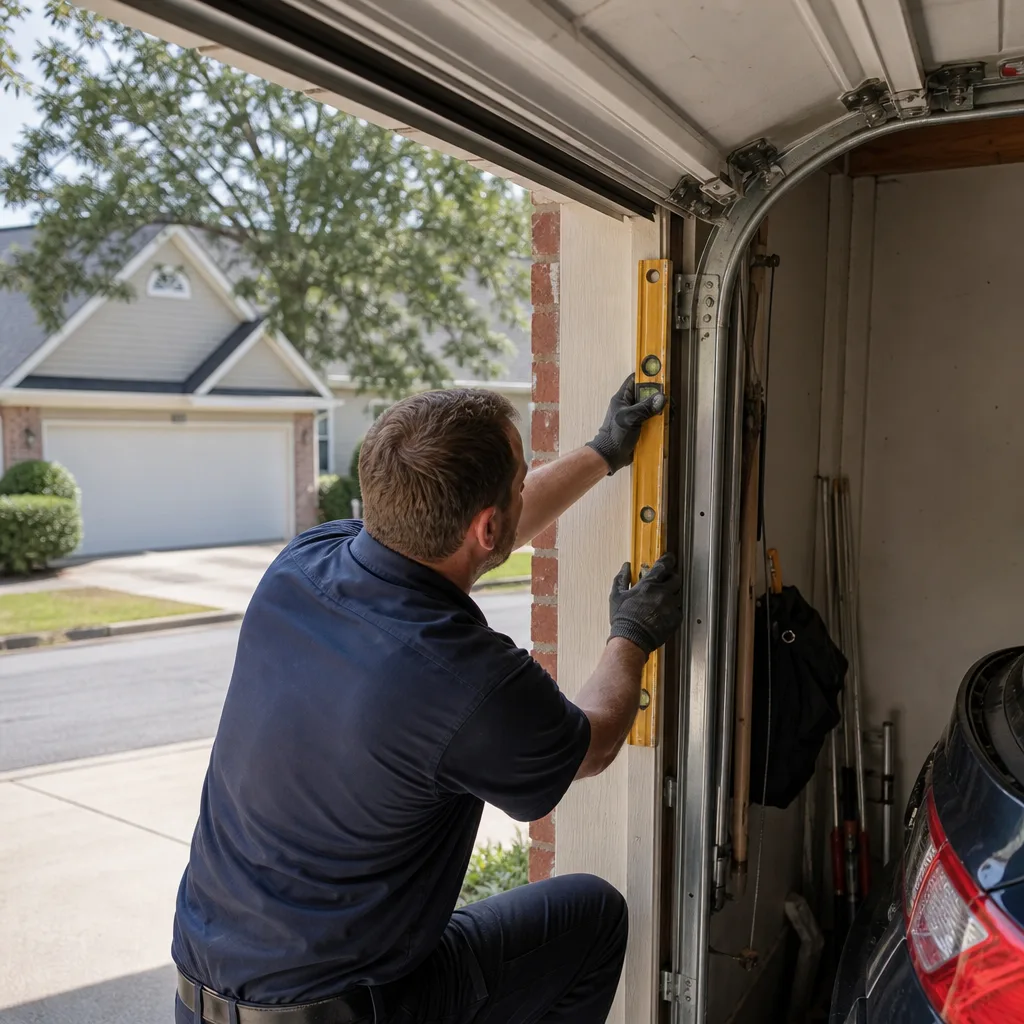
- Track alignment check – vertical and horizontal track measured for plumb and level. A door installed on racked track wears rollers unevenly and fails early, and a new door hung on old, racked track inherits those problems.
- Opener condition test – run the opener through a full cycle, listen for strain, check the force settings, and verify the safety reversal mechanism works. Georgia law requires the safety reversal to function, and a lot of older openers in Douglasville don’t pass the test.
- Photo documentation – every finding gets photographed. The rust, the spring measurement, the track misalignment. These photos go into the written quote so you’re not taking a contractor’s word for a condition you can’t see.
Most Douglasville contractors do a version of steps one through four. Almost none do step five. The absence of photo documentation from a quote is itself cost information: it means the quote is based on an inspection you can’t verify, and the contractor knows that. We built our entire operation on fixing that gap in 2015, and every job still includes the photo record. For what a complete repair process looks like, start with Garage Door Repair in Douglasville.
Reading Your Warranty Clause: Labor Coverage vs. Parts Coverage
Most garage door manufacturers warrant their parts for life. The spring, the hinges, the panel, the track. Lifetime parts. That language sells doors and it’s printed on every brochure, and it means almost nothing when the spring breaks at year four because the labor warranty expired at year one.
Here’s the standard structure, and it’s the structure across Clopay, Amarr, and the other major brands:
- Parts warranty: lifetime on the door sections and hardware delivered with the door. This covers the physical panel and the metal components.
- Spring warranty: typically 5 to 10 years, prorated after a set period. Read this one carefully. A 10-year spring warranty might pay out 20% of the spring cost in year seven.
- Labor warranty: 1 year, standard across the industry. After the first year, the homeowner pays for the labor to remove and install every warrantied part.
The labor expiration timing is not accidental. Mechanical failures cluster in years 7 to 10, right when the labor coverage has been gone for six to nine years. The parts show up free. The three hours of labor to install them cost you $255 to $405. The warranty that felt comprehensive at purchase has quietly become a parts discount program.
This is why the installation matters more than the door. A door installed with the spring tension slightly off will deliver a spring failure right in that window. A door installed with the track dead plumb and the spring balanced to the tenth of a turn will often run past the statistical failure point. When you read a warranty, read the labor coverage line first. Then ask the installer what their own workmanship warranty covers, separate from the manufacturer’s. Ours runs 365 days, through the Done Right Promise: if it’s not right, we make it right. That’s not a parts warranty. It’s a workmanship commitment in writing.
Common Mistakes to Avoid
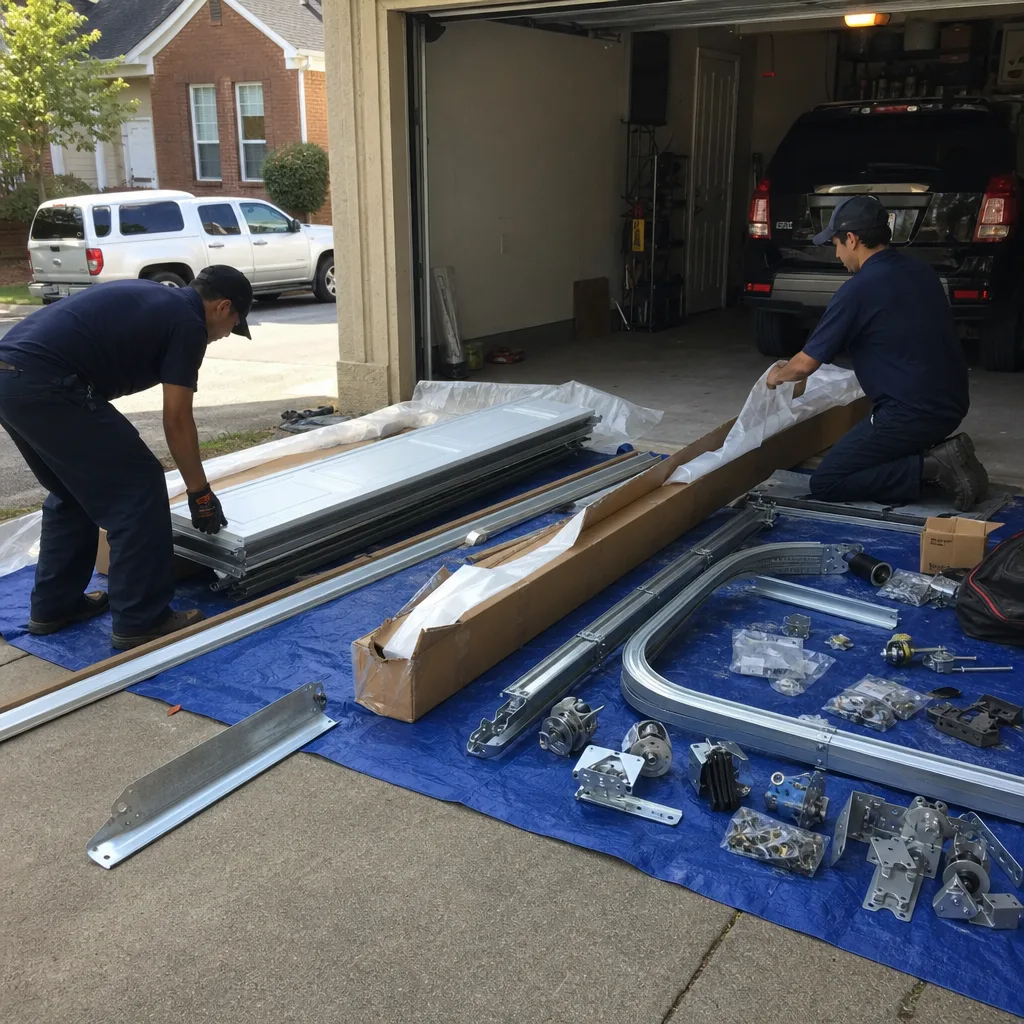
- Accepting a one-line quote. “Door replacement: $2,400” tells you nothing. If the quote doesn’t separate panel, spring, opener, and labor, it’s not a quote. It’s a number pulled from thin air.
- Replacing only the broken spring. Torsion springs work in pairs. Replacing one on a Douglasville 16×7 door saves $80 to $120 up front and costs you the labor again in half the time when the old spring lets go.
- Ignoring the section replacement color-match problem. A new panel on a five-year-old south-facing door will show. If your contractor doesn’t raise it, raise it yourself before you commit.
- Skipping the insulation upgrade on an attached garage. The $250 panel delta on a double-layer door is the cheapest durability and comfort improvement in the whole quote. You’ll feel it the first August afternoon.
- Not asking about disposal. Old door haul-away runs $50 to $75 in Douglasville and it’s the most common surprise line item on an otherwise clean quote. Ask before you sign.
- Paying for a quote that doesn’t include photos. If the technician can’t show you the failed component, the rust line, or the spring measurement, you’re taking their word for it. In an age where every phone has a camera, there’s no excuse for a photo-less inspection.
- Choosing the opener by price alone. A chain-drive unit on a bedroom-adjacent garage will wake someone up every single morning. The $100 to $150 belt-drive premium is the best noise reduction purchase in the garage.
When to Call a Professional
Some garage door work is genuinely doable as a homeowner job: lubricating rollers, tightening hinge bolts, replacing a wall control unit. Most of it isn’t. The spring system, whether torsion or extension, is under enough tension to cause serious injury, and the door itself is a 150 to 450 lb panel that can crush when it’s released incorrectly. If the problem involves springs, cables, or a door that’s off its track, leave it alone. If the opener’s safety reversal doesn’t trigger when you block the beam, that’s a legal and safety issue, not a handyman project. Servo Garage Doors Douglasville handles all of this, with a written price and scope before any work starts, and a documented photo record when we leave. Call (470) 243-8314 for a free estimate and a quote you can actually read.
Frequently Asked Questions
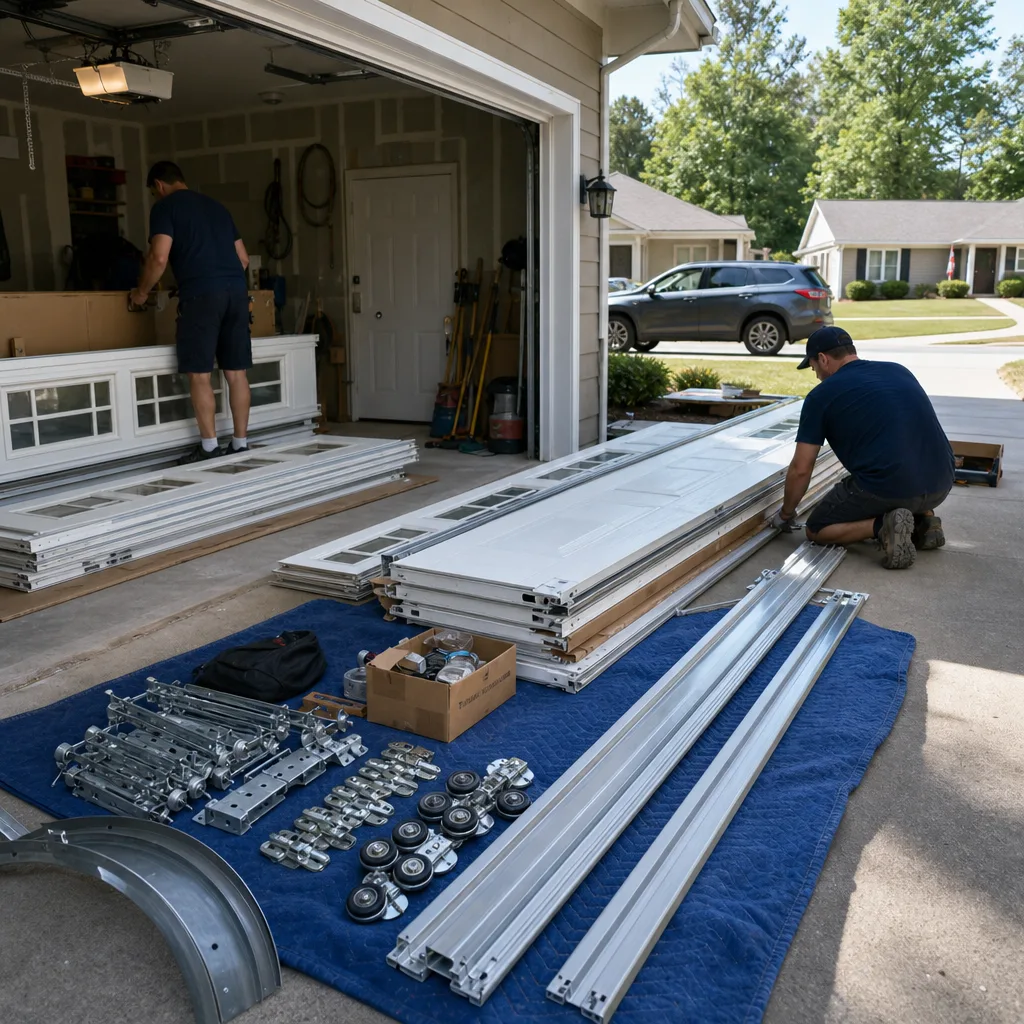
A full garage door replacement in Douglasville runs $1,100 to $3,800 in 2026, with the range driven primarily by panel material and insulation class. A stock double-layer steel 16×7 door on an existing track with a torsion spring system typically lands around $1,500 to $2,200 all-in. Every quote should break out panel, spring, opener, and labor as separate lines so you can compare one quote to another. Call (470) 243-8314 for a written quote with those numbers on it.
Yes, a single panel replacement in Douglasville runs $300 to $700 installed, and it’s viable when the door is under five years old and hasn’t faded significantly. The catch is color match: a new panel on a five-year-old south-facing door will be visibly different. If your door is over ten years old or the damage is on a sun-facing panel, the extra $1,000 to $2,500 for a full replacement often makes more sense than living with a visible patch.
Torsion spring replacement runs $180 to $340 for a standard pair on a 16×7 door in Douglasville. That includes both springs, which must be replaced as a matched set. A quote under $150 likely covers only the broken spring, which is a false economy: the remaining old spring will fail soon after and you’ll pay for labor twice.
Not if you’re working with a company that quotes work scope, not job price. The price changes when the original quote was built without a real inspection and the contractor discovers the springs are wrong, the track is racked, or the opener won’t pass its safety reversal test. If your quote arrived before anyone touched the door, expect it to move. Our written price is based on a photographed inspection and the number doesn’t move after the work starts.
For common Douglasville jobs, yes. Our trucks carry standard torsion springs in the common wire diameters, nylon and steel rollers, hinges, brackets, and opener replacement units. Custom-ordered door panels or specialty colors require an order, which we handle at the quote stage with a lead time included in the written scope.
Disposal. Old door haul-away runs $50 to $75 and it’s the line item most often omitted from an initial quote. The second is a spring replacement quoted as one spring only. The third is insulation: a heavier panel requires a spring retension or replacement that some quotes skip. A complete quote includes all three. Call (470) 243-8314 and you’ll get a quote structured that way from the first pass.
The Bottom Line
Douglasville’s garage door costs in 2026 are knowable. The data is in this guide, in the line items, in the ranges. What separates a good experience from a bad one isn’t the door brand or the opener model. It’s whether the contractor wrote the scope down before they quoted it, photographed what they found before they priced the fix, and stood behind the work once the truck left the driveway. The math never lies: a quote with five line items, a photo record, and a written warranty beats a one-line job price every time. Do the reading, ask for the paper, and you’ll pay exactly what the job is worth.
Written by Marcus Deller, Owner at Servo Garage Doors Douglasville, serving Douglasville since 2015.