
Last updated September 20, 2026
Full 25-point door and opener safety check with every visit - springs, cables, rollers, tracks, and your LiftMaster or Chamberlain opener included
You get a price before we start. It does not change when the truck arrives.
 Before
 After
After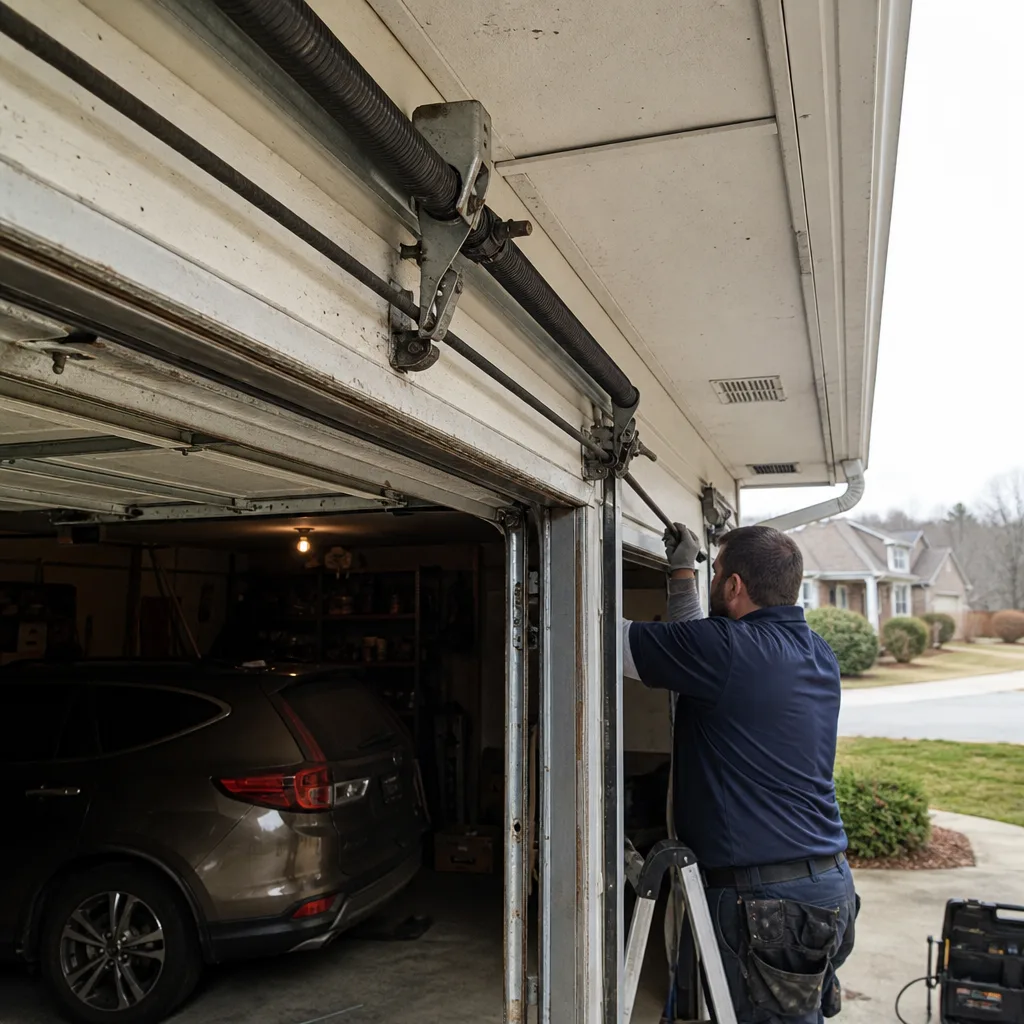 Before
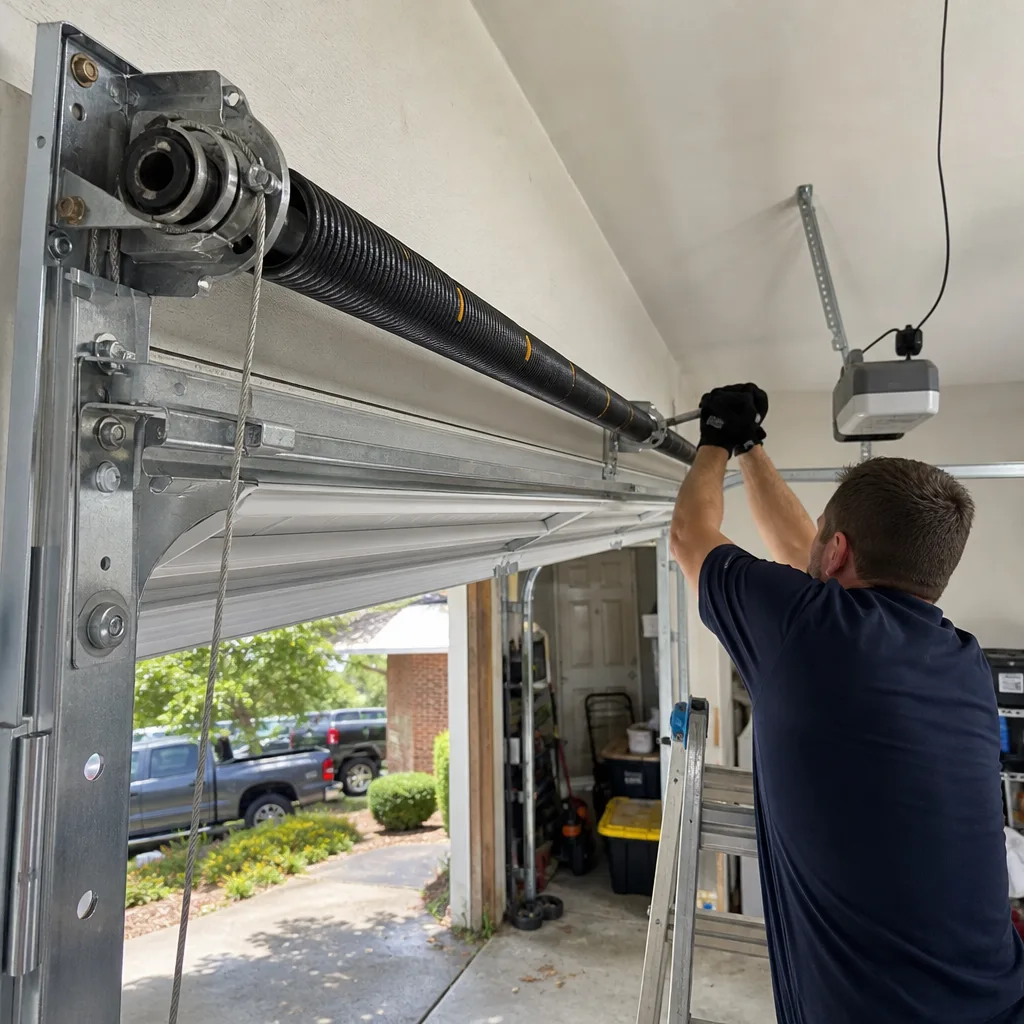 After
After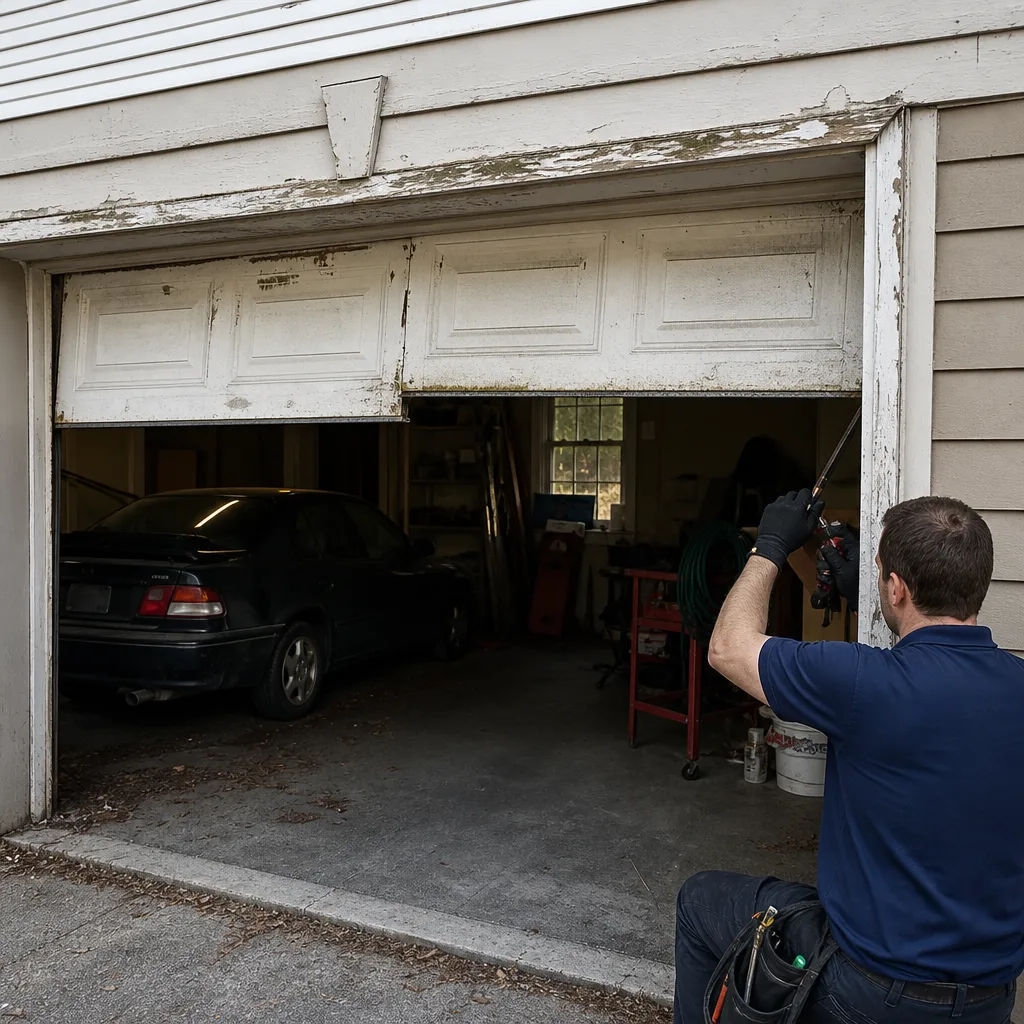 Before
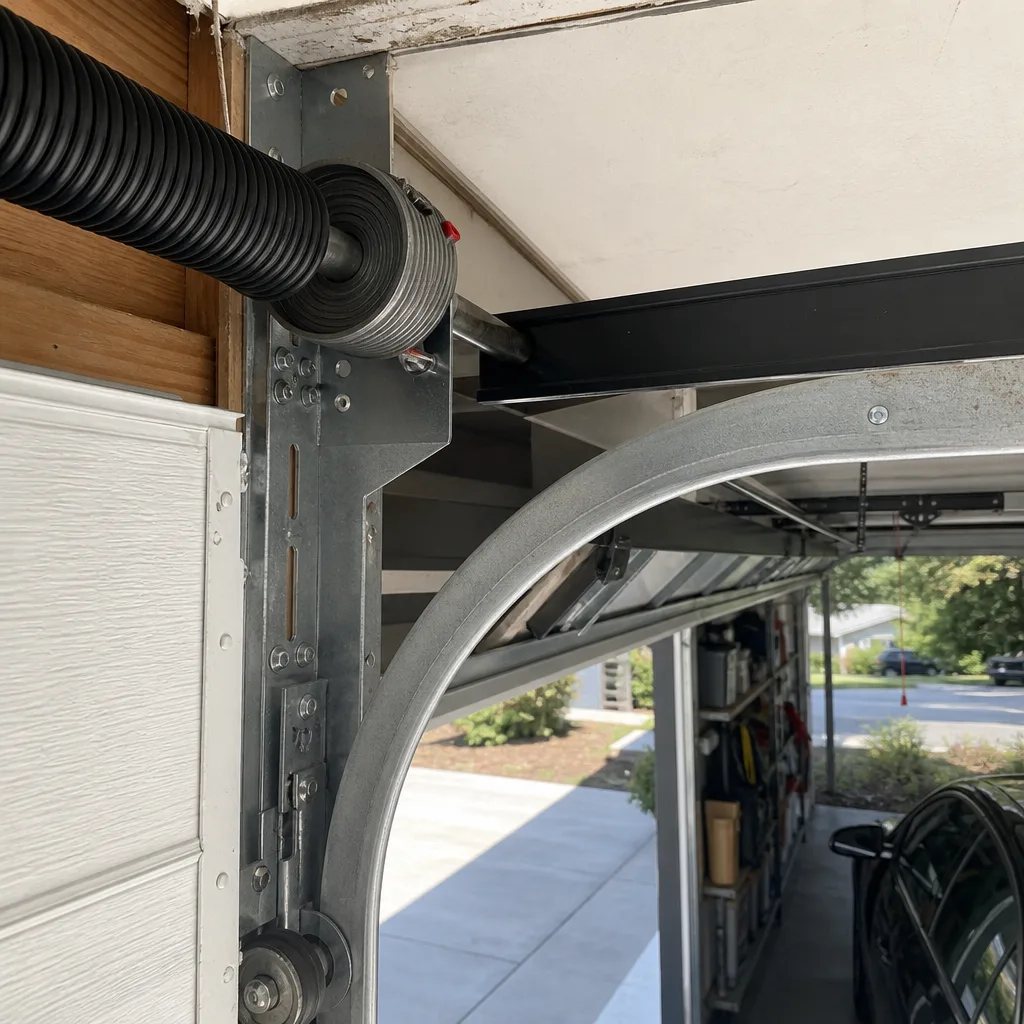 After
AfterSeasonal Garage Door Care for Douglasville: Year-Round Homeowner’s Guide
The garage door failure most common in Douglasville in January isn’t cold-related. It’s the cumulative effect of August humidity that warped the bottom seal and wasn’t caught before temperatures dropped. A garage door in Douglasville doesn’t face four distinct seasons the way the calendar suggests. It faces two stress periods, summer humidity peak and winter freeze-thaw cycling, and two maintenance windows that bracket them. This guide is organized around that reality, because a seasonal checklist built for Minnesota or Arizona doesn’t match what actually happens to your door on Chapel Hill Road or Anneewakee Trail. For more guides & resources on local home maintenance, see our blog.
We’ve maintained and repaired garage doors across Douglasville since 2015, and the pattern is consistent: homeowners who do two focused inspections a year, timed to local climate inflection points, avoid most of the repairs we’re called for on weekends. By the end of this guide you’ll know what to check in late September and late March, why your torsion spring tension drifts with the Georgia temperature swings, and how to spot condensation damage that never shows on the exterior of the panel. For a deeper look at repair expenses, see our Garage Door Cost Breakdown: The Douglasville Homeowner’s Reference for 2026.
Quick Answer
Seasonal garage door maintenance in Douglasville comes down to two inspection windows: late September, before the first freeze-thaw cycles, and late March, before summer humidity peaks. During those windows, check the bottom seal compression, lubricate moving parts in the correct order, test the auto-reverse sensors, and look for paint checking on steel panels from UV exposure. Expect to spend $15 to $40 on lubricant and seal materials annually, and budget $180 to $340 for a service call if a technician needs to recalibrate torsion spring tension or replace a humidity-compromised panel section.
Table of Contents
- Why Douglasville Has Two Seasons for Garage Doors, Not Four
- The Late September Inspection: Pre-Winter Sequence
- The Late March Inspection: Pre-Humidity Sequence
- Why Torsion Spring Tension Drifts in Douglasville
- Condensation Damage Inside Insulated Panels
- Lubrication Order: Why Sequence Matters
- Common Mistakes to Avoid
- When to Call a Professional
- Frequently Asked Questions
BeforeAfterWhy Douglasville Has Two Seasons for Garage Doors, Not Four
Douglasville sits in the humid subtropical band where summer dew points regularly exceed 70°F and winter nights drop below freezing often enough to matter. For a garage door, that combination creates two distinct stress periods. From June through early September, sustained heat and humidity compress the rubber bottom seal, soften the polystyrene core in insulated panels, and cycle the opener’s logic board through repeated expansion and contraction. From late December through February, overnight freezes followed by daytime thaws introduce moisture into gaps the compressed seal left open, and metal parts contract enough to shift torsion spring tension measurably.
What looks like a “cold weather problem” in January usually started in August. We’ve pulled bottom seals in Douglasville garages in December that show compression set, the permanent flattening of rubber after sustained heat exposure, so clear you can read the imprint of the threshold in the material. The door wasn’t damaged by cold. It was compromised by heat and simply failed when cold arrived. That’s why a two-window maintenance schedule, late September and late March, matches the climate here better than a four-season checklist with quarterly tasks. Spring and fall as separate shoulder seasons don’t create the failure conditions. Summer humidity peak and winter freeze-thaw cycling do.
The Complete Guide to Garage Door in Douglasville follows that structure. Each inspection window addresses the conditions that built up in the preceding stress period and prepares for the one coming. If you’re starting seasonal care for the first time, start with whichever window is next on the calendar. For most Douglasville homeowners reading this in fall, that’s the late September sequence.
The Late September Inspection: Pre-Winter Sequence
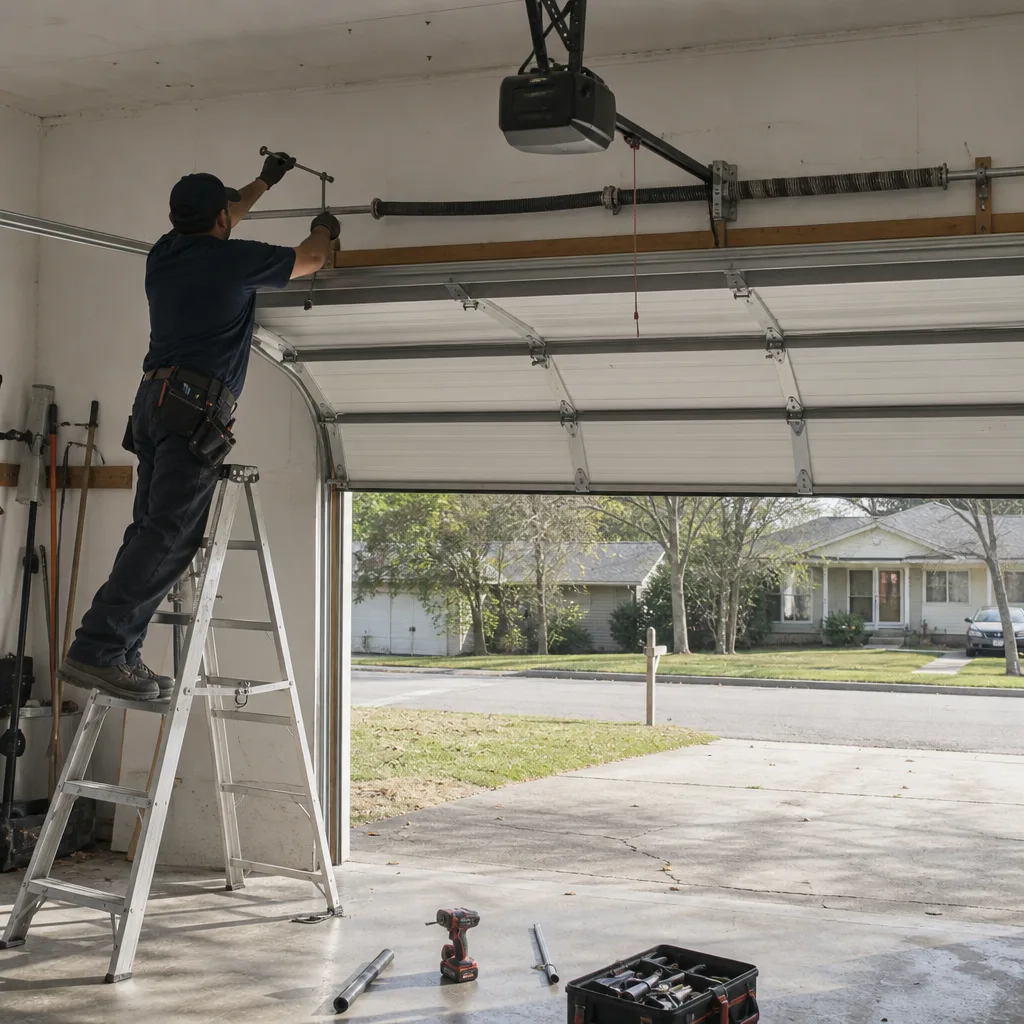
The late September window in Douglasville targets the damage summer left behind and prepares the door for freeze-thaw cycling. By late September, daytime highs drop below 85°F consistently, which means the bottom seal has stopped compressing under heat and any permanent compression set is now visible. This is the window to catch it before winter moisture exploits the gap.
- Test the bottom seal compression. Close the door and look at the seal from inside the garage at mid-morning light. If you can see daylight through any gap between the seal and the threshold, the seal has compressed past its useful range. Douglasville’s July heat regularly flattens seals to half their original height in three summers.
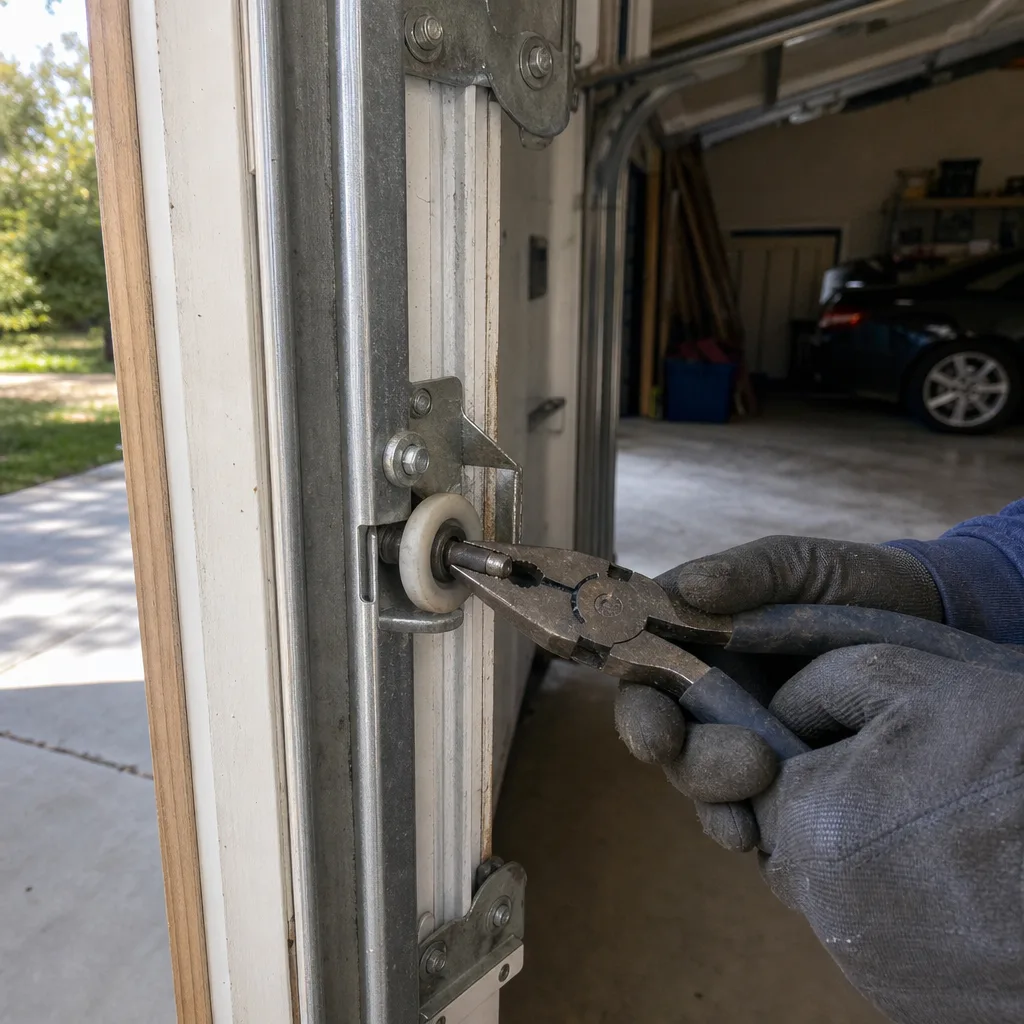
- Lubricate in sequence (rollers first, then hinges, then springs, then opener rail). The order matters because roller lubrication pulls the door upward slightly as resistance drops, which changes the apparent spring balance. Lubricating rollers first lets the door settle into its natural travel before you evaluate anything else.
- Check steel panel paint for checking. Douglasville’s UV index runs high from May through September. Galvanized steel panels with factory paint will eventually show hairline cracks in the paint layer, especially on south-facing doors. These hairline cracks aren’t cosmetic only. They expose the base coat to moisture, leading to rust under the paint.
- Test the auto-reverse sensors. They’re the two small boxes mounted six inches off the floor on either side of the door opening. Place a paper roll in the door’s path and close it. The door should reverse within two seconds. Photoelectric eyes degrade gradually, not suddenly, and a failed sensor means a door that won’t reverse on a child or pet.
- Write down the door’s balance behavior. Disconnect the opener (there’s a red release handle), then move the door by hand. It should stay put at chest height. If it drifts down, the spring has lost tension. If it drifts up, tension is too high. Don’t adjust anything. Just record what you observed. What a homeowner can observe without risk is drift direction and speed. Torsion springs under tension store enough energy to cause serious injury, and adjustment is a professional task, not a DIY one.
Most of this inspection takes under twenty minutes. The materials cost is a can of white lithium grease for hinges and rollers, a can of silicone spray for the opener rail, and possibly a new bottom seal if the old one shows the flat profile of compression set. Douglasville hardware stores carry universal seals in the $15 to $30 range, though we often install doors from Amarr, Clopay, and Wayne Dalton where the seal is panel-specific and worth matching exactly.
The Late March Inspection: Pre-Humidity Sequence
The late March window in Douglasville catches freeze-thaw damage before humidity begins. By late March, the overnight freeze threat is mostly gone, but the damage from December through February is visible. This is also the window to prepare for the specific failures Georgia summers cause. Our Servo Garage Doors Douglasville home team has documented thousands of these inspections, and the same three findings repeat year after year.
- Inspect the bottom seal for frost-heave damage. Douglasville soil expands and contracts through freeze-thaw cycles. When the concrete slab shifts slightly, a seal that fit tight in October can gap in February. Look for sections of the seal that are split, peeling away from the retainer, or shorter than the door edge by more than a quarter inch.
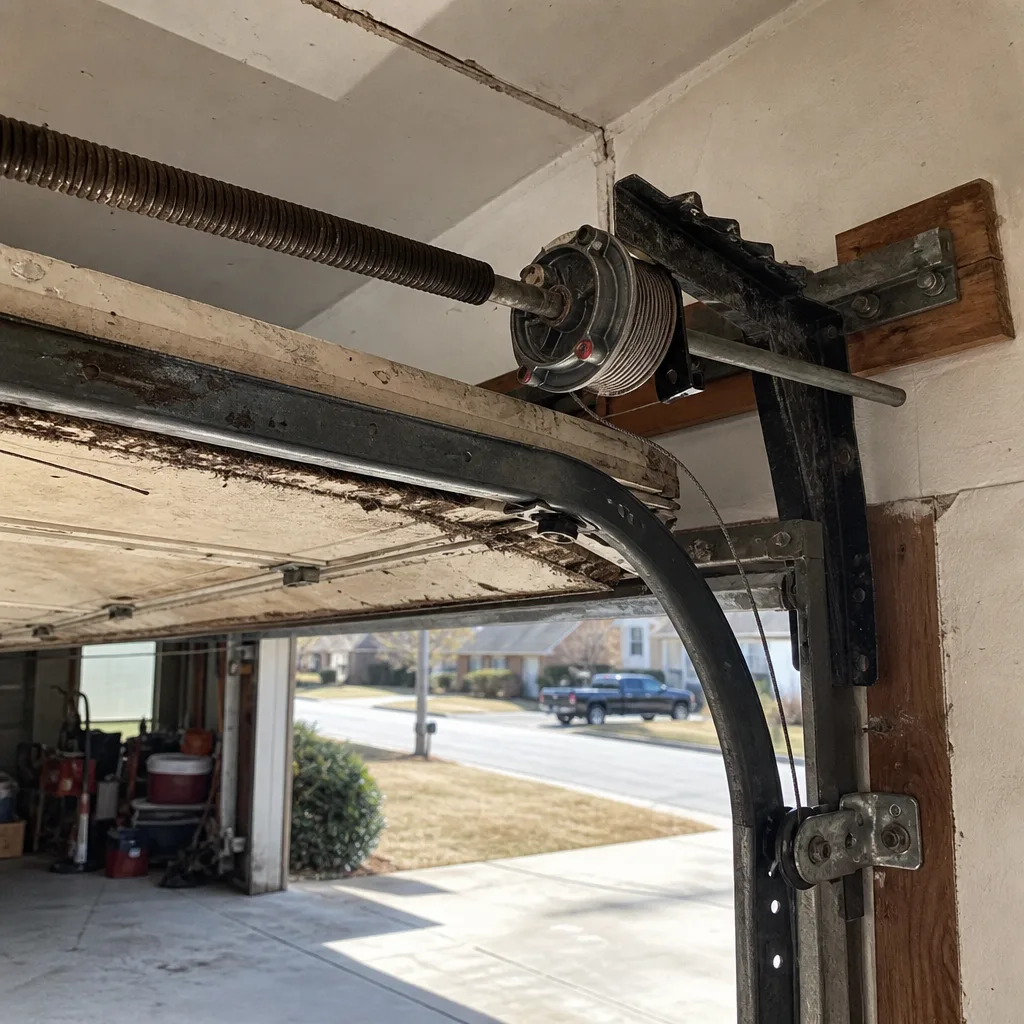
- Check the counterbalance cables for fraying. The two steel cables running along each side of the door pick up moisture in winter and throw it off in summer. Where the cable passes over the drum at the top, repeated wet-dry cycles create rust bloom that turns into broken strands. Fraying anywhere on the cable means replacement is due, and it’s a job for a technician because the cables are under full spring tension.
- Lubricate the torsion spring coil surface. The coil shrinks in cold and expands in heat. Dry coil surfaces oscillate against themselves as tension shifts and create friction points. A light coat of lithium grease across the coils before the summer heat surge prevents that.
- Test the logic board for humidity positioning. The logic board lives inside the opener housing, but Douglasville’s summer humidity finds it anyway. Look for any dust accumulation around the board vents, because dust plus humidity equals a conductive paste over the solder points. Logic boards on LiftMaster and Chamberlain openers are the most humidity-tolerant, but even they benefit from moving garage stored chemicals away from overhead. Spilled lawn chemicals are a primary logic board killer here.
- Wipe down the photoelectric sensors. They fog with early spring pollen and condensation. A dry microfiber cloth across both lenses is enough.
The late March sequence should also include a written record of anything you noticed in the September window that hasn’t worsened. Drift that was just a suggestion in September is often direct evidence by March. If the door drifts more than an inch in a three-second count, call for a professional balance evaluation. It’s less expensive than the spring failure that follows ignoring drift through two more months.
Why Torsion Spring Tension Drifts in Douglasville
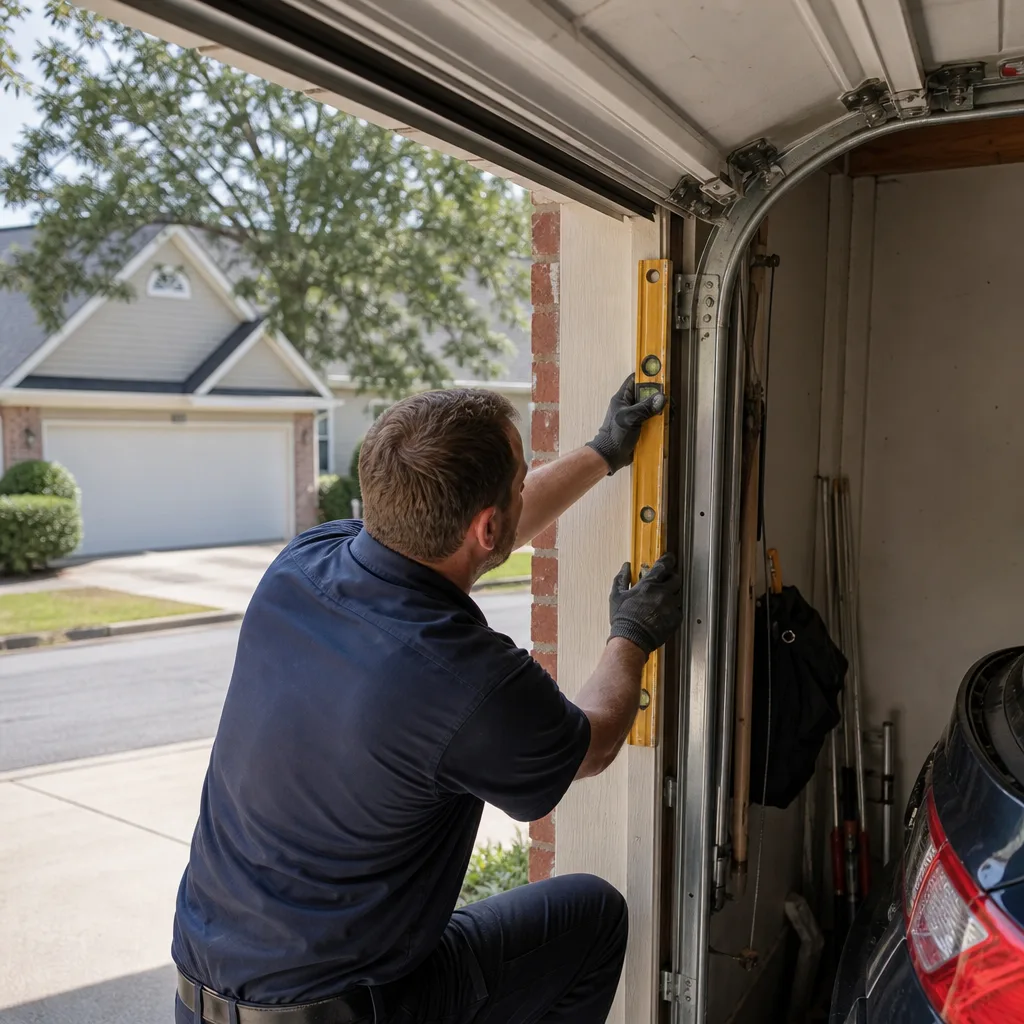
A torsion spring is a steel coil under rotational tension, wound tight on a shaft above the door. The spring stores energy that helps lift the door and counters the door’s weight. In Douglasville’s winter, overnight temperatures drop into the low 20s on the coldest nights. In August, daytime highs reach the mid-90s. That’s a 70-degree span within a single year, and metal expands and contracts measurably within that span.
What a homeowner can observe, without adjusting anything, is drift rate. Disconnect the opener and let the door travel by hand. A spring holding proper tension keeps the door where you put it. It drifts down if tension is too low, drifts up if too high. Temperature swings shift the coil dimensions enough to move that drift slightly from week to week. That’s normal. What’s not normal is drift that changes quickly from one week to the next, or drift that exceeds an inch in two seconds. That indicates the spring has lost permanent tension through coil fatigue, not temperature movement.
The measurement we use in Douglasville service calls is inside diameter and wire gauge. A spring that measured 0.225-inch wire in a new installation may measure 0.220-inch after four years of Georgia temperature cycles. That difference sounds small but translates to pounds of lifting force lost. When the spring has lost enough force that the opener motor starts working against the door instead of with it, the opener’s gear drive strips. That’s the most expensive outcome of a spring issue, and it’s preventable with a balance check once a year.
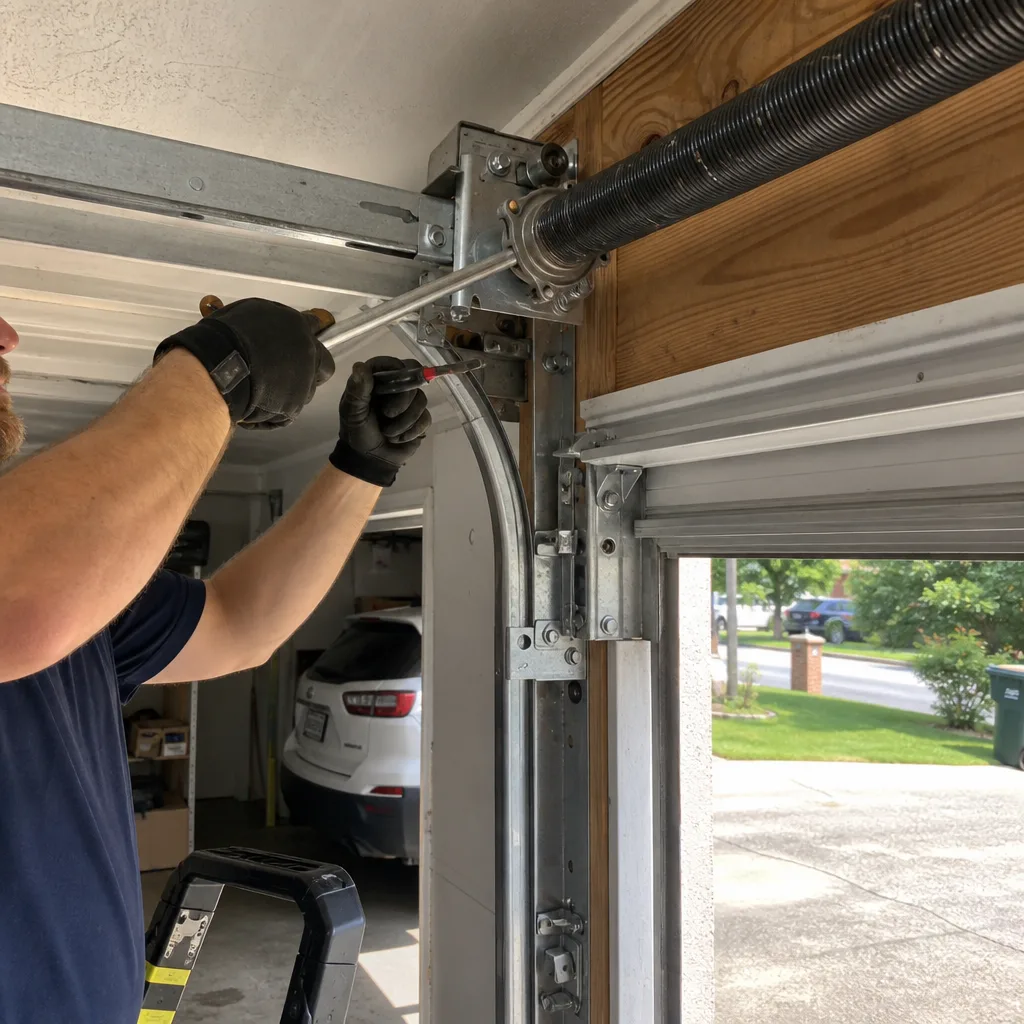
What homeowners should not do is wind or unwind a torsion spring. The spring stores enough energy under tension to snap suddenly, and when it does it can throw pieces across a garage at speeds that break bone. Even the specialist rods used for winding require positioning that no video explains well enough to justify the risk. The observation is safe. The adjustment is not. See our DIY vs Professional Garage Door: The Douglasville Homeowner’s Decision Guide for more on when to call a technician.
Condensation Damage Inside Insulated Panels
Insulated garage door panels are steel skins bonded over a core, usually polystyrene or polyurethane foam. The exterior paint comes from the factory. The core is not visible from outside. But Douglasville’s humidity cycle drives moisture into the core through micro-fractures in the panel edge sealant, and the result is a panel that looks fine outside while it’s rotting from within.
The first sign is a change in feel. Knock on the panel with a knuckle. A dry core sounds like a knock on a solid wood door, a dull thud with no ring. A condensation-compromised core sounds like a knock on an empty rain barrel, hollow with an echo. The second sign is weight. An insulated panel that has absorbed water gains several pounds, and the door’s balance shifts slightly, which you can feel when you open it by hand. The third sign is sag. A waterlogged core loses structural rigidity, and the panel starts to bow in the middle when the door is rising.
The exterior of a water-damaged panel often shows nothing at all. The condensation forms inside the core where warm, humid garage air meets the cooler steel skin, and the moisture stays trapped there. In Douglasville’s summer cycle, the inside of the panel is warmer than the outside at night when the steel skin cools, and that’s when condensation forms. It happens in August as much as January, and every cycle adds more water.
If a panel shows hollow sound on the knock test and the door drifts more than it did last season, have a professional garage door repair in Douglasville inspection performed. Replacing one panel section can restore the door, but only if the damage is caught before the core fully delaminates from the steel skin. If the panel is bowing visibly, the door usually needs full replacement.
Lubrication Order: Why Sequence Matters
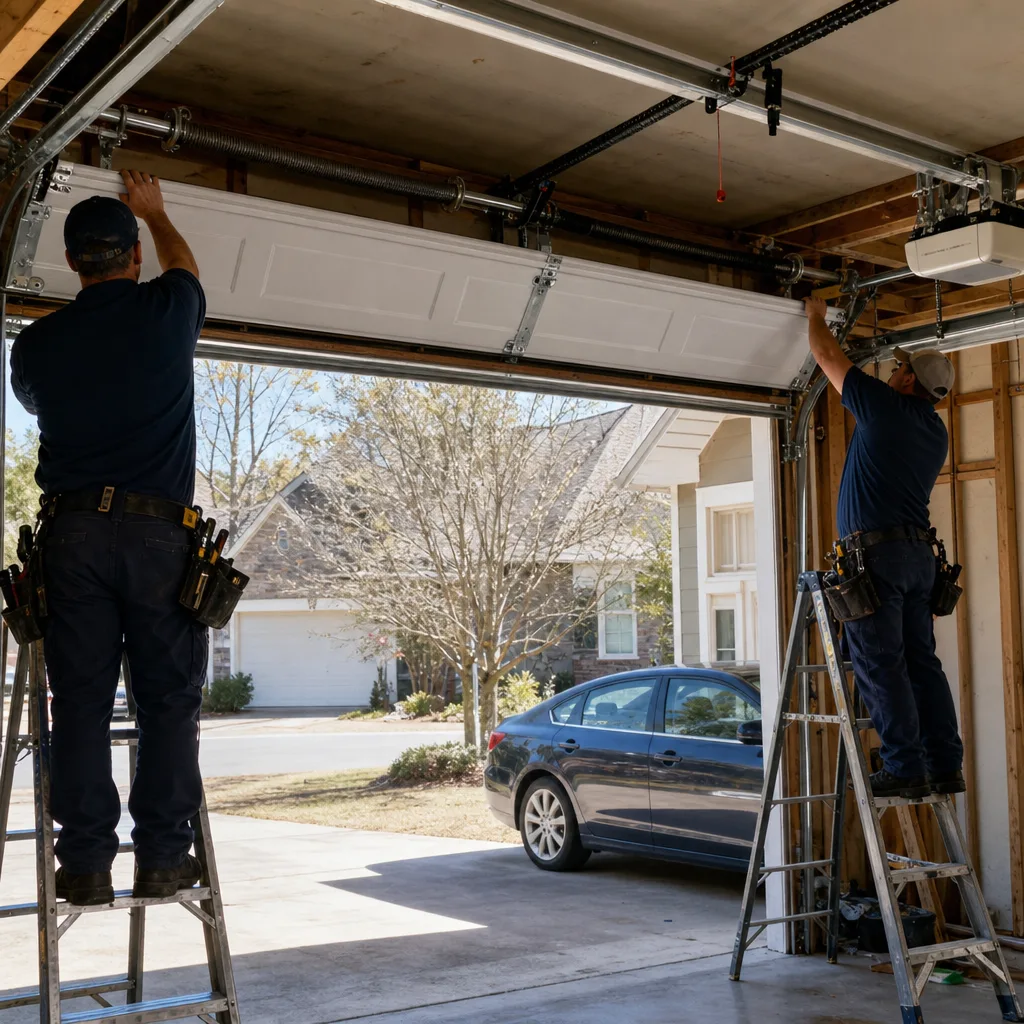
There’s a sequence to lubricating a garage door that matters more than most homeowners realize. The purpose of lubrication is to reduce friction at the rollers, hinges, spring coils, and opener rail. But each of those components affects the door’s balance differently, and if you lubricate in the wrong order, you lose the ability to read the door’s true balance state afterward.
The correct sequence for a Douglasville seasonal check: rollers first, then hinges, then torsion spring coils, then opener rail. Rollers matter first because they carry the majority of frictional load. When rollers are dry, the door drags slightly, and a dragging door masks low spring tension. Lubricating the rollers first lets the door settle into its natural travel, which is what you need before evaluating spring balance.
Hinges come second because they work in pairs with the rollers. A dry hinge binds slightly each time the panel folds, adding drag. Lubricate the hinge points after the rollers and the door’s travel is fully freed. Only then do you move to the spring coils. The spring’s job is to counter the door’s weight, and it can only be evaluated when the door has no frictional drag helping or hurting it. If you lubricate the spring before the rollers, you’re lubricating a system that’s still fighting dry roller friction, and you’ll get a false read on balance if you test it that day.
The opener rail comes last because it’s on a separate system. The rail drives a trolley carriage that pushes the door, and the rail’s friction doesn’t affect door balance at all. It affects opener motor strain. Lubricate it after the door is settled so the opener drives a free-moving door instead of a dragging one.
Use white lithium grease on metal-to-metal points (hinges, spring coils) and silicone spray on the opener rail. Do not use WD-40. It’s a penetrant, not a lubricant. It cleans rust but does not leave a durable film, and in Douglasville’s humidity it rinses away in weeks. The correct product ranges from $8 to $15 at Douglasville hardware stores and lasts a full season.
Common Mistakes to Avoid
- Lubricating the spring before the rollers. This wastes product and produces a false balance reading. Rollers first, spring later, opener rail last.
- Ignoring bottom seal compression in September because “the door still works.” A compressed seal leaks conditioned air in summer and heat in winter. Douglasville’s August heat compresses the seal permanently; the failure shows up as a December draft if not caught.
- Treating paint checking on steel panels as cosmetic. The hairline cracks are the entry point for Douglasville’s summer humidity to reach the bare steel underneath. Rust that starts under the paint costs more than a panel repaint.
- Not testing auto-reverse sensors after a cold snap. Photoelectric sensors degrade in ways the human eye doesn’t catch. A sensor that fails in February doesn’t self-repair in March. Test with a paper roll every season.
- Using WD-40 instead of white lithium grease. WD-40 cleans but doesn’t lubricate. The film evaporates or washes off within weeks, leaving the metal drier than before you started.
- Assuming a dry interior panel means no water damage. Condensation damage forms inside the core. The exterior shows nothing until rust blooms through from behind or the panel starts to bow.
- Replacing a failed spring without inspecting the opener gear drive. When a spring loses tension, the opener motor compensated for the extra load. By the time the spring fails visibly, the opener’s gears may be scored and close to failure themselves.
When to Call a Professional
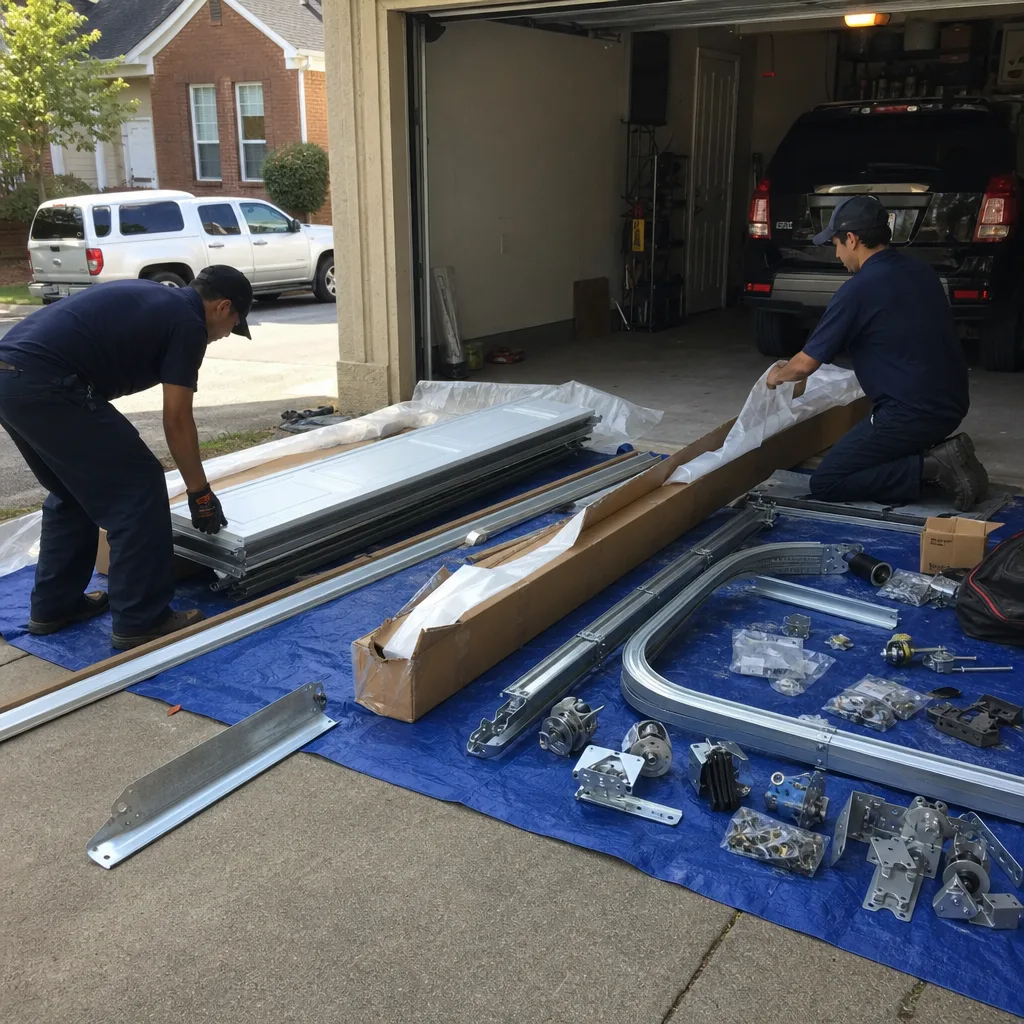
Call a professional when the door drifts more than an inch in two seconds on a hand-balance test, when the spring shows a visible gap or a separation in the coil, when auto-reverse sensors fail a test, when cables show fraying or rust bloom at the drum, or when a panel knocks hollow and the door feels heavier than it did last season. These are not adjustment tasks. They’re repair tasks that require tension release, spring recalibration, or panel replacement, all of which are hazardous for a homeowner to attempt. Servo Garage Doors Douglasville offers free estimates in Douglasville, including on seasonal balance checks and seal replacements, call (470) 243-8314.
Frequently Asked Questions
A homeowner who does the seasonal checks themselves spends about $15 to $40 per year on lubricant and possibly a bottom seal. A professional inspection with minor adjustments typically falls between $75 and $150 in Douglasville, depending on what’s found. If spring recalibration or panel replacement is needed, the range shifts to $180 to $340 for spring work and $250 to $600 per panel for insulated replacements. Servo Garage Doors Douglasville always quotes a flat written price before any work starts, so an inspection estimate is free and the repair quote is binding. Call (470) 243-8314 to schedule.
No. Torsion springs are under several hundred pounds of rotational tension, and the winding process involves steel rods positioned at specific points. A spring that lets go during adjustment throws those rods with enough force to break bone. The injury risk is not theoretical. We recommend a trained professional for any spring work, and in Douglasville the fee for a spring recalibration is less than a hospital copay. Schedule a free estimate by calling (470) 243-8314.
Knock on each panel with a knuckle. A dry insulated panel sounds like a solid wood door. A condensation-compromised panel sounds hollow, like an empty bucket. Also feel the door’s weight by disconnecting the opener and moving the door by hand. A waterlogged panel makes the door noticeably heavier than it was the previous season, and the door will drift down on a balance test. If you observe either sign, call (470) 243-8314 for a free inspection in Douglasville.
Bottom seal compression set from sustained summer heat. Douglasville’s July and August temperatures exceed 90°F for weeks at a time, and the rubber bottom seal permanently flattens under that heat plus the door’s own weight. By December, the seal has lost so much height that a visible gap lets conditioned air out and cold air in. It’s the single most common repair we perform on garage door installation in Douglasville homes, and it’s preventable with a September seal inspection.
Twice a year matches Douglasville’s climate best. Lubricate in late September after the summer heat has dried the existing film, and again in late March after the winter freeze-thaw cycles have washed it thin. The two-window schedule coincides with the times the lubrication film is most depleted. More often than that doesn’t extend component life meaningfully in this climate.
Yes. Most manufacturers, including LiftMaster, Chamberlain, Craftsman, and Raynor, require documented maintenance for warranty coverage on opener motors and spring assemblies. Keeping a simple log of your two seasonal inspections, including what you lubricated and what you observed, is usually sufficient for homeowner-performed maintenance. If a professional performs the work, the documented photo record that Servo provides in Douglasville is the documentation you can submit to the manufacturer.
The Bottom Line
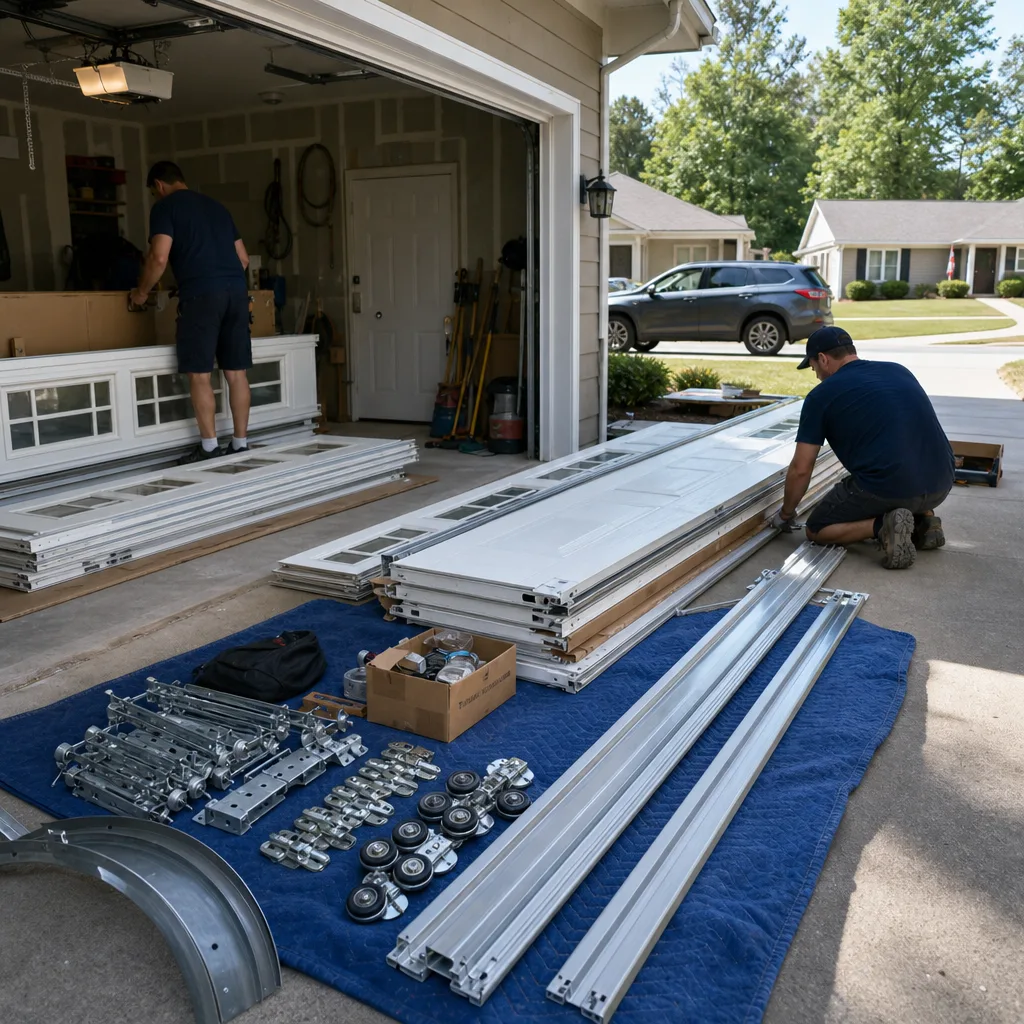
Douglasville garage doors fail predictably, and the failure patterns follow local climate stress periods, not the four seasons of the calendar. Summer humidity peak compresses bottom seals, cycles logic boards, and drives condensation into insulated panels. Winter freeze-thaw cycling exposes every gap summer left behind. Two inspection windows, late September and late March, address each stress period at its inflection point. The sequence of those inspections matters. Lubrication order matters. And the difference between observing a problem and attempting to fix it matters most of all. When you need professional repairs, garage door opener repair and installation in Douglasville is available from Servo at (470) 243-8314 with written upfront pricing on every job, no exceptions.
Written by Marcus Deller, Owner at Servo Garage Doors Douglasville, serving Douglasville since 2015.