
Last updated September 20, 2026
Full 25-point door and opener safety check with every visit - springs, cables, rollers, tracks, and your LiftMaster or Chamberlain opener included
You get a price before we start. It does not change when the truck arrives.
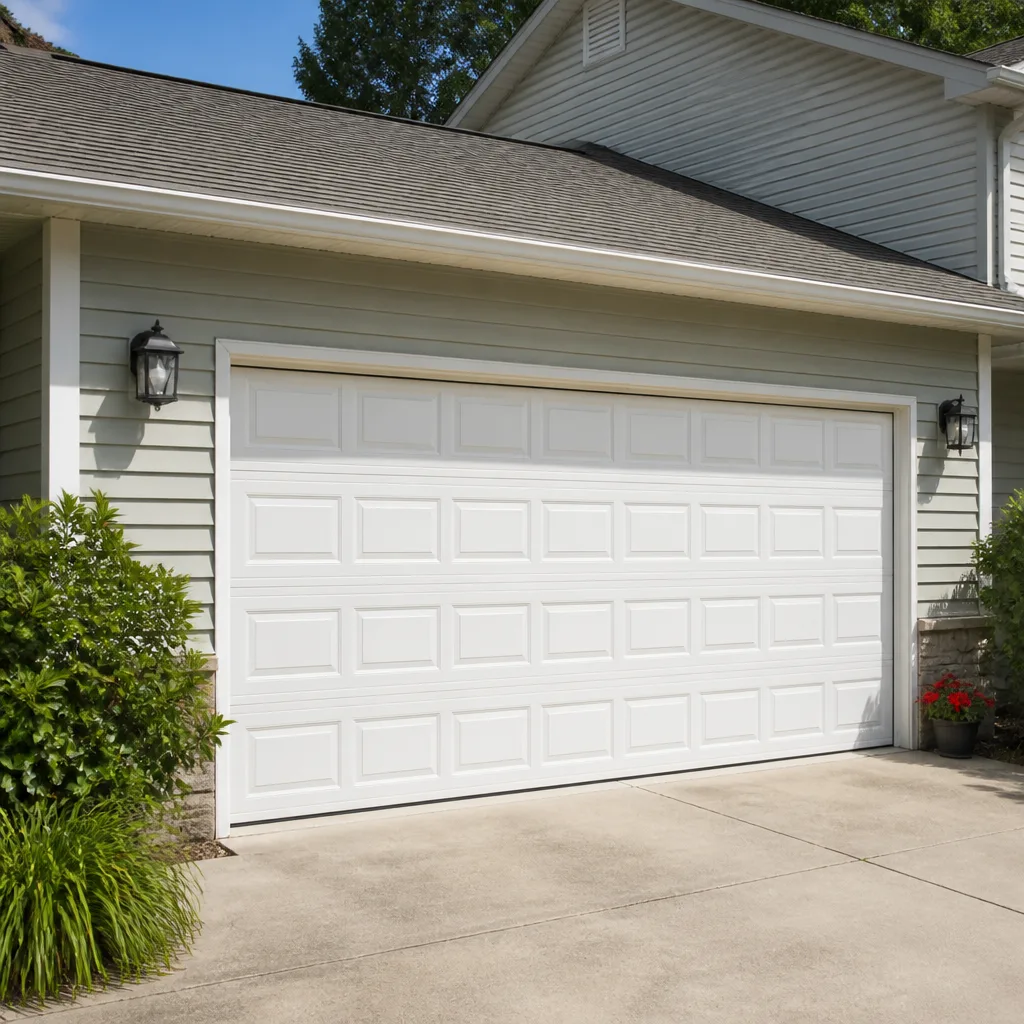
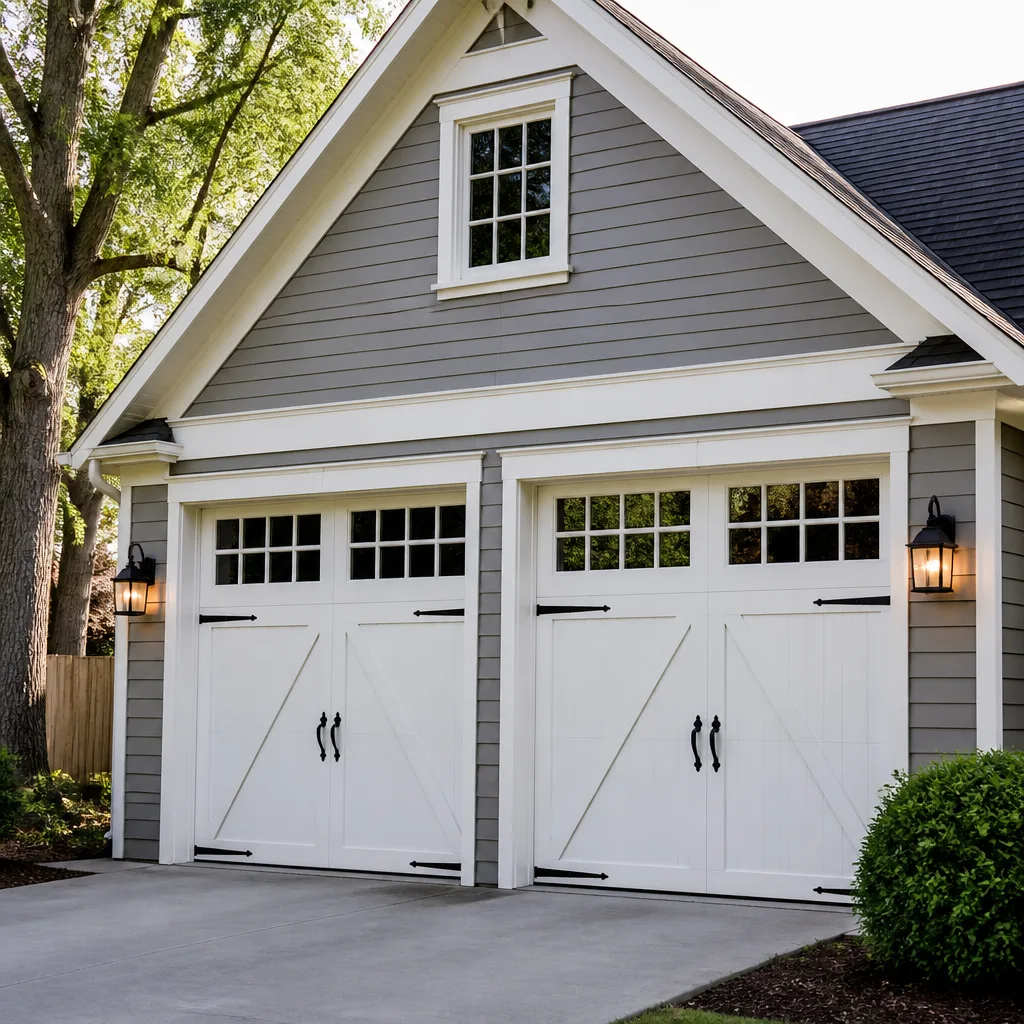
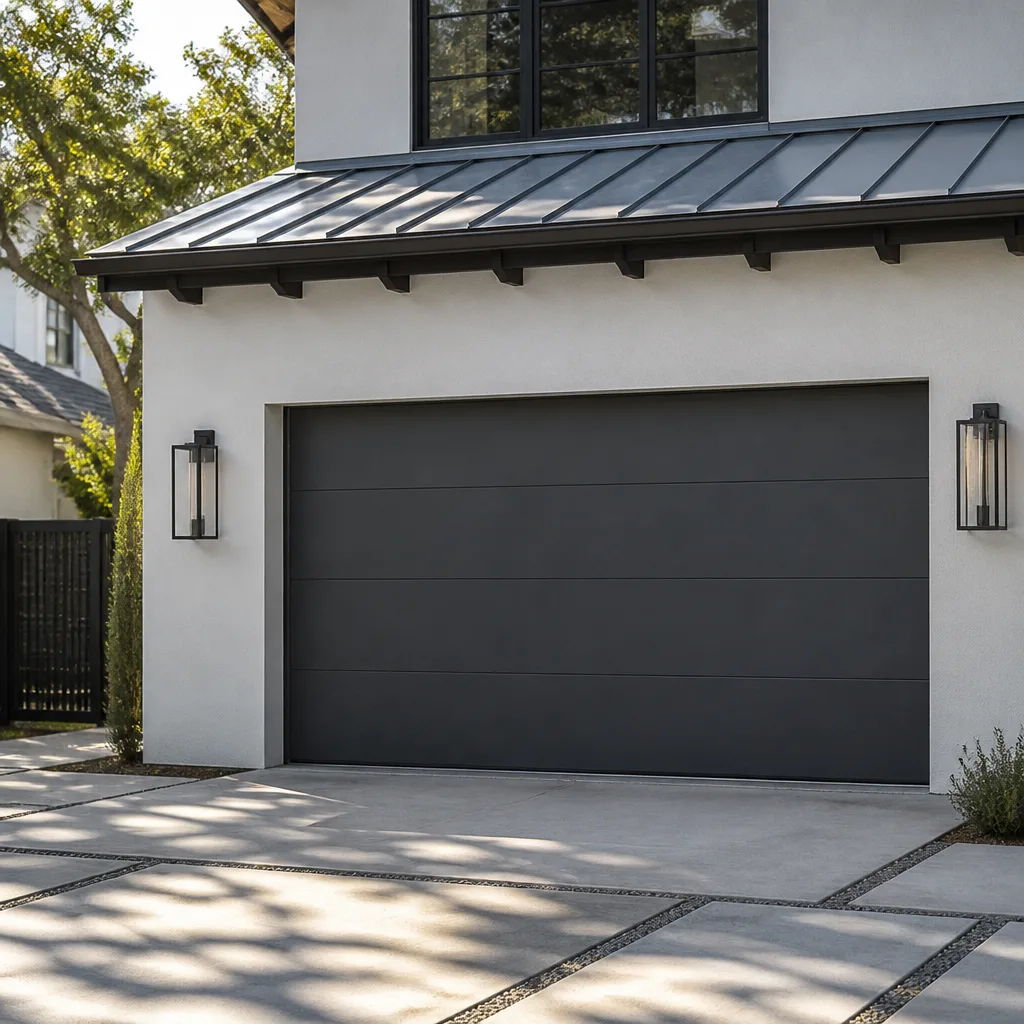
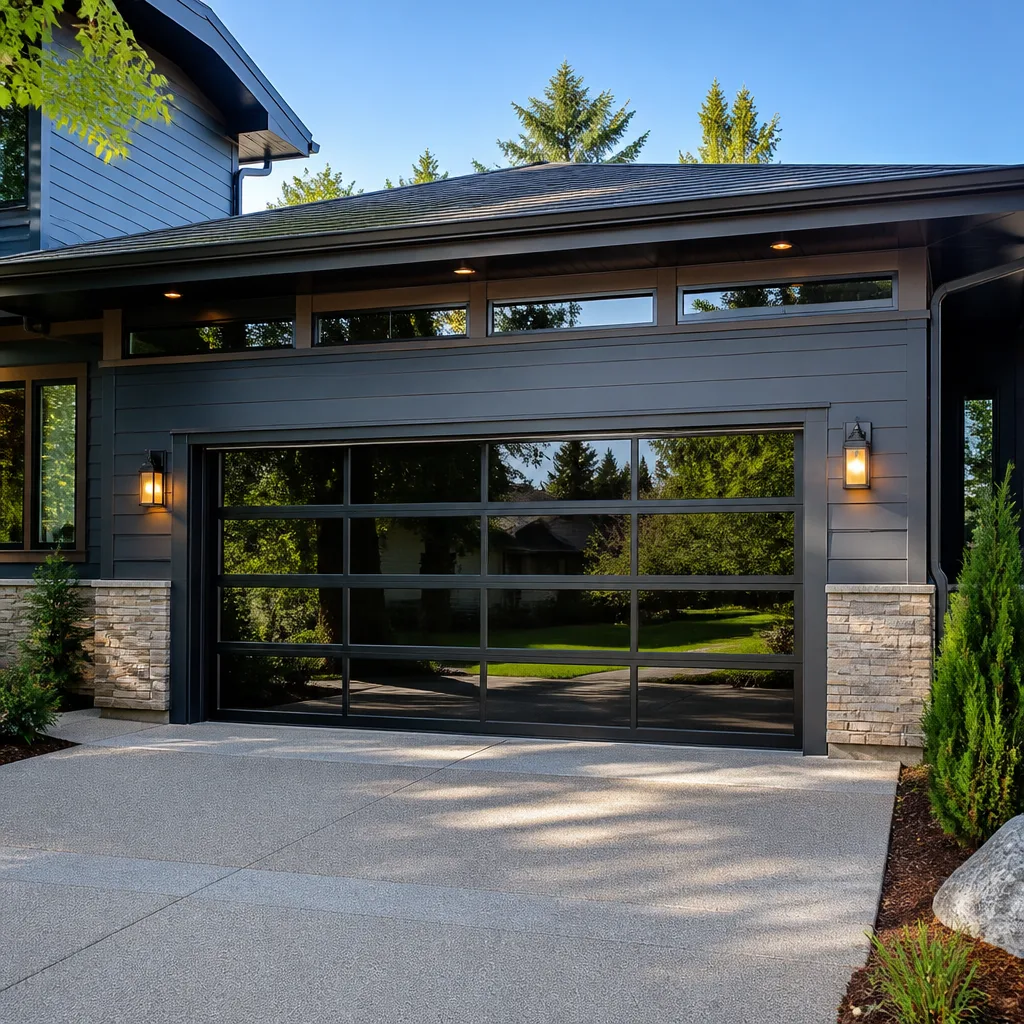
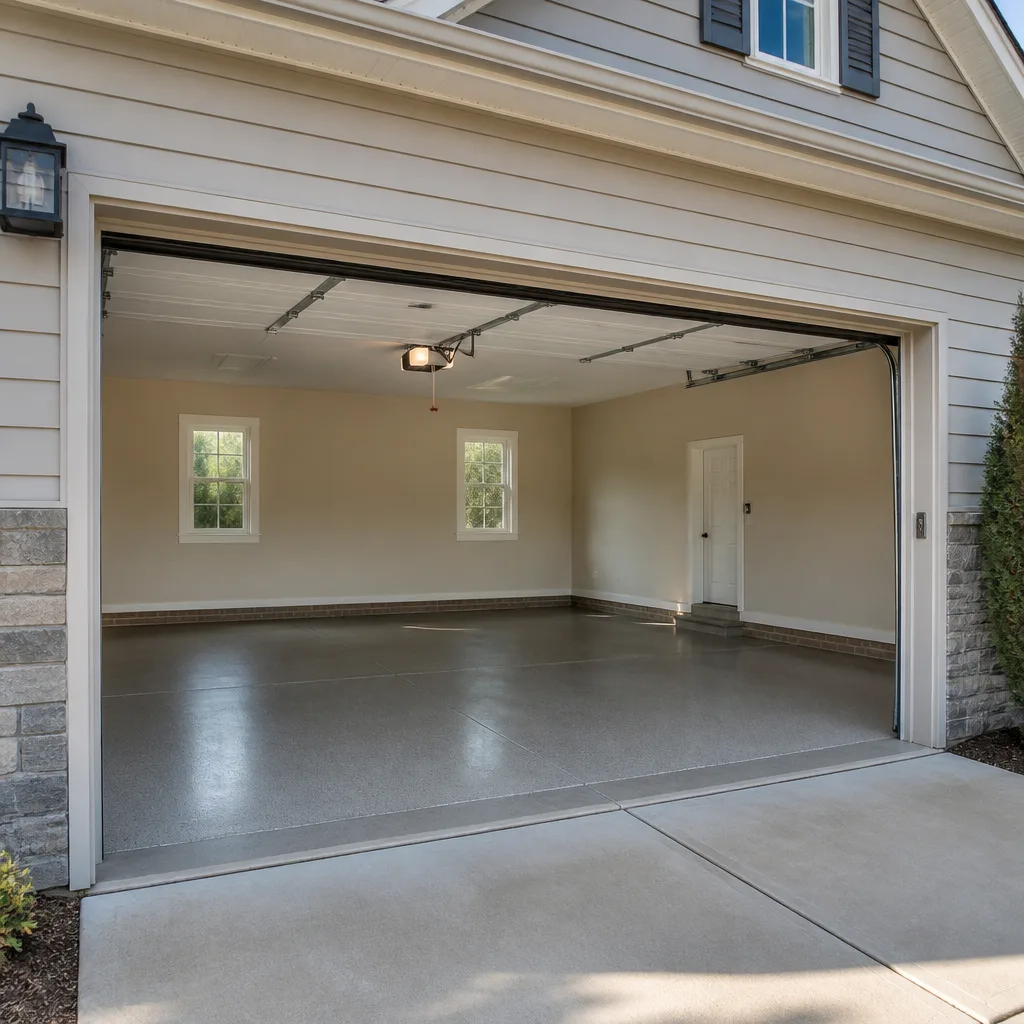
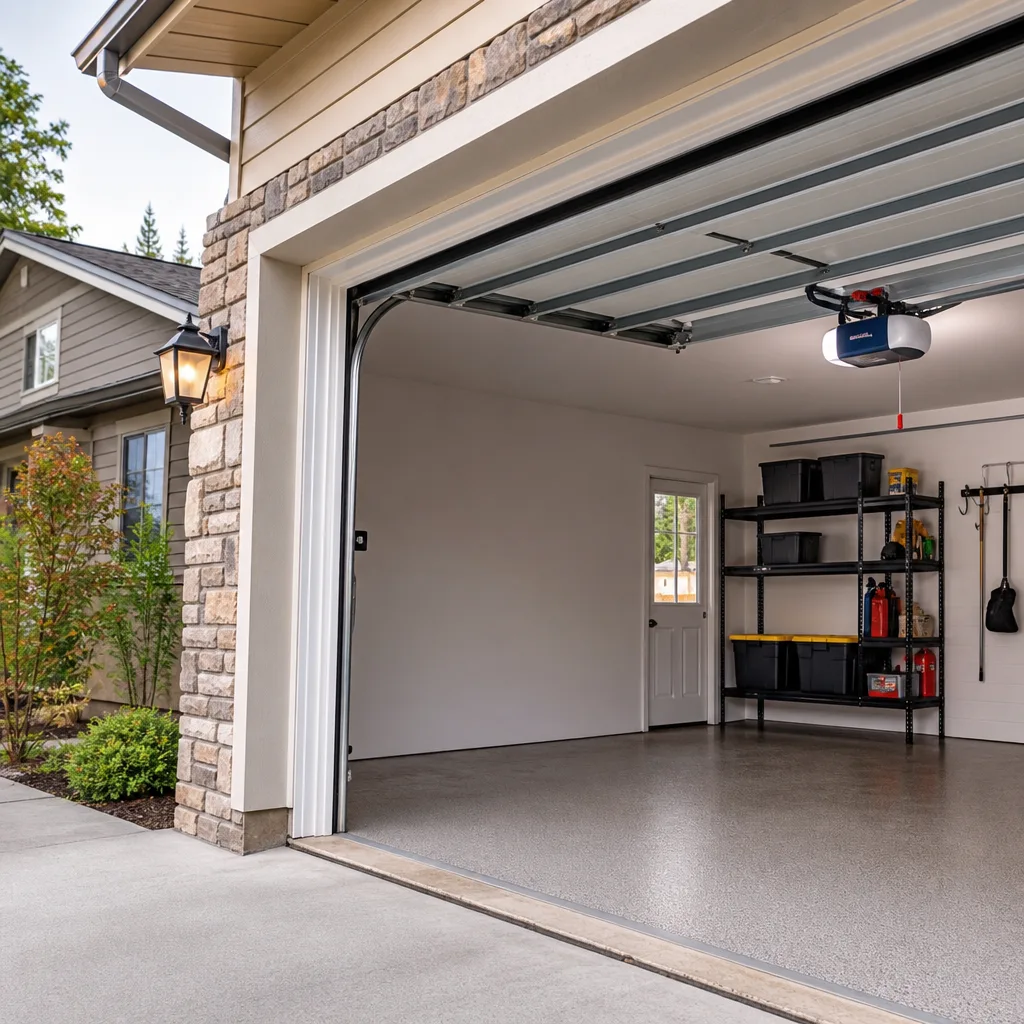
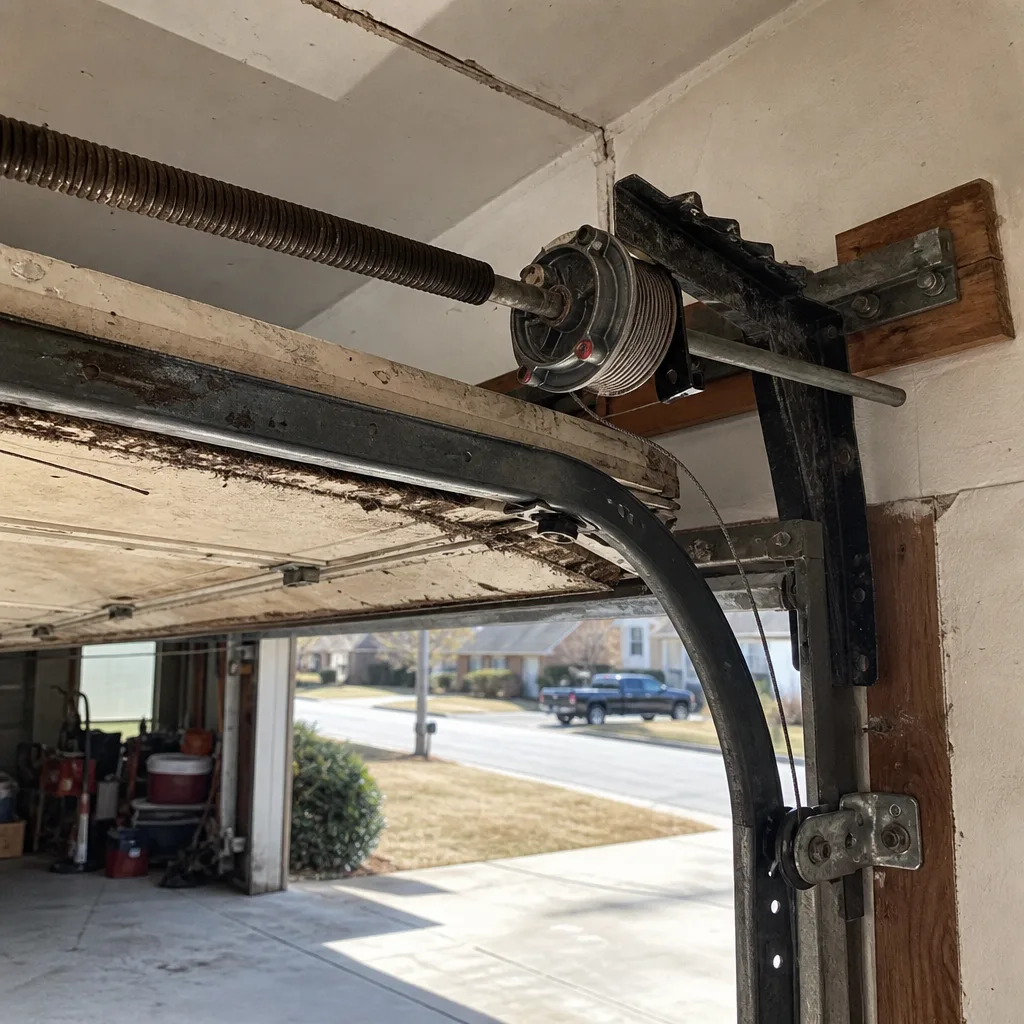 Before
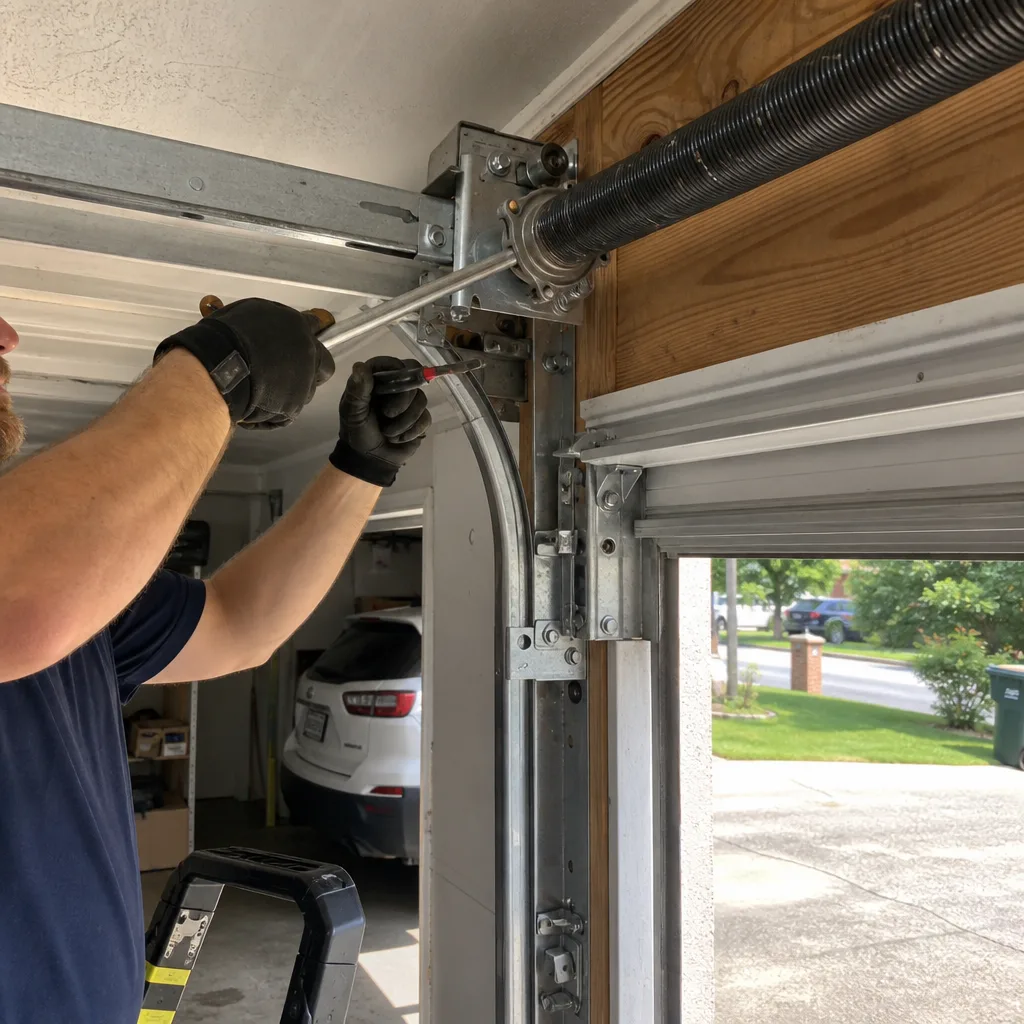 After
After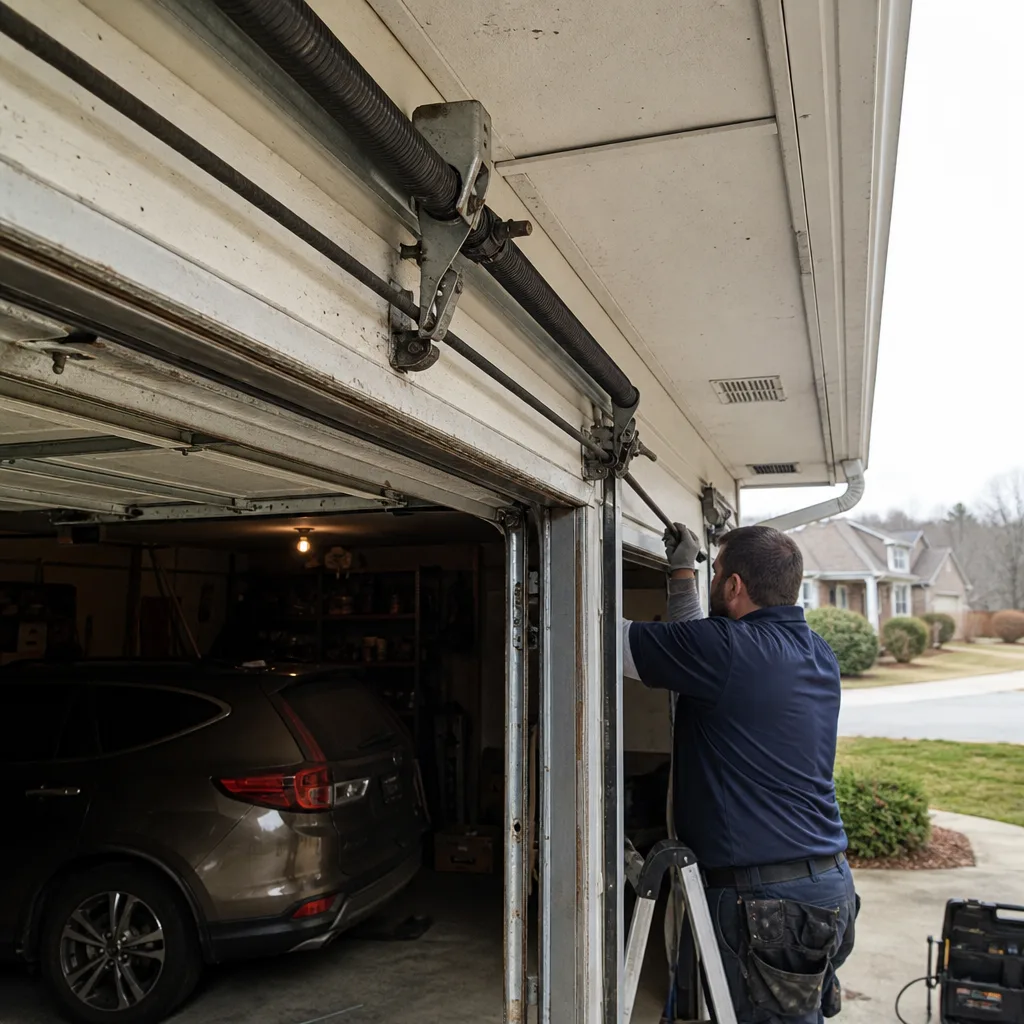 Before
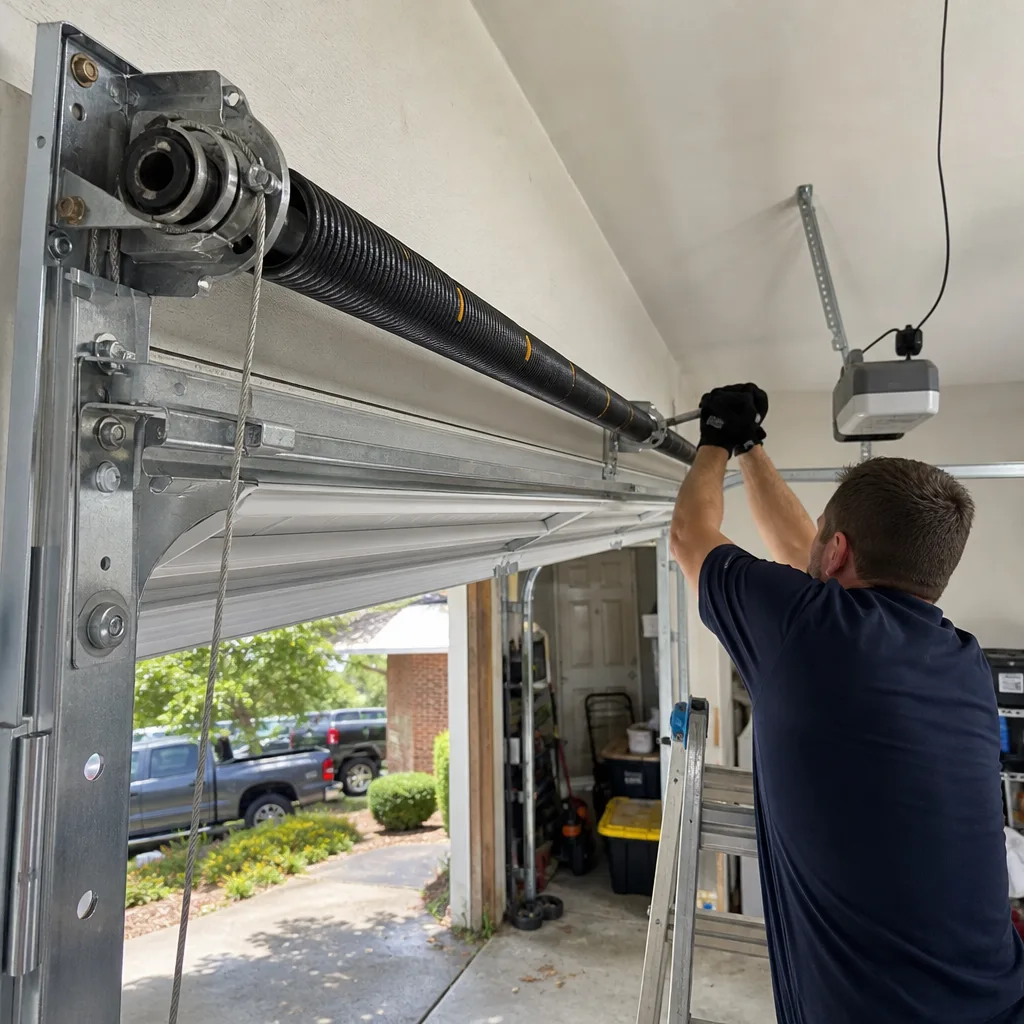 After
After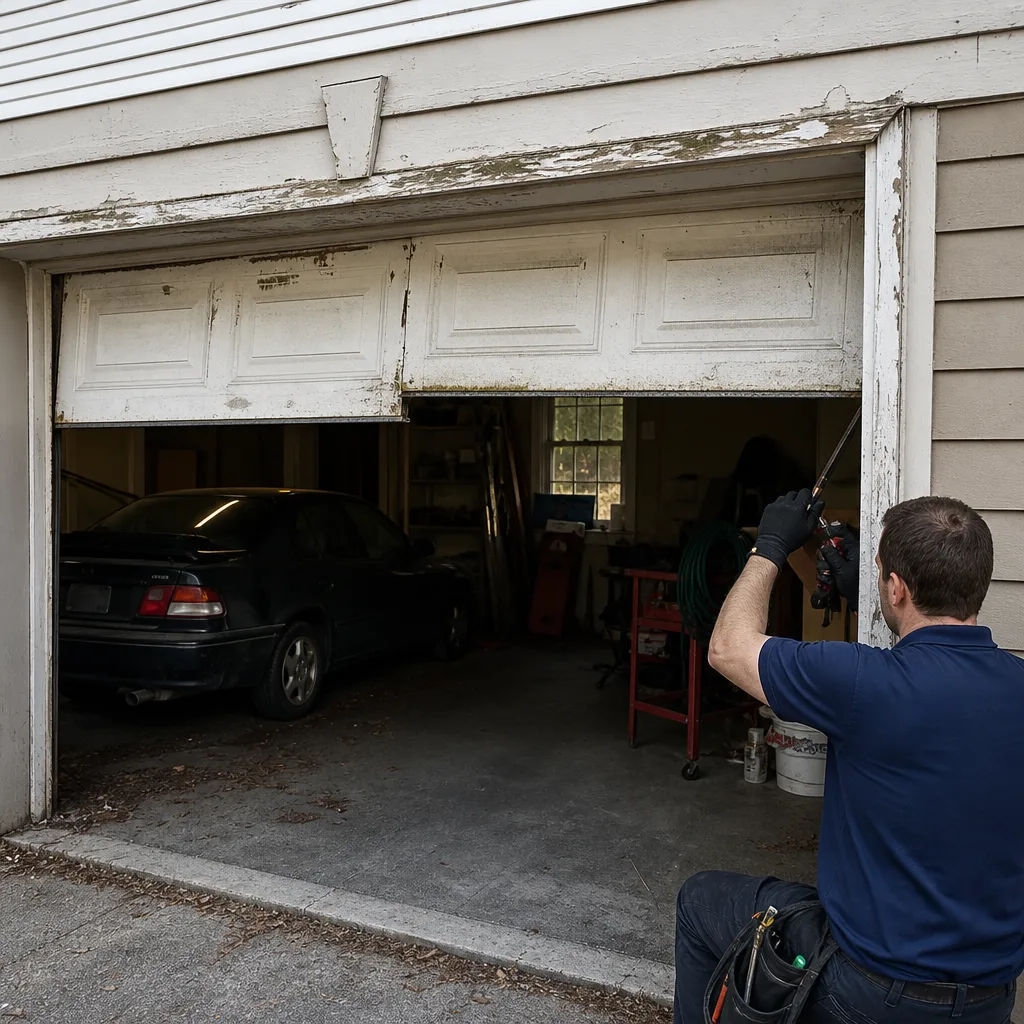 Before
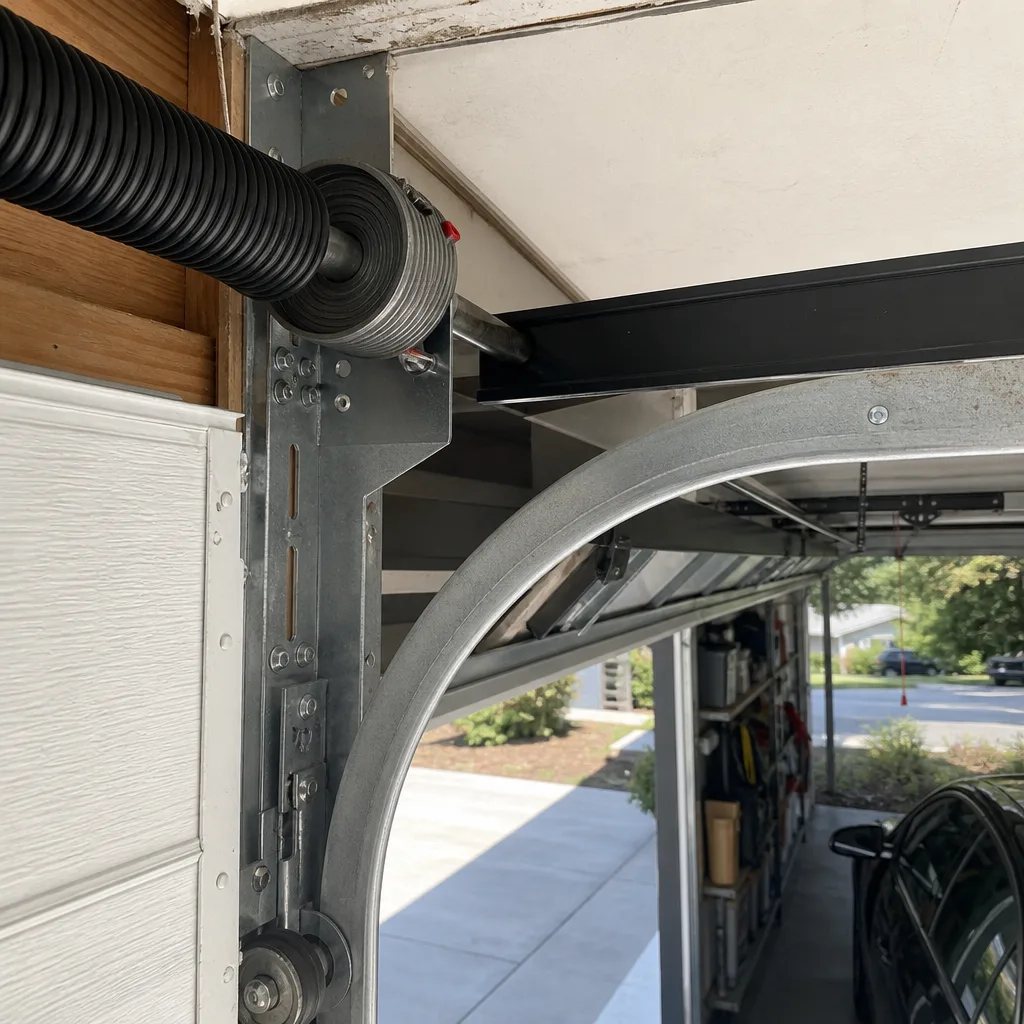 After
AfterThe Complete Guide to Garage Door in Douglasville
Most more guides & resources treat a garage door as a single product decision. In Douglasville, that approach is how homeowners end up paying twice. The most expensive mistake we see isn’t choosing the wrong door. It’s choosing the right door for the wrong opening, discovered only after the old door is already off the tracks. This guide maps the real sequence: material first, then spring system, then opener compatibility. Each decision locks in the next, and getting the order wrong costs money at every step. We’ll walk through measurements, climate considerations, spec sheets, and how a written price should look in Douglasville.
Quick Answer
A garage door in Douglasville is not one decision. It’s a sequence: you measure the opening, choose a material and insulation level suited to Douglas County’s humidity and temperature swings, then select a spring system based on door weight, and only then match an opener to that configuration. A complete replacement in Douglasville typically runs $1,400 to $4,200 installed depending on material, size, and spring system, with steel being the most common choice for this climate.
Table of Contents
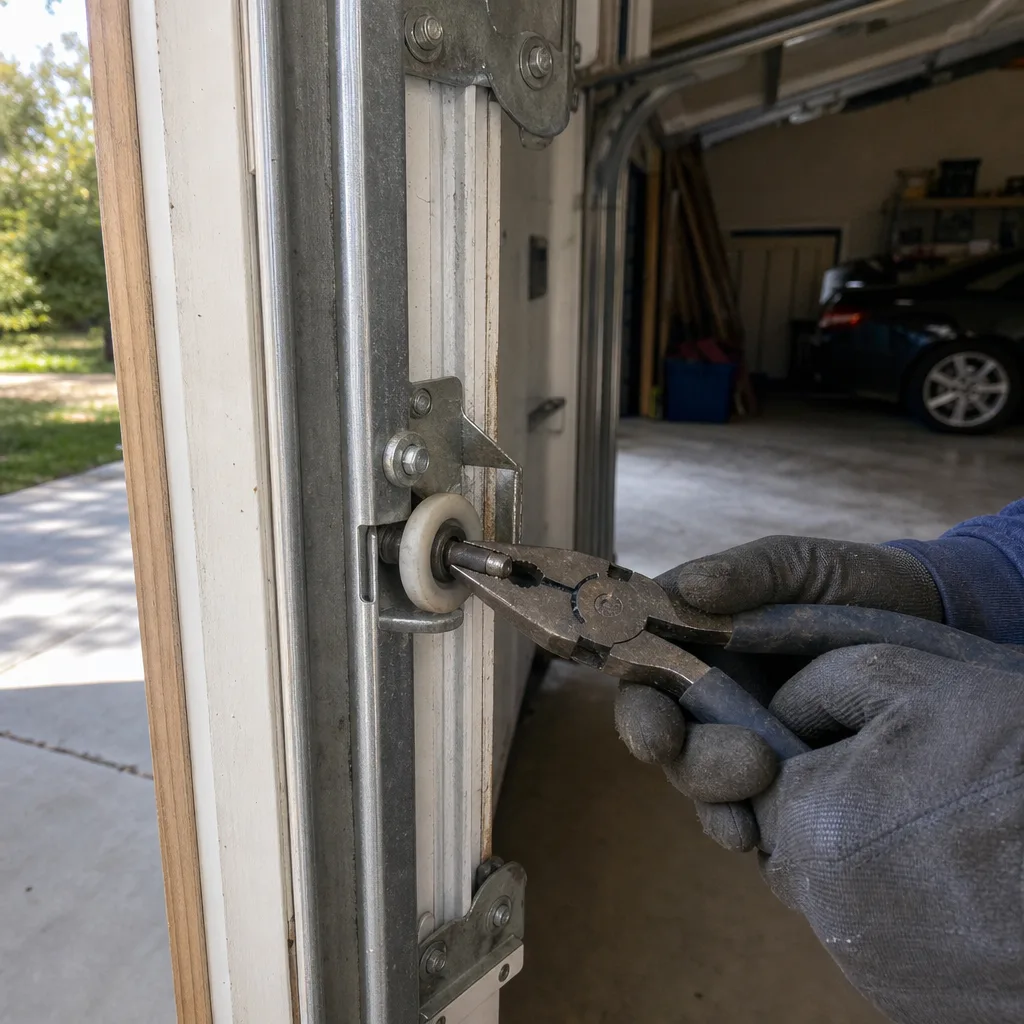
- How to Measure a Douglasville Garage Opening
- Choosing the Right Door Material for Douglas County Weather
- Spring Systems: Torsion vs. Extension and Why the Sequence Matters
- Opener Compatibility After Door and Spring Decisions
- How to Read a Garage Door Spec Sheet
- What a Written, Price-First Quote Should Include in Douglasville
- Common Mistakes to Avoid
- When to Call a Professional
- Frequently Asked Questions
- The Bottom Line
BeforeAfterHow to Measure a Douglasville Garage Opening
Before you look at a single door catalog, you need three numbers: width, height, and what the trade calls headroom. Headroom is the distance from the top of the opening to the ceiling or the first obstruction above it. Sideroom is the distance from the edge of the opening to the nearest wall on each side. In Douglasville, many homes built between 1995 and 2010 have openings that were framed for standard 9×7 doors, but finishing changes, storage shelves, and even HVAC runs across the garage ceiling reduce usable headroom in ways that eliminate certain spring configurations.
Here’s the measurement sequence we use on every Garage Door Installation in Douglasville job:
- Measure the opening width between the finished jambs at the widest point. Standard widths are 8, 9, 16, and 18 feet. A tape measure that says 8 feet 11 inches is a 9-foot door with framing that’s slightly out of square.
- Measure the opening height from the concrete floor to the underside of the header. Most Douglasville garages are 7 feet, but some newer homes in the Chapel Hills and Tributary communities measure 8 feet.
- Measure headroom from the top of the opening to the ceiling. Extension springs need 12 inches. Standard torsion springs need 12 to 18 inches. Low-headroom torsion kits need as little as 4.5 inches but add cost and change the track profile.
- Measure sideroom from the opening edge to the nearest side wall. Standard torsion systems need 3.5 inches. Less than that pushes you into a low-sideroom bracket or an extension spring design.
- Measure the backroom depth from the opening to the back wall of the garage. This determines whether a sectional door can travel fully horizontal before the opener rail becomes a clearance issue.
These numbers matter because they eliminate options. A Douglasville homeowner with 10 inches of headroom and a 9×7 opening cannot install a standard torsion system without modifying the header or using a low-headroom kit. Knowing that before you shop prevents falling in love with a door that won’t fit the opening you actually have.
Choosing the Right Door Material for Douglas County Weather
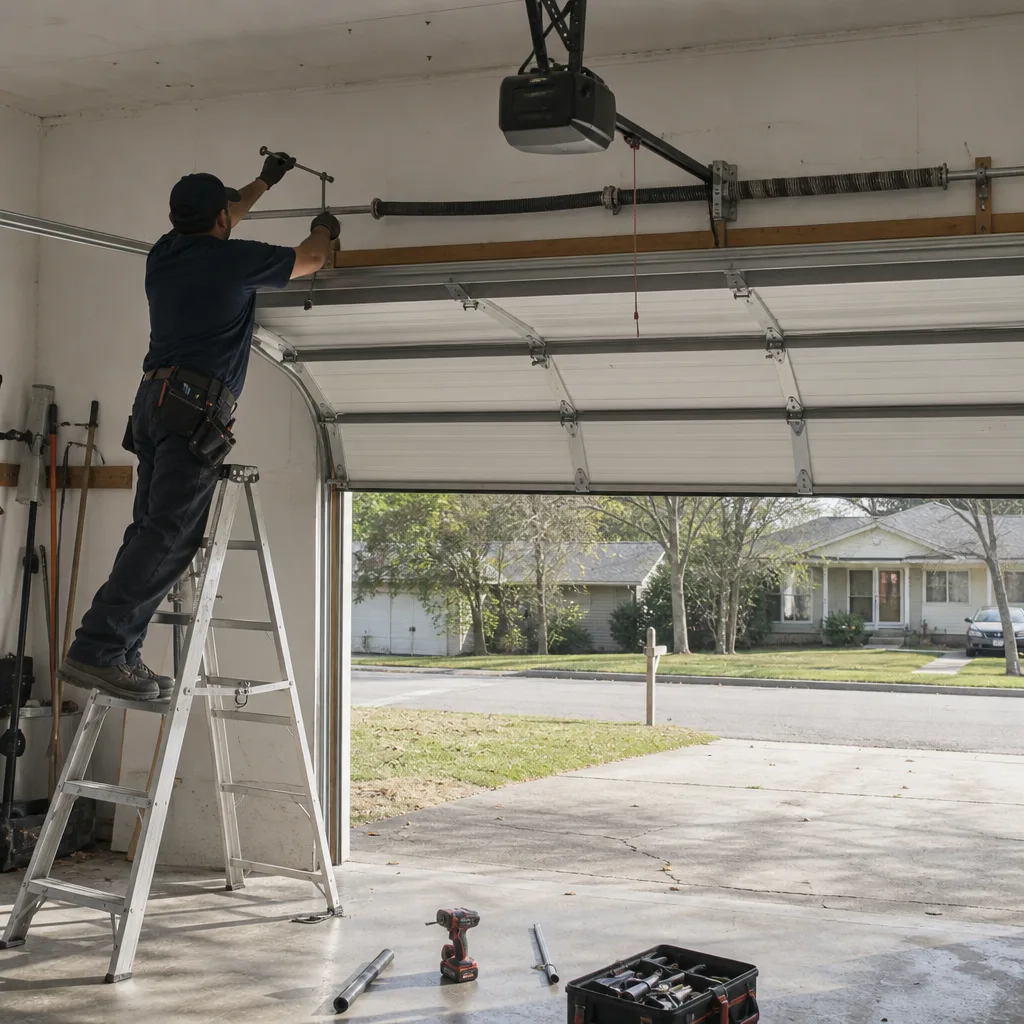
Douglas County sits in a humid subtropical climate zone. Winter lows dip near 20°F. Summer highs push past 95°F with humidity that makes the air feel heavier than the door. That temperature swing, repeated across roughly 120 hot-cold cycles per year, is the real test for any garage door material. It’s also the reason most Douglasville installers recommend steel over aluminum or solid wood.
Steel dominates this market for practical reasons:
- 25- to 26-gauge steel is the sweet spot for Douglasville. Thinner than 26 gauge dents when a basketball hits it or a lawn mower handle taps it in the driveway. Thicker than 25 gauge (lower gauge number means thicker steel) adds weight without a proportional insulation benefit for an attached garage.
- Galvanized steel with a baked-on polyester finish resists the humidity that causes rust streaks on doors in this region. Unpainted aluminum transfers heat and dents more easily. Solid wood doors absorb Douglas County’s summer moisture and swell, which is why we rarely recommend them here.
- Vinyl-backed steel keeps the inner skin from corroding when condensation forms on cool mornings. Douglasville garages that aren’t climate-controlled will sweat. The door’s inner face needs to tolerate that.
Insulation value matters more in Douglasville than in coastal Georgia because of those winter lows. An uninsulated steel door on an attached garage can make the room above it noticeably colder in January. A door with an R-value between R-9 and R-12, using injected polyurethane or expanded polystyrene, closes enough of that gap without driving the price to the top of the range. For detached garages that aren’t heated or cooled, a basic R-6 door is sufficient. For an attached garage under a bedroom, pushing to R-16 with polyurethane core is a comfort decision, not an energy one.
The weatherstripping choice is equally local. Douglasville’s summer humidity softens cheap vinyl seals and makes them lose contact with the concrete. We specify bulb-style bottom seals with a T-channel retainer, and side seals with a thermally bonded vinyl flap, because they maintain a seal across the temperature range this area experiences. A door that’s sealed correctly for Douglas County keeps out not just weather but the insects that follow the humidity.
Spring Systems: Torsion vs. Extension and Why the Sequence Matters
Once the door material and insulation are chosen, you know the door’s weight. That weight determines the spring system. This is the sequencing logic that most guides miss, and it’s the part that costs Douglasville homeowners real money when it’s skipped:
Door weight determines spring type. Spring type determines header bracket placement. Header bracket placement determines opener rail length. In that order. Always.
A 9×7 insulated steel door from Clopay or Amarr weighs roughly 100 to 140 pounds. A 9×7 solid wood door can weigh 250 pounds or more. The spring system exists to do the lifting, so the opener’s motor only has to start and stop the motion. If the door is heavy and the springs are wrong, the opener burns out its gears in a season or two. In Douglasville, we replace a fair number of opener gears on doors that were never balanced correctly in the first place.
Two systems are common here:
Torsion springs mount on a shaft above the header. They store energy by twisting, not stretching. They’re the standard on doors over 10 feet wide, on heavier insulated doors, and on any door where the homeowner wants the opener to do less work. A torsion system needs proper headroom and sideroom, which is why the measurement step comes first. Torsion springs are under extreme tension. They store enough energy to lift the door, and that energy can be released suddenly if a spring fails or is mishandled. We do not recommend do-it-yourself torsion spring work. A trained professional with the correct winding bars and experience reads the spring’s wire diameter and coil count before touching anything.
Extension springs mount above the horizontal tracks on both sides and stretch as the door closes. They’re cheaper, simpler, and common on older Douglasville homes. They require safety cables through the spring core, because an extension spring that fails under tension becomes a projectile. We regularly see older homes in the Stewart’s Mill and Arbor Station areas with extension springs that predate safety cable requirements. That’s a documented safety issue, not a cosmetic one.
Our Garage Door Repair in Douglasville service frequently involves a spring replacement where the original was sized for a door that no longer exists. A previous owner swapped a 26-gauge door for an insulated one without resizing the springs. The opener compensates, briefly, and then the strain shows up somewhere else: a cracked header bracket, a burned-out logic board, or a spring that snaps at the coil, which is exactly what a clean torsional break looks like.
Opener Compatibility After Door and Spring Decisions
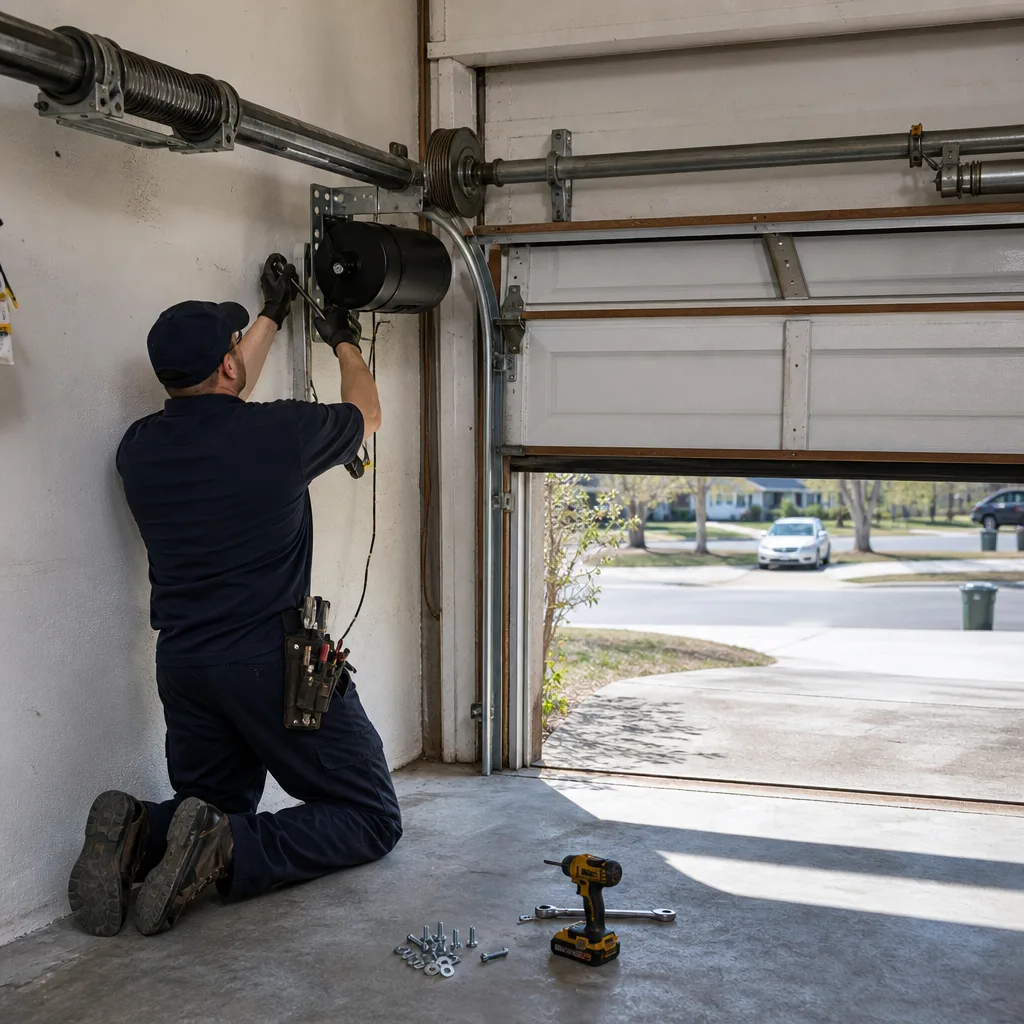
The opener is the last piece of the sequence. It should never be the first. When you’ve selected the door and the spring system, the opener choice narrows to a few practical options. Horsepower matters less than people think. What matters is the drive type, the rail compatibility with your headroom, and whether the opener is sized for the door’s actual weight and balance.
In Douglasville, belt-drive openers dominate newer homes because they’re quiet enough for a bedroom above the garage. Chain-drive units cost less and work fine when the garage is detached or when no living space sits above it. Screw-drive and direct-drive units are less common here, but each has a use case. LiftMaster, Chamberlain, and Genie are the brands we see most often in Douglasville, and all three sell units that integrate with the rails already installed on any of the major door brands. We service all eight major brands including Clopay, Amarr, Wayne Dalton, Craftsman, and Raynor.
The rail length question comes back to the header bracket. A torsion system places the header bracket at a specific height based on the spring shaft and drum configuration. The opener rail must clear that bracket. A low-headroom torsion kit changes the bracket height, which changes the rail angle, which changes how far back the opener can sit. If the opener was ordered first, before the spring system was chosen, it sometimes arrives with a rail that won’t clear the shaft. That’s a sequence error with a dollar sign attached.
Opener repair is common enough in Douglasville that it’s worth a separate mention: Garage Door Opener Repair & Installation in Douglasville covers logic board replacement, limit switch issues, trolley carriage wear, and the gear failures that follow a door that was never balanced after a spring swap. Most opener problems we see are not opener problems. They’re door problems the opener is being asked to mask.
How to Read a Garage Door Spec Sheet
A spec sheet is the fastest way to confirm what a sales pitch is telling you. Every reputable manufacturer publishes one, and it tells you more in two pages than a 30-minute sales conversation can. Here’s what to look at before talking to any contractor in Douglasville:
- Section thickness: Look for a number in inches: 1-3/8″, 1-1/2″, or 2″. Thicker sections improve rigidity and insulation but add weight, which loops back to the spring sizing decision.
- R-value: This is the insulation rating. The higher the number, the more resistance to heat flow. A spec sheet will state either the door’s assembled R-value or the core panel R-value. Different numbers mean different things; an R-12 door with an R-9 core is not the same as an R-16 polyurethane door.
- Wind load rating: In Douglas County, we’re far enough inland that coastal wind codes don’t apply the same way they do in Savannah or Brunswick. But a door with a P.S.F. (pounds per square foot) wind load rating tells you the section construction is reinforced enough to handle the storms that roll through west Georgia in March and April. A standard residential door is typically rated when the building code requires it.
- Gauge: The steel thickness. Lower gauge equals thicker steel. A 24-gauge door is heavier and stiffer than a 27-gauge door. If the spec sheet doesn’t list the gauge, ask.
- Cycle rating on springs: Springs are rated in cycles (one full open and close equals one cycle). A 10,000-cycle spring lasts roughly twice as long as a 5,000-cycle spring in a home where the door opens four times a day. This is the number most homeowners never see, and it’s the difference between a spring that breaks in four years and one that breaks in eight.
- Hardware and track classification: Look for the track gauge and whether the rollers are nylon, steel, or sealed-bearing. Nylon rollers with ball bearings run quieter and last longer on doors that cycle daily.
The spec sheet is also where you’ll spot inflated claims. If a contractor quotes you an R-value but can’t produce the manufacturer’s sheet, that’s a red flag. Written documentation is the whole point. At Servo Garage Doors Douglasville home, the written quote references the spec sheet, and the installation follows the manufacturer’s documented requirements. Clause 1 of The Haven Standard requires a flat, written price and written scope before any work starts, and that scope includes the exact door model, spring size, and opener specifications.
What a Written, Price-First Quote Should Include in Douglasville
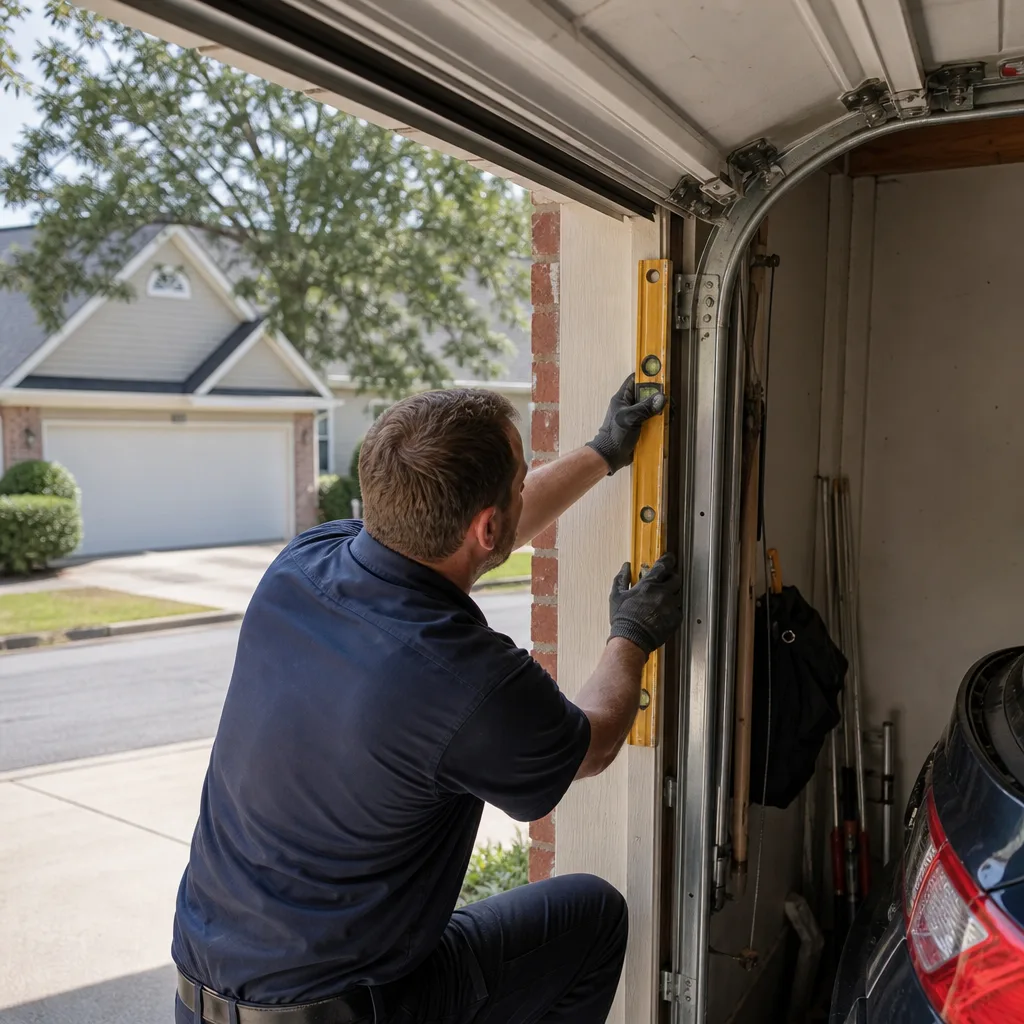
The quote is where most homeowners in Douglasville lose money without realizing it. A verbal estimate leaves out line items. A written quote either includes them or it isn’t a quote. Here’s what a legitimate written estimate for this market should itemize:
- Door model and size: Manufacturer, model number, exact width and height, construction (steel gauge, insulation type, R-value), color, and panel design. If it says “standard door” without a model number, it’s not a written quote.
- Spring system: Type (torsion or extension), wire diameter, coil count, inside diameter, and cycle rating. This is the line item verbal estimates skip, and it’s the one that determines how long the door works correctly.
- Track and hardware: Track gauge, radius, and any low-headroom or low-sideroom components. Hardware should include roller type, hinges, and brackets.
- Opener (if included): Brand, model, drive type, horsepower, rail type, and whether it includes remotes, a keypad, and any smart-home integration.
- Disposal of the old door: Some bids include haul-away; some don’t. In Douglasville, a 16×7 steel door has scrap value. That should be reflected or at least acknowledged.
- Labor and timing: The written scope should state when the work starts, how long it takes, and who does it. Background-checked, uniformed technicians on every job means the person at your door is the person the quote names.
- Warranty terms: Manufacturer warranty on the door, the springs, and the opener, plus the installer’s workmanship warranty. Our 365-Day Done Right Promise means if it’s not right, we make it right, backed by The Haven Standard and a terms page, not a handshake.
The price in Douglasville for a complete replacement, door plus installation plus new springs and tracks, falls into a range. A basic 9×7 non-insulated steel door runs $1,400 to $2,200. An insulated 16×7 steel door with polyurethane core runs $2,800 to $4,200. A premium Amarr or Clopay design with glass inserts and a high cycle spring package pushes toward $5,000. These are the ranges we quote from daily, and they hold across Douglasville’s market.
Most importantly, the price quoted and written before work begins is the price. It doesn’t change once the door is off the tracks. That’s not a courtesy. It’s the system, and it’s the reason a written quote is the first thing we produce.
Common Mistakes to Avoid
- Buying the opener before the door and springs are chosen. The opener is the last decision in the sequence. Buying it first commits you to a rail length and bracket height that may not clear the torsion shaft.
- Skipping the headroom measurement. A Douglasville homeowner who orders a standard torsion door for a garage with 8 inches of headroom has a door that doesn’t fit without a low-headroom retrofit they didn’t budget for.
- Selecting insulation level by marketing, not by spec sheet. An R-value on a brochure is not the same as the assembled R-value on the manufacturer’s spec sheet. Read the sheet.
- Replacing the door without resizing the springs. If the new door weighs more than the old one, the old springs are wrong. We see this in Douglasville garages where a lightweight 1980s door was swapped for a modern insulated one, and the springs remained original.
- Ignoring the cycle rating on springs. A 10,000-cycle spring costs more up front than a 5,000-cycle spring. Over eight years, the cheaper spring means a second service call. The math is straightforward.
- Accepting a verbal estimate for a multi-thousand-dollar job. In Douglasville, a written quote with itemized scope is the minimum standard. Anything less leaves the door open, literally, for price changes after the work starts.
When to Call a Professional
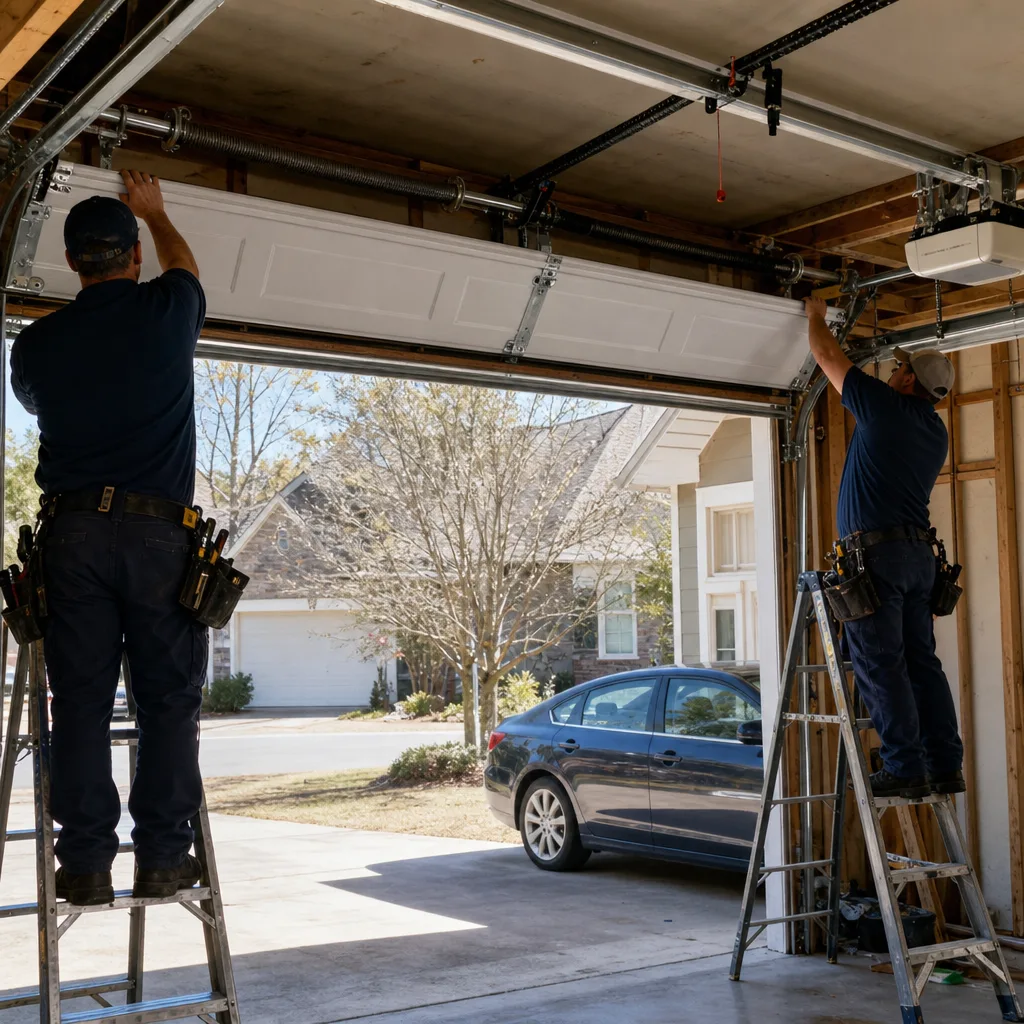
Some garage door decisions are safe to make on your own: measuring the opening, reading spec sheets, comparing material choices. Some are not. We recommend calling a professional any time the work involves torsion springs under tension, cable replacement, track realignment, or any repair where a part stores energy and could release it. The springs on a torsion system carry the door’s full weight, and a sudden release is genuinely dangerous. The same applies to extension spring cables. A real expert flags this every time, not as a sales tactic but as a liability statement.
Servo Garage Doors Douglasville offers free estimates in Douglasville and the surrounding west Georgia area. Call (470) 243-8314 for a free estimate, and expect a written price and a written scope before any work begins. The estimate is documented, the technician is background-checked and uniformed, and the call is answered by a live person, not a recording.
Frequently Asked Questions
A complete garage door replacement in Douglasville typically costs between $1,400 and $4,200 installed, depending on size, material, insulation level, and spring system. A basic 9×7 non-insulated steel door starts near $1,400, while a 16×7 insulated door with a high-cycle spring package runs $2,800 to $4,200. Every quote we provide is flat, written, and itemized before work starts. Call (470) 243-8314 for an exact price on your opening.
An insulated steel door between 25 and 26 gauge is the best match for Douglasville’s humidity and temperature swings. Steel resists the moisture that warps solid wood and corrodes aluminum, and a polyurethane or polystyrene core between R-9 and R-12 keeps attached garages from turning into ovens in August or freezers in January.
Same-day installation is not the standard for a full door replacement in Douglasville. A door is a measured product: the opening gets verified, the panel is ordered or confirmed in inventory, and the install is scheduled. We provide a free measure and a written price, then schedule the installation at a time that works for you. Emergency repair is different: for a broken spring or a door stuck open, we respond the same day in most cases.
Garage door springs are rated in cycles, not years, and a 10,000-cycle spring lasts roughly eight to ten years in a home where the door opens four times daily. In Douglasville, the humidity doesn’t shorten spring life directly, but doors that aren’t balanced correctly force the springs to work harder and fail sooner. We inspect spring cycle ratings on every service call.
Most residential garage door replacements in Douglasville do not require a building permit when the door is a like-for-like swap on an existing opening. Structural changes to the opening, header modifications, or any work that affects load-bearing framing may require permits through Douglas County’s building department. A qualified installer will know the line, and a written scope should state whether any structural work is included; for specifics, read Garage Door Permits, Codes & Inspections in GA: What You Need to Know.
No. The price quoted and written before work begins is the price. That’s Clause 1 of The Haven Standard: a flat, written price and written scope are delivered before any work starts. If we find something unexpected during the install, we document it, photograph it, and present a written change order before proceeding. You approve the number before anything changes. Call (470) 243-8314 for a free estimate that works this way.
The Bottom Line
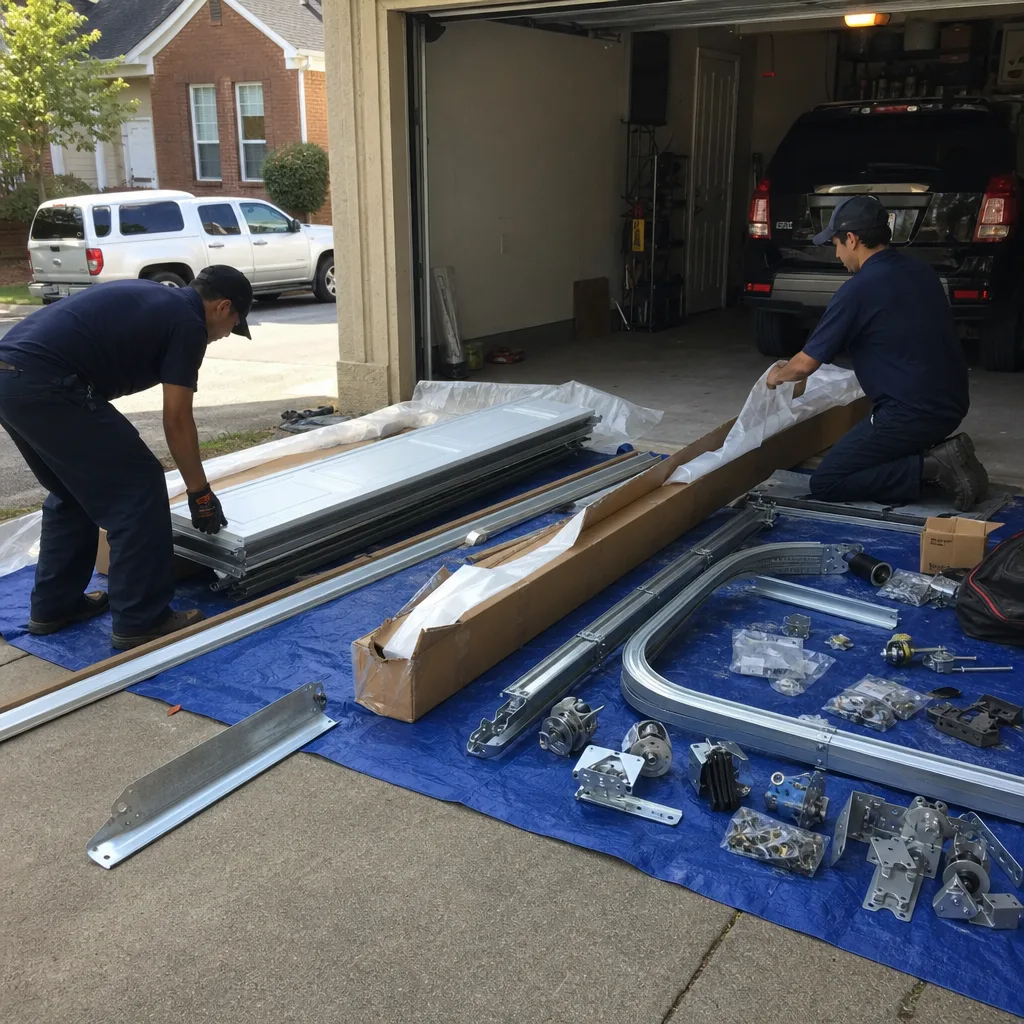
A garage door in Douglasville is a sequence of decisions, not a single purchase. Measure the opening first, including headroom and sideroom. Choose a material that holds up to this county’s heat and humidity. Size the springs to the door’s actual weight. Match the opener last. Read the spec sheet before the sales pitch, and demand a written, itemized quote with a price that doesn’t change once the work begins. The homeowners who follow that order spend less, replace less, and end up with a door that works the way the manufacturer intended. The homeowners who skip steps pay for it later, usually in a spring that snaps or an opener that burns out years early.
Written by Marcus Deller, Owner at Servo Garage Doors Douglasville, serving Douglasville since 2015.