
Last updated September 20, 2026
Full 25-point door and opener safety check with every visit - springs, cables, rollers, tracks, and your LiftMaster or Chamberlain opener included
You get a price before we start. It does not change when the truck arrives.
 Before
 After
After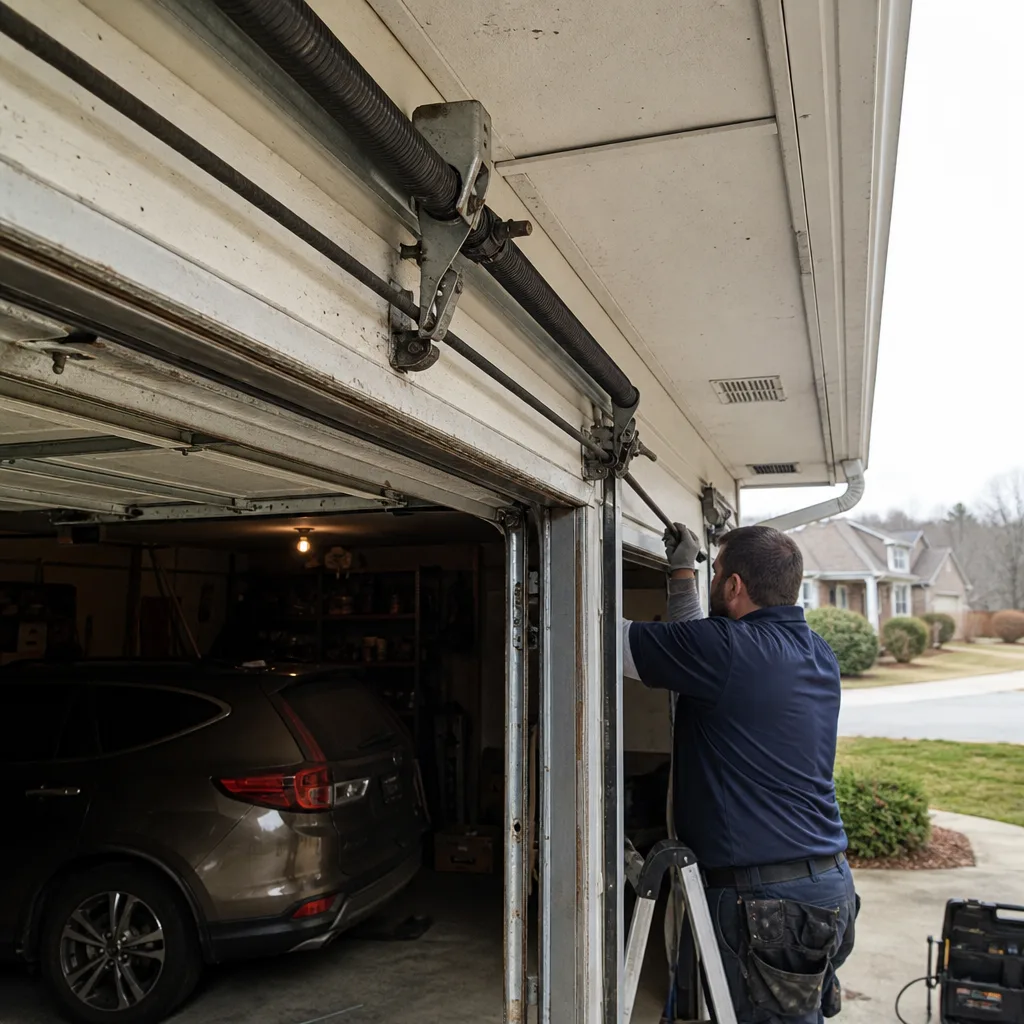 Before
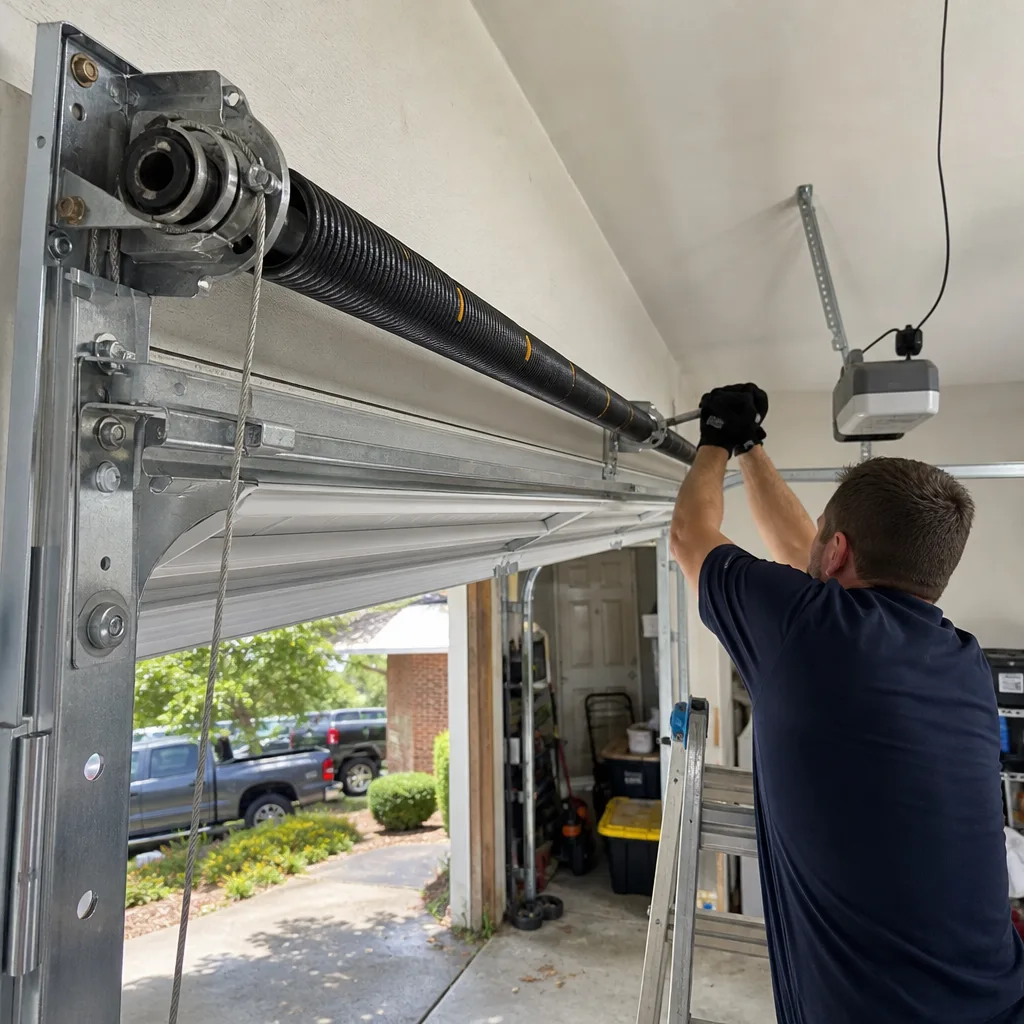 After
After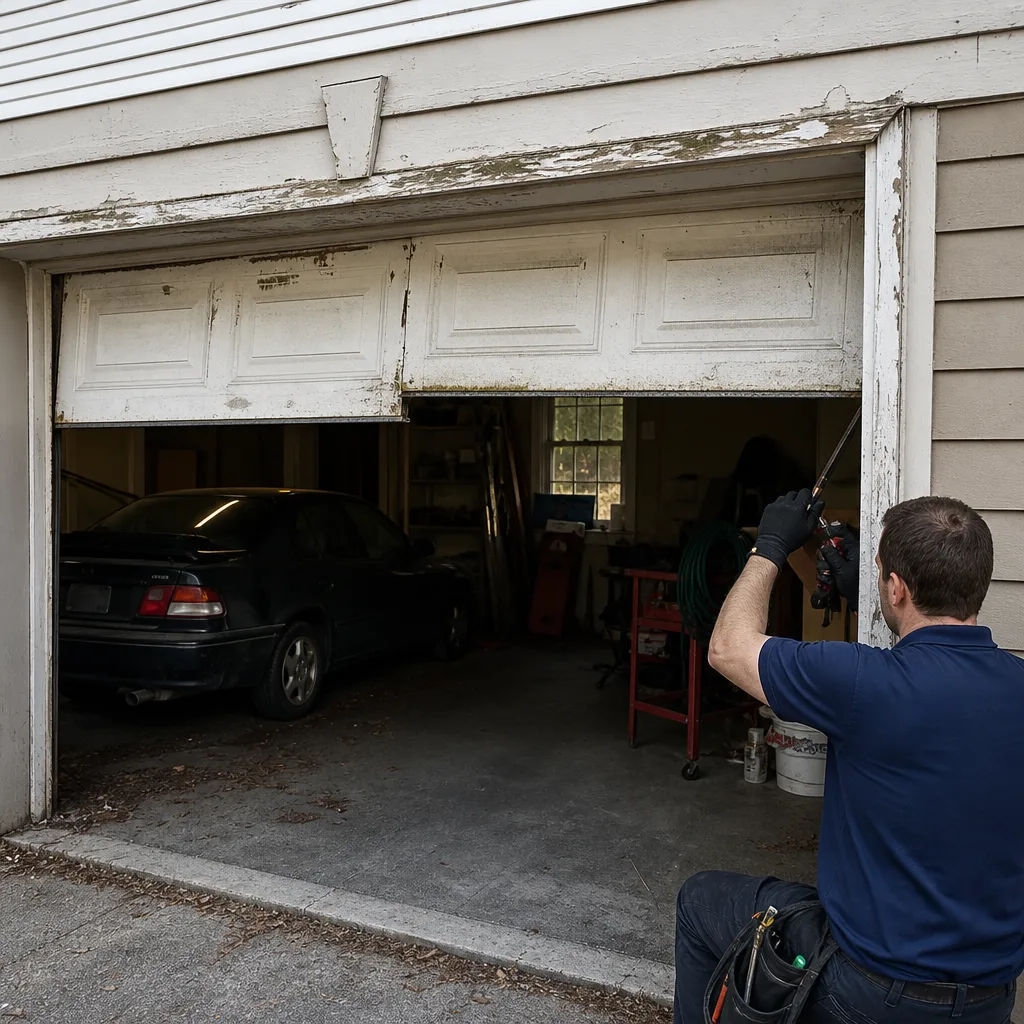 Before
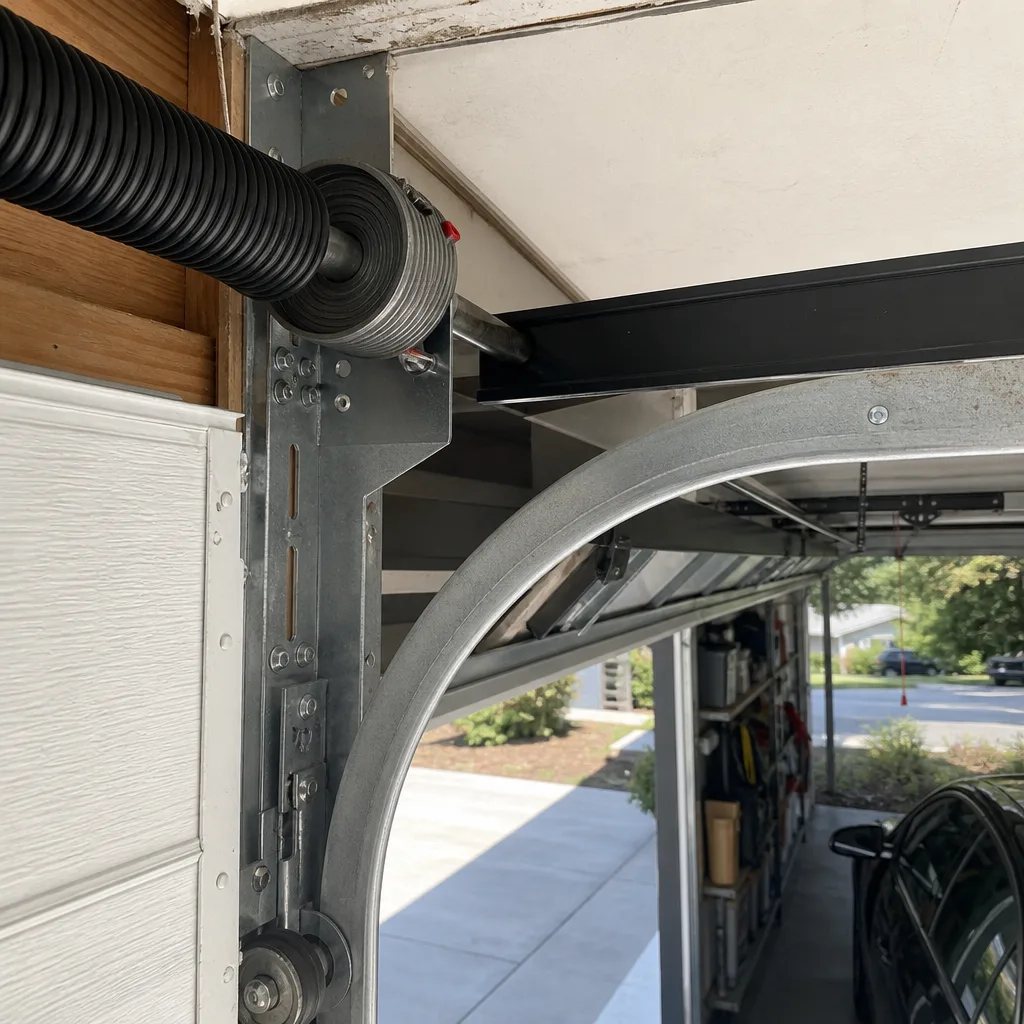 After
AfterGarage Door Permits, Codes & Inspections in GA: What You Need to Know
A full garage door replacement in Douglas County can require a permit even when the opening dimensions don’t change. Most homeowners learn this the hard way, usually after a contractor finishes the job and someone mentions it at closing. This guide maps the actual local requirements rather than restating state-level generalities, because Georgia delegates nearly all garage door permitting to counties, and Douglas County’s rules diverge from neighboring Cobb and Carroll in ways that catch people mid-project. You’ll learn when a permit is required, what wind load means for your door selection, what inspections actually cover, and how the permit arrangement affects your leverage if the work goes sideways.
Quick Answer
In Douglasville and unincorporated Douglas County, a garage door replacement generally requires a building permit when the work involves structural modification, such as altering the rough opening, header, or framing. Replacement-in-kind with no structural change often qualifies as exempt or may only need a simple trade permit depending on current Douglas County amendments to the Georgia State Minimum Standard Codes. Always confirm with Douglas County Building & Development before starting, because the county’s local amendments override the state baseline, and unpermitted structural work creates a documented liability at resale.
Table of Contents
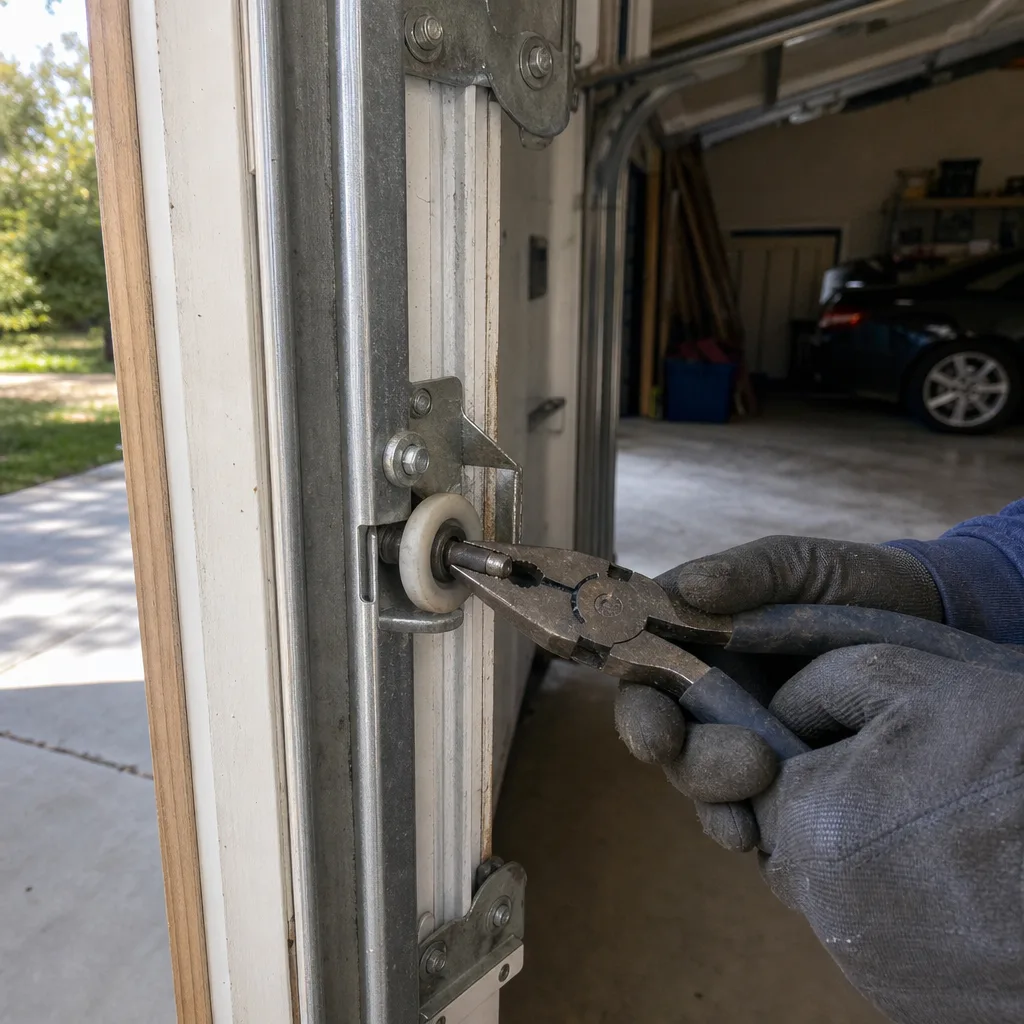
- How Georgia Code and Douglas County Amendments Actually Interact
- When Douglas County Requires a Permit for Garage Door Work
- Wind Load Requirements in Douglas County
- What an Inspection Actually Covers Versus What Homeowners Assume
- The Liability Gap: Unpermitted Work at Resale
- Pulling Your Own Permit Versus Having a Contractor Pull It
- Common Mistakes to Avoid
BeforeAfterHow Georgia Code and Douglas County Amendments Actually Interact
Georgia sets a floor, not a ceiling. The Georgia State Minimum Standard Codes, established under OCGA 8-2-20, apply to all residential construction in the state, including garages and garage doors. What many homeowners don’t realize is that Douglas County can, and does, adopt local amendments that are stricter than the state baseline. Those amendments aren’t published in a way that’s easy for a homeowner to find, and they change over time.
When we plan a garage door installation for a Douglasville homeowner, we check the county’s current published amendments before we write the scope. That’s not a sales pitch; it’s how the job gets done without a stop-work order. The county’s Building & Development division maintains the local ordinance that modifies the state code, and the specifics that affect garage doors tend to concentrate in three areas: wind load ratings, structural header requirements, and whether a replacement counts as new construction or as a like-for-like repair.
Here’s the practical difference. The state code may say that a residential accessory structure like a detached garage has a certain wind resistance requirement. Douglas County’s amendment may reference a different design wind speed, which changes the minimum door rating. A door that meets state code but not the county amendment will fail an inspection. That’s the kind of detail that separates a smooth closing from a sale that stalls.
For anyone in Douglasville researching this before they call a contractor, the sequence that matters is:
- Start with the state code as the baseline, specifically the residential sections governing garages and accessory structures.
- Overlay Douglas County’s local amendments, which you can request from Douglas County Building & Development or have your contractor pull as part of the permit package.
- Verify the door product’s rating against the county’s design wind speed, not just the manufacturer’s marketing sheet.
- Confirm with the county whether your specific work item requires a permit before you sign anything.
This process is the same one we follow on every garage door installation in Douglasville, because the amendment status can shift, and the last thing a homeowner needs is a door that measures correctly but fails the county’s paperwork test.
When Douglas County Requires a Permit for Garage Door Work
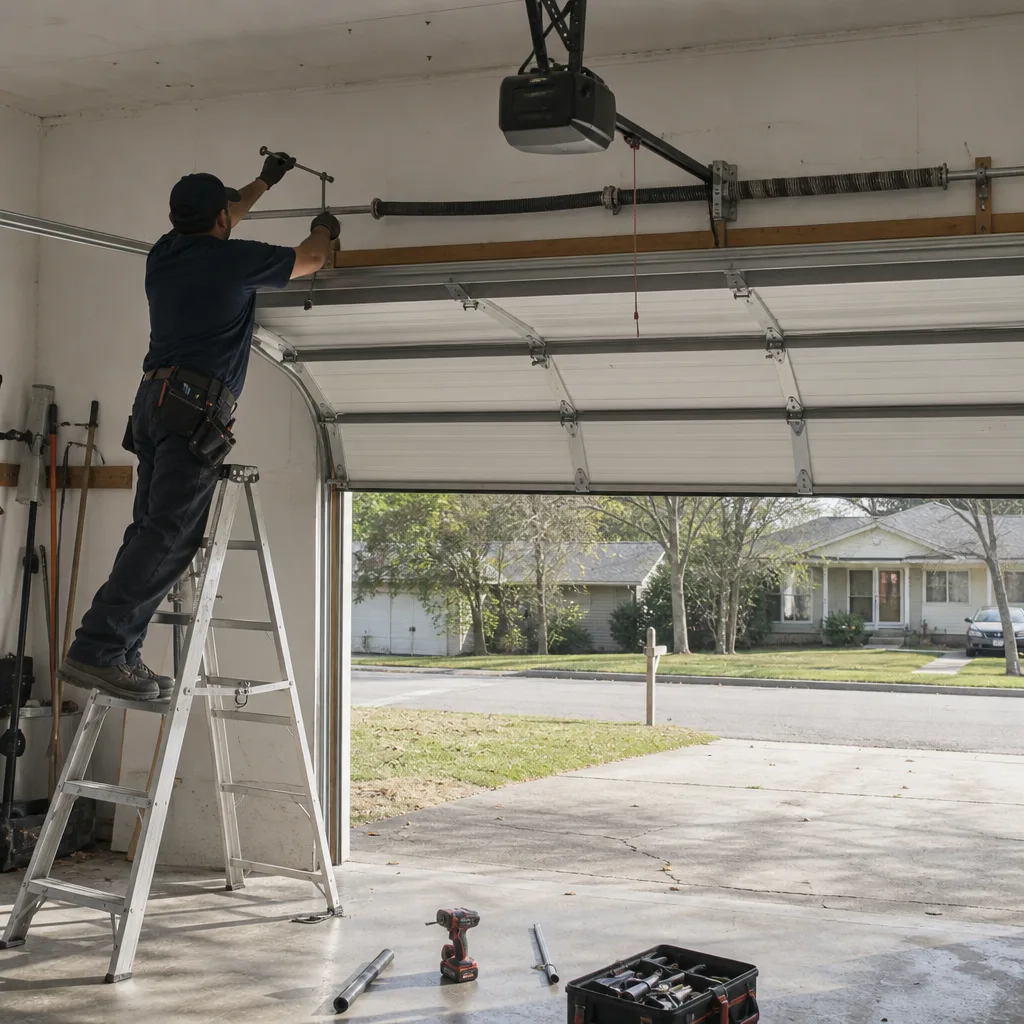
The line between “repair” and “new construction” is where most permit confusion lives. Douglas County generally does not require a building permit for a repair that swaps an existing door for a new one of the same dimensions with no structural changes to the opening, the header, or the surrounding framing. That’s the replacement-in-kind exception, and it’s the one most homeowners assume covers everything.
The exception gets narrower than most people think. Here are the scenarios in Douglas County where a permit is more likely required:
- Header modification. If the existing header above the door is undersized for a wider or heavier door, and the work involves installing a new engineered header, that’s structural. A permit is required.
- New rough opening cuts. Cutting a new opening where none existed, or widening an existing one, is new framing work. A permit is required, and the framing gets inspected before the door is hung.
- Converting a carport to an enclosed garage. That changes the structure’s use and its wind load profile. A permit is required, and the county will treat the wall framing and the door as new construction.
- Replacing a door on a garage that’s part of a new build or a major remodel. If the garage work is tied to a broader permit, the door is included in that permit’s scope.
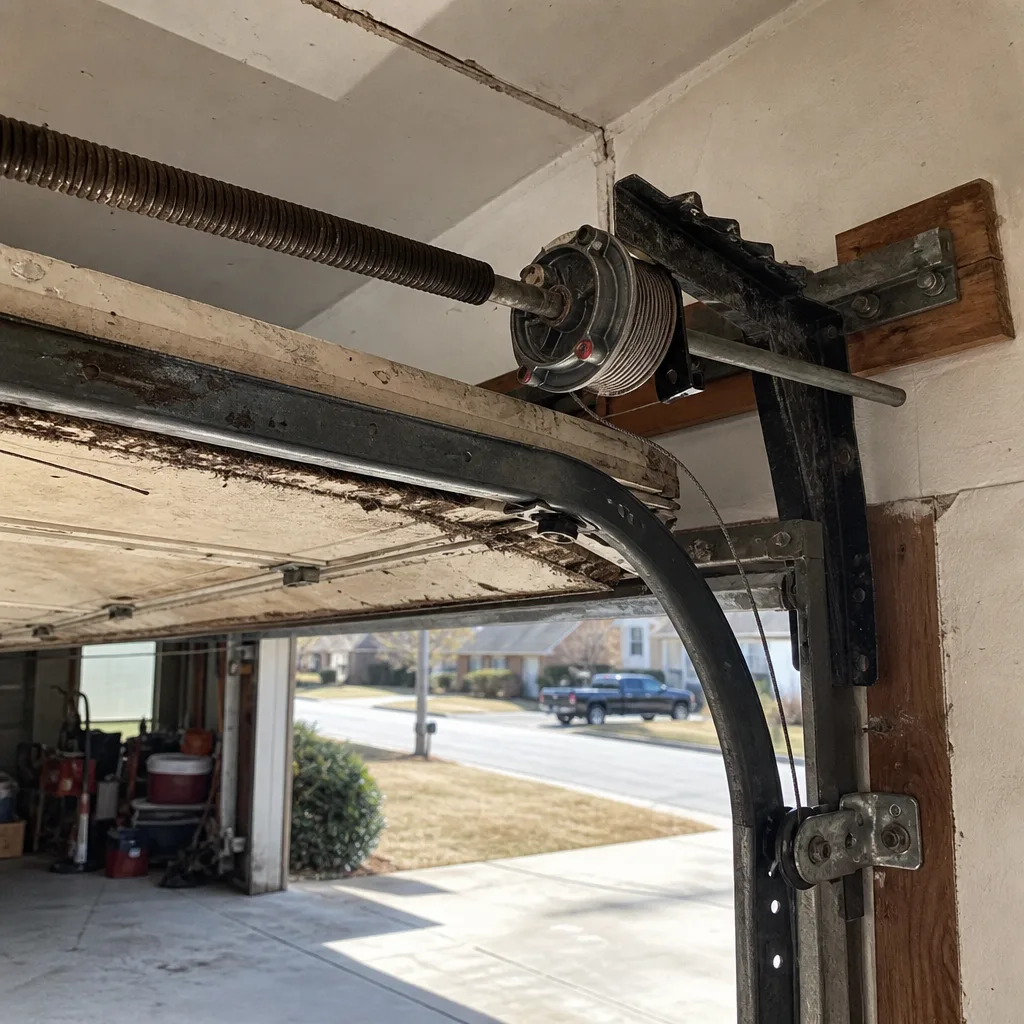
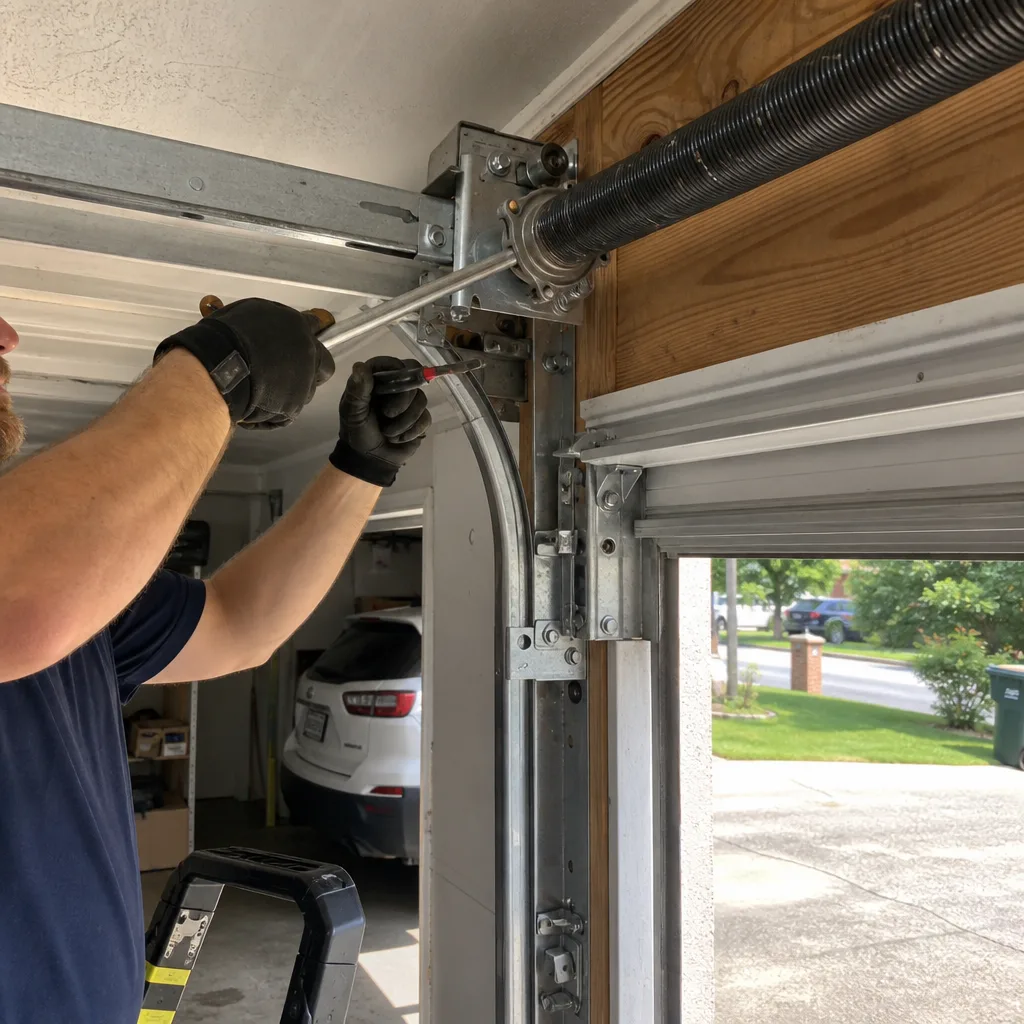
What’s equally important is what does not require a permit. Replacing torsion springs, cables, rollers, hinges, tracks, or the opener itself is repair work, not structural. Those jobs don’t need a Douglas County permit, although the workmanship still falls under the state’s construction code if an inspection ever becomes relevant. That’s a point we make often on garage door repair calls in Douglasville: the permit question is about the building, not the door hardware.
The practical rule we give homeowners is this. If the word “header” appears in the scope, assume a permit. If the opening dimensions don’t change and no framing is touched, ask the county anyway. A five-minute phone call to Douglas County Building & Development settles it before money changes hands.
Wind Load Requirements in Douglas County
Wind load is the requirement most homeowners have never heard of and most contractors don’t mention unless pressed. Douglas County sits west of Atlanta, and its design wind speed under current code is different from what a coastal county would require, but still high enough that door selection matters. A garage door is the largest exterior opening on most homes, and when a wind event hits, it’s the most likely component to fail first.
Here’s what wind load actually means for a garage door. The door is rated to resist a certain pressure, measured in pounds per square foot, based on the county’s design wind speed and the garage’s exposure category. A detached garage on open land faces a different calculation than an attached garage on a street lined with two-story homes. The door manufacturer publishes a wind load certificate for each door configuration, and that certificate is what an inspector asks to see.
In our experience across Douglasville, most modern doors from the major manufacturers meet or exceed the county’s requirement without additional bracing, provided they’re installed per the manufacturer’s instructions with the correct track gauge and sufficient jamb anchoring. Brands we work with regularly include Clopay, Amarr, and Wayne Dalton, and all three publish engineering data that makes the wind load documentation straightforward. When a door comes up short, the fix is typically additional struts or a heavier track system, which is a material cost and a labor cost that should be in the written price before work starts.
The documentation angle is where this ties back to permits. If the county inspects the door, the inspector checks that the installed product matches the wind load paperwork. A contractor who can’t produce the certificate hasn’t done the job, even if the door opens and closes fine.
What an Inspection Actually Covers Versus What Homeowners Assume
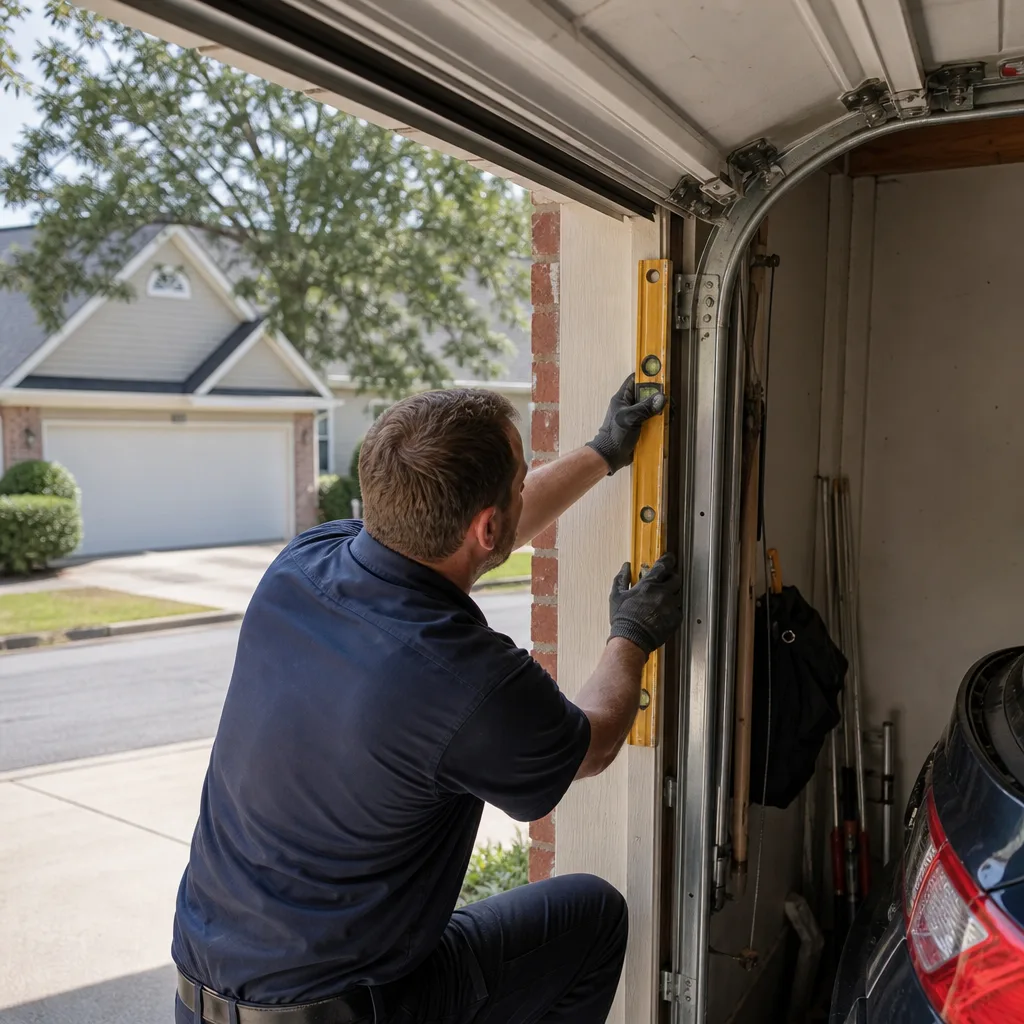
Most homeowners assume an inspection is a quality check on the contractor’s work. It isn’t. A Douglas County inspection is a code compliance check, and it covers a specific list of items that often bears little resemblance to what the homeowner cares about.
When a garage door inspection happens after permitted structural work, here’s what the inspector is typically checking:
- Framing and header size. The inspector verifies the header dimensions match the approved permit drawings. This happens before the door is installed, not after.
- Anchorage. The door’s track brackets and jamb attachment points need to meet the manufacturer’s spacing and fastener requirements. An inspector may look at this after installation.
- Wind load documentation. The inspector checks that the installed door’s engineering certificate matches the county’s wind load requirement for the structure’s location and exposure.
- Safety components. Photo eyes, reverse mechanisms, and emergency release functionality are part of the state’s residential code and can be verified during a final inspection.
What the inspection does not cover is workmanship in the broader sense. A door that’s out of balance, a track that’s slightly out of square, rollers that will wear prematurely, a spring tension that’s off by a half turn, none of that is a code violation, and none of it will fail an inspection. That’s the gap where quality contractors distinguish themselves, and it’s also the gap where a homeowner’s leverage depends on the written scope.
This is why we photograph the failed component before quoting a replacement, as a matter of course. Clause 4 of The Haven Standard, the documented system we work under, is what makes that happen on every job. The inspection confirms code compliance. The photo record confirms what was actually found and fixed. Those are two different things, and homeowners in Douglasville are better served when both are in writing.
The Liability Gap: Unpermitted Work at Resale
Unpermitted structural work becomes the homeowner’s problem most often at resale, during the disclosure process. Georgia’s seller disclosure form asks about known defects and unpermitted work, and a garage door installation that required a permit, but didn’t get one, is exactly the kind of item that surfaces during a buyer’s inspection or a title search.
The liability gap is not hypothetical. If a Douglasville homeowner sells a house with an unpermitted header modification, and the new owner later discovers the work doesn’t meet code, the seller can be liable for the cost of remediation, plus any consequential damage. The buyer’s lender may also flag the permit gap during underwriting, which stalls the sale or forces a retroactive permit process that takes weeks.
Retroactive permits are possible in Douglas County, but they’re slower and more expensive than pulling the right permit upfront. The county may require the work to be exposed for inspection, which means removing drywall or siding so the framing can be seen. That’s a cost measured in hundreds, sometimes thousands, of dollars, on top of the original door work.
The math points one way. A permit for a garage door with structural work in Douglasville is a fraction of the cost of a retroactive permit with wall demolition. Homeowners who plan to sell within five years should treat the permit question as part of the resale preparation, not as a bureaucratic afterthought. And when the door work is part of a larger garage door installation, the permit is folded into the scope, written down, and documented, which is how the whole thing stays transparent.
Pulling Your Own Permit Versus Having a Contractor Pull It
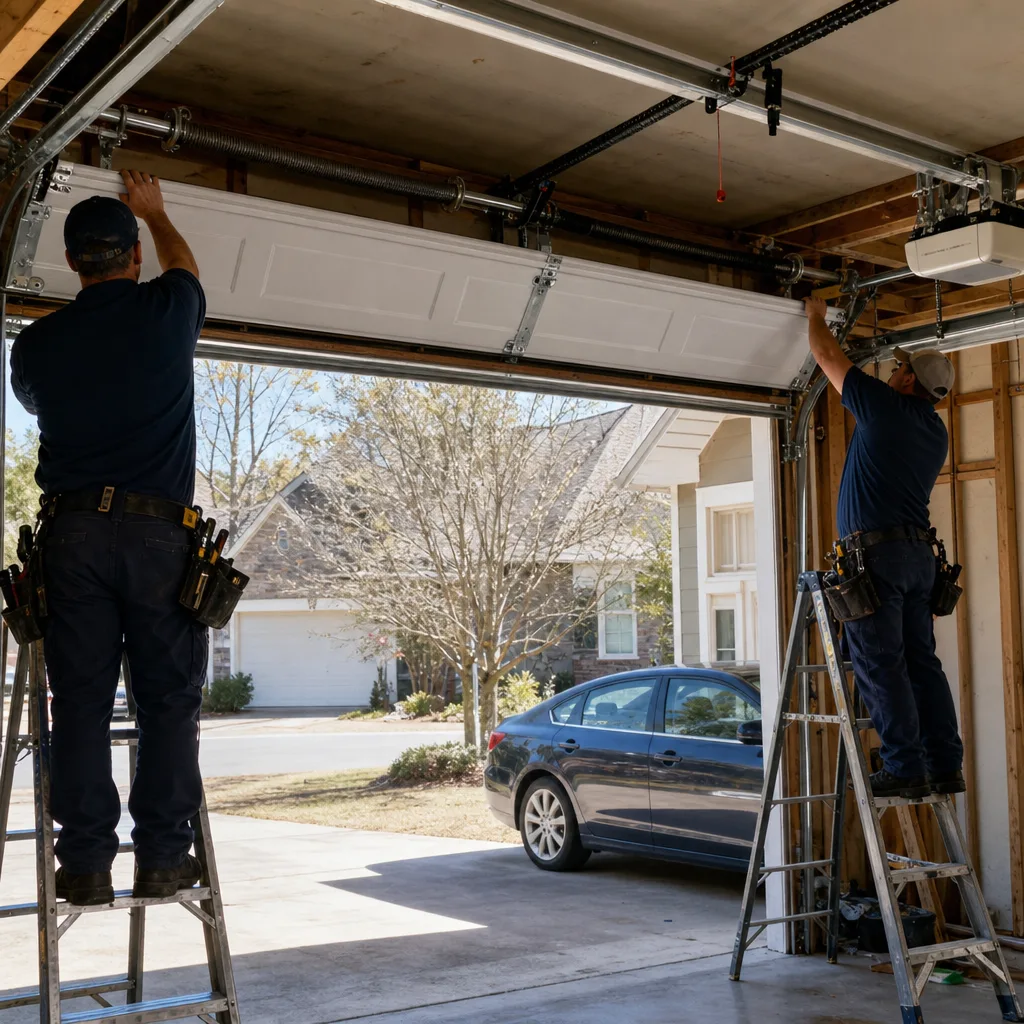
Douglas County allows homeowners to pull their own permits for work on their own primary residence. That option exists, and it’s sometimes the right choice. But the arrangement has implications for leverage that most homeowners don’t think through until something goes wrong.
When a homeowner pulls the permit, they are the permit holder of record. That means the county communicates with the homeowner directly about scheduling inspections, corrections, and sign-offs. It also means the homeowner, not the contractor, is the party the county holds responsible if the work doesn’t pass. If the contractor installs a door that fails a header inspection, and the permit is in the homeowner’s name, the homeowner is the one chasing the contractor for the fix. The county’s enforcement path runs through the permit holder.
When a contractor pulls the permit, the leverage shifts. The contractor’s name and license are on the permit, which means the county holds the contractor responsible for corrections. The contractor can’t walk away from a failed inspection without putting their license at risk. For structural work, this arrangement gives the homeowner measurably more protection, because the contractor has a regulatory incentive to get it right.
The trade-off is usually money. A contractor who pulls the permit charges for the time and the permit fee, and that cost is part of the written scope. We treat it the same way we treat every other line item under Clause 1 of The Haven Standard: the permit fee, the labor, and the materials are all in a flat, written price before any work begins. No “call for a quote” ambiguity, no upcharge discovered after the fact.
Our recommendation for Douglasville homeowners is simple. For structural work, have the contractor pull the permit. For replacement-in-kind with no framing changes, pull your own if you’re comfortable with the paperwork, or just have the contractor handle it either way. What matters is that the permit exists when it’s required, and the name on the permit is a decision you make deliberately, not accidentally.
Common Mistakes to Avoid
- Assuming “replacement” always means no permit. In Douglas County, replacement-in-kind without structural change is often exempt, but a wider door, a new opening, or header work changes that. Ask the county, don’t assume.
- Trusting a contractor who says “we’ll handle the permit” without putting it in writing. If the permit isn’t a line item in the written scope, it doesn’t exist. You want the permit number before the work starts, not after.
- Picking a door by look alone, ignoring wind load. Douglas County’s design wind speed is specific, and a door that meets state code but not the county amendment will fail. Ask for the engineering certificate.
- Confusing an inspection with a quality guarantee. Inspections check code compliance, not workmanship. A door can pass inspection and still be poorly balanced or have rollers wearing unevenly.
- Skipping the permit to save a few hundred dollars. The resale math doesn’t work. A retroactive permit with exposed framing costs more than the original permit, and unpermitted structural work can stall a sale or create seller liability.
- Not keeping the paper trail. Permit, inspection sign-off, door wind load certificate, and the contractor’s written scope. File all of it. When you sell, the buyer’s inspector will ask for exactly those documents.
When to Call a Professional
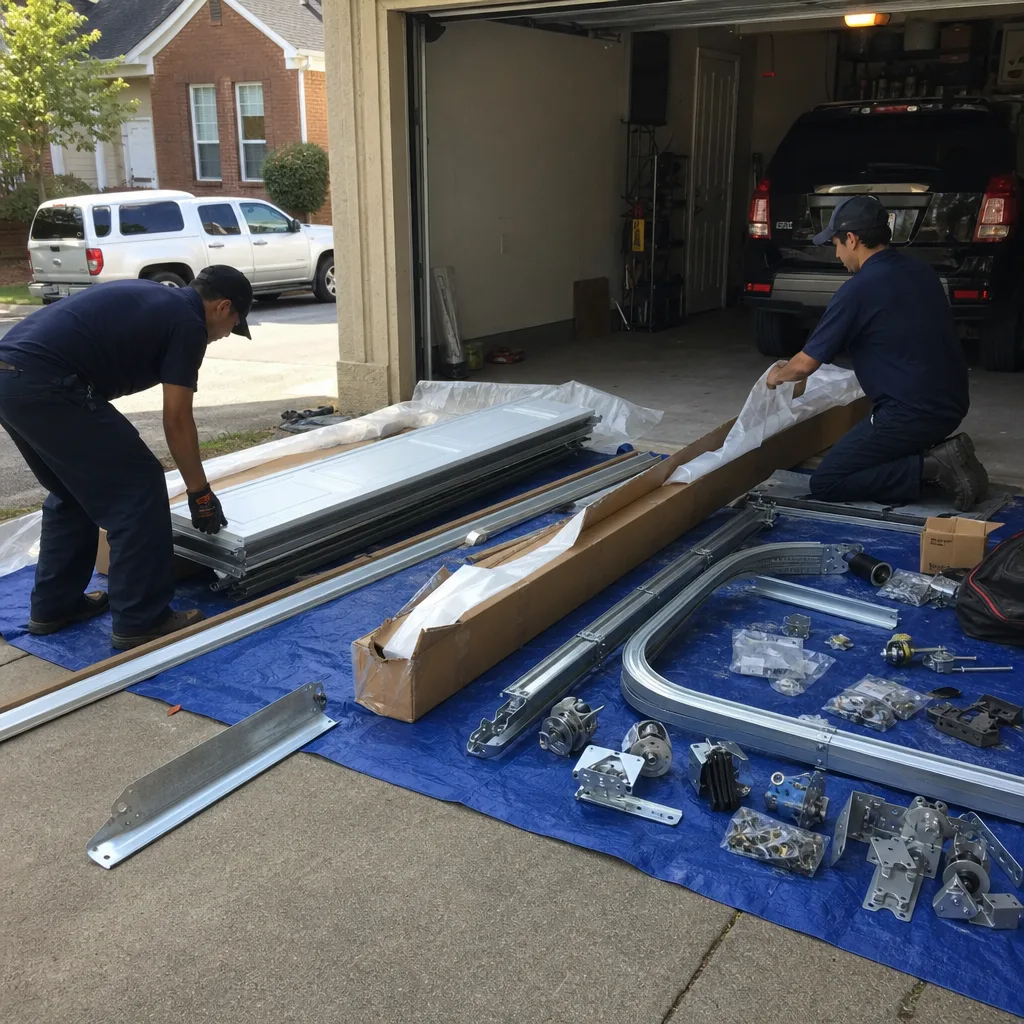
The permit and code questions are answerable, but structural work is not where you learn by doing. If the scope involves a header, a new rough opening, or a door heavier or wider than the one it replaces, get a professional involved before you cut anything. The same applies when an existing door has visible sag, a cracked header, or gaps at the jambs, because those are symptoms of structural issues that a code inspection will catch eventually, and the sooner they’re addressed, the cheaper they are to fix.
Servo Garage Doors Douglasville has been serving Douglasville since 2015, with 18,000+ garage doors made right and a written price before any work starts on every single one. If you’re unsure whether your project needs a permit, call (470) 243-8314 and we’ll walk through the scope with you. Estimates are free, and the answer doesn’t cost you anything to get. Garage door opener repair and installation in Douglasville also falls under our scope, and we handle the documentation end so the permit paperwork matches the work actually done.
Frequently Asked Questions
It depends on whether the replacement changes the structure. A like-for-like swap with the same dimensions and no framing changes often doesn’t require a building permit in Douglas County, but a wider door, a new opening, or header work does. Confirm with Douglas County Building & Development before starting. When in doubt, call Servo at (470) 243-8314 and we’ll help you sort out which category your project falls into.
Permit fees in Douglas County are calculated based on the scope and valuation of the work, and they’re specific to each project. The right way to get the number is to request the fee schedule from Douglas County Building & Development or have your contractor include the permit as a line item in the written scope. Servo Garage Doors Douglasville always lists the permit fee as a separate, flat item before work begins, so there’s no surprise at the end.
The unpermitted work becomes a disclosure issue. Georgia’s seller disclosure form asks about known unpermitted work, and a buyer’s inspector or lender can flag a garage door with structural changes that has no permit on file. That can stall the sale, force a retroactive permit, or create seller liability if the work is later found to be non-compliant. The cheapest fix is pulling the right permit upfront.
When a garage door is inspected as part of permitted structural work, the inspector verifies that the installed door’s engineering certificate meets Douglas County’s design wind speed for the structure’s location and exposure. Most modern doors from major brands meet the requirement without additional bracing, but the certificate is what proves it. We document this on every garage door installation in Douglasville, because the paperwork is part of the job.
Yes, Douglas County allows homeowners to pull permits for work on their own primary residence. But the name on the permit determines who the county holds responsible for corrections, and when a contractor pulls the permit, their license is on the line. For structural work, having the contractor pull it gives you more leverage. For replacement-in-kind, either arrangement works, as long as the permit exists when it’s required.
No. Opener installation is repair-adjacent work, not structural work, and it doesn’t require a building permit under Douglas County’s current amendments to the Georgia State Minimum Standard Codes. The workmanship should still meet the state’s residential code requirements for safety components like photo eyes and auto-reverse. If you need garage door opener repair or installation in Douglasville, we handle the installation to code with a written scope, no permit needed.
The Bottom Line
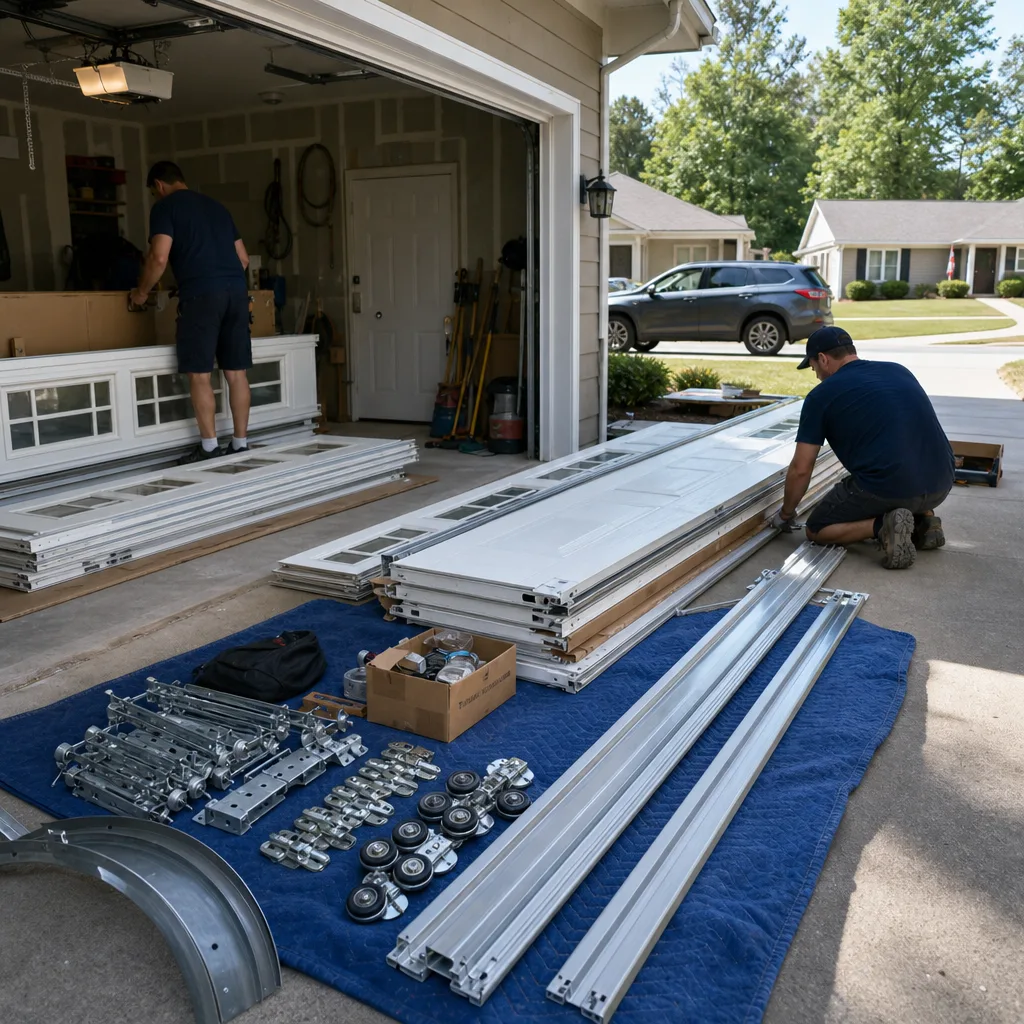
Georgia delegates garage door permitting to counties, and Douglas County’s rules are specific enough that generic state-level advice will mislead you. The practical checklist: confirm whether your scope includes structural work, check the county’s current amendments on wind load and headers, get the permit when it’s required, and keep every piece of paper. If a contractor says “don’t worry about the permit,” that’s the moment to worry about the contractor. The permit protects you at resale, during inspections, and if the work doesn’t hold up. It’s not bureaucracy. It’s leverage.
Written by Marcus Deller, Owner at Servo Garage Doors Douglasville, serving Douglasville since 2015.